


1900s Central Asian Weaving
These 1900s central asian weaving examples are tribal rugs, bags, and covers carrying the geometric motifs and natural dyes of nomadic makers.
1900s Central Asian Weaving
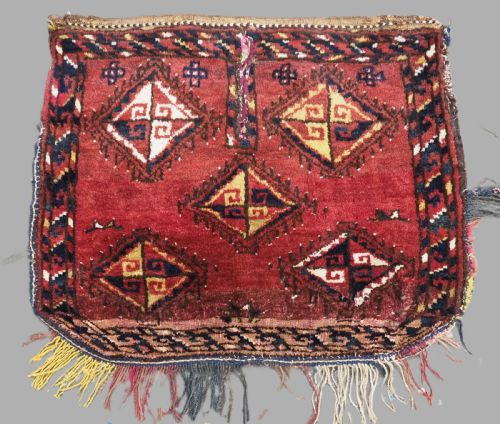
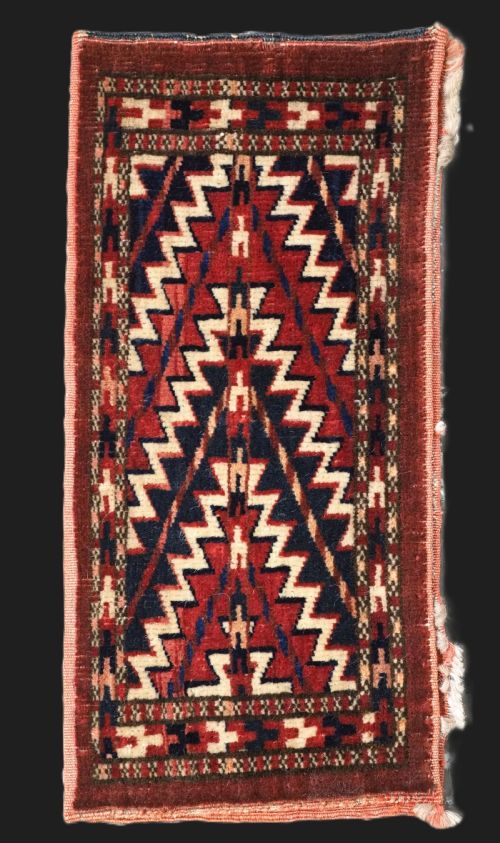
When you search for 1900s central asian weaving, you are looking at utilitarian textiles produced by tribal groups across the region. The pieces on this page span rugs, carpets, kilims, and various functional bags including spindle bags, torba faces, and saddlebag faces.
The most common items you will meet here are Turkmen weavings, alongside pieces from Uzbek, Baluch, and Afghan makers. These objects served practical roles within nomadic and village life, functioning as tent door hangings, floor coverings, and transport pouches rather than purely decorative items.
Dating predominantly from around 1900 and the final decade of the nineteenth century, these textiles display the characteristic patterns and formats of their respective tribes. They bring dense geometric structure and distinct regional colour palettes into domestic spaces.
Materials and construction
These textiles rely entirely on wool as the primary material for both pile and foundation work, often paired with plain weave techniques on the reverse of bags. The reliance on wool suited the nomadic lifestyle of the weavers, providing durable structures that withstood heavy daily use.
Colour comes from natural dyes applied to the wool, producing the rich, enduring hues seen across the rugs and bag faces. Artisans utilised traditional botanical and mineral colourants long before synthetic dyes dominated commercial production.
Listings show pieces exclusively from the 1890s and 1900, constructed entirely from wool and natural dyes.
Factors that separate examples
Quality in these tribal textiles rests on the tightness and fineness of the weave, which dictates the crispness of geometric motifs like octagonal guls and box medallions. A finer weave requires greater skill from the artisan and allows complex patterns to maintain sharp definition.
The choice and execution of design also distinguish superior pieces, particularly where specific tribal formats such as curled leaf designs or banded weft work appear. Strong, well-balanced natural dye colours further elevate a weaving, creating visual depth that weaker or duller dye applications lack.
The 1900s Central Asian Weaving Glossary
- Torba
- A small wall hanging or storage bag used within a nomadic tent. These pieces frequently feature prominent guls and detailed border work.
- Ensi
- A tribal rug specifically used as a tent door hanging. They typically display a characteristic four-part division across the field.
- Chuval
- A large storage bag face produced by Turkmen weavers. They often showcase multiple rows of guls intended for domestic utility.
- Kilim
- A flat-woven carpet or rug made without a pile. These pieces rely on interlocking weft techniques to form geometric patterns.
- Gul
- A primary medallion or repeating octagonal motif used in Turkmen and other tribal designs. Different tribes utilised distinct gul patterns to signal their specific heritage.
1900s Central Asian Weaving: Frequently Asked Questions
What is a torba face used for?
A torba face is the front section of a small, decorative storage bag traditionally hung inside a nomadic tent. These pieces held small personal possessions and valuables.
Over time, many torba faces were separated from their plain weave backs and preserved as individual decorative wall hangings or small mats.
How do I identify a Yomut Turkmen rug?
Yomut Turkmen rugs are generally identified by their characteristic octagonal guls and distinct secondary motifs arranged across the field. The palette often relies on deep madder reds combined with ivory and dark brown contrasts.
These pieces reflect the specific weaving traditions of the Yomut tribe, differing significantly in border structure and medallion shape from neighbouring Tekke or Ersari work.
Are these textiles made with natural dyes?
Yes, the pieces listed from this era utilise natural dyes sourced from plants and minerals. This traditional dyeing method produces rich, stable colours that age gracefully.
Natural dye work avoids the harsh fading or chemical brightness associated with early synthetic colourants introduced later in the twentieth century.
Where were saddle rugs placed?
Saddle rugs and covers were placed directly beneath or over a horse's saddle for protection and decoration during travel. They needed to be exceptionally durable to withstand constant friction and outdoor exposure.
Today, these smaller formats function well as compact floor mats or table coverings in modern interiors.