
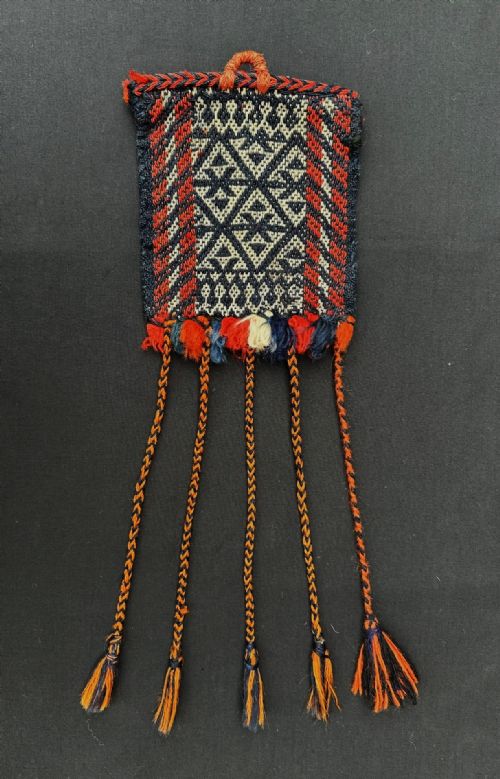


Navy Blue Flatweave Rug
These navy blue flatweave rug examples bring dense tribal geometry and rich vegetable dyes into a room, offering genuine historical character.
Navy Blue Flatweave Rug
When you search for a navy blue flatweave rug, you encounter hand-woven tribal textiles originating from Persian, Afghan, and Uzbek traditions. These pieces include flatweave kilims, soumaks, and utilitarian tribal bag faces spanning the late nineteenth and early twentieth centuries.
The selections available here represent nomadic and village weaving traditions, featuring distinctive geometric patterns and banded designs rather than court workshop styles. They function as versatile floor coverings, runners, and decorative wall hangings that anchor a space with deep indigo tones.
How they were made
Weavers constructed these textiles primarily using hand-spun wool and cotton foundations, employing warp-faced and weft-faced flatweave techniques without a pile. These methods produce a durable, thin fabric suitable for both floor use and nomadic transport.
Makers achieved the deep blue palette utilising natural and vegetable dyes derived from plants and minerals. This traditional dyeing process creates subtle tonal variations across the surface of the wool over time.
Several pieces started life as camel saddle bags before settling down as respectable floor art.
What varies in quality
Quality in these flatweaves rests on the tightness of the weave and the precision of the geometric execution. Finer examples display meticulous structural integrity in banded designs and Soumak wrapping techniques.
The depth and complexity of the natural dye palette also determine distinction within the range. Pieces exhibiting rich indigo saturation alongside secondary vegetable colours command greater interest among collectors.
The Navy Blue Flatweave Rug Glossary
- Flatweave
- A textile produced without knotted piles by interweaving warp and weft threads directly. This creates a flat, lightweight fabric used traditionally for rugs and utility bags.
- Soumak
- A historic brocade-like flatweaving technique involving coloured weft threads wrapped around warp threads in various rows. It produces a textured, sturdy face with a characteristic braided appearance on the reverse.
- Kilim
- A tapestry-woven carpet or rug lacking a pile, made across various tribal regions. These textiles rely on visible weft threads pulled tightly to conceal the warp.
- Vegetable Dyes
- Colourants extracted from organic sources such as plants, roots, and bark before synthetic alternatives dominated production. They yield rich, complex tones that age gracefully.
- Sofreh
- A woven spread or cloth traditionally used during meals or dough preparation in nomadic households. These often feature striking tribal iconography and specific regional formats.
Navy Blue Flatweave Rug: Frequently Asked Questions
How do I care for a flatweave rug?
Vacuum these textiles gently with a suction-only attachment, avoiding beater bars that can catch on hand-spun wool threads. Rotate the piece periodically to ensure even wear across high-traffic areas.
Keep them out of direct, harsh sunlight to protect the natural vegetable dyes from fading prematurely. Professional cleaning by a specialist familiar with antique tribal textiles is recommended when necessary.
Are these rugs durable enough for daily foot traffic?
Their dense, flat-woven structure makes them surprisingly resilient for everyday use in residential spaces. Without a pile to crush, they withstand regular walking while remaining thin enough to lie flat under doors.
Using a quality rug underlay prevents slipping and cushions the wool against hard flooring. This simple addition significantly extends the working life of nineteenth and early twentieth-century weaves.
What is the difference between a kilim and a soumak?
A kilim is woven using a slit-tapestry technique where weft threads reverse direction at the boundary of a colour block, creating small slits in the fabric. This results in a completely flat, reversible textile.
Soumak weaving involves wrapping weft threads over and under warp threads in a continuous motion, leaving floating threads on the back. This technique provides a heavier, more structured fabric with raised surface detail.
Where were these tribal textiles made?
Nomadic and village communities across Persia, Afghanistan, and Central Asia produced these works. Specific tribal confederations such as the Baluch, Afshar, Shahsavan, and Uzbek each developed distinct regional motifs and colour combinations.
Geographic borders often blurred as tribes migrated seasonally across high plateau landscapes. Consequently, weaving structures and design vocabularies frequently reflect shared borderland influences.