
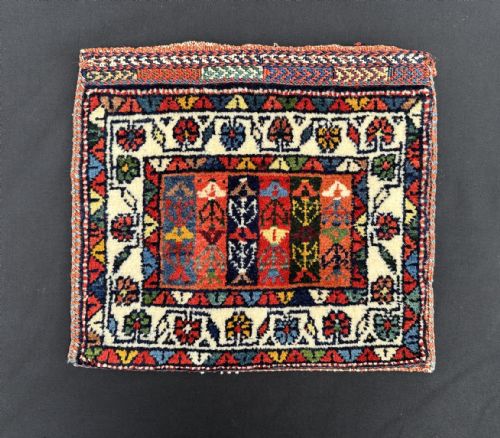


Nomad Woven Carpet
These nomad woven carpet pieces are authentic tribal textiles brought from nineteenth and early twentieth century looms to furnish rooms with character.
Nomad Woven Carpet
A nomad woven carpet or related tribal textile represents the weaving traditions of groups such as the Tekke Turkmen, Shahsevan, Afshar, Qashqai, and Timuri or Baluch nomads. Buyers searching for a nomad woven carpet encounter diverse functional objects including rugs, torba faces, chuval faces, salt bags, and kilims.
The pieces on this page span the nineteenth century and the early twentieth century, originating from regions such as Persia, Azerbaijan, and Western Afghanistan. Smaller formats like bag faces and panels appear alongside larger rugs and main carpets, showing the practical output of nomadic and tribal weavers.
Quality variations
Quality in these tribal textiles rests on the clarity of traditional motifs such as gul designs, compartment patterns, and animal or architectural depictions. Finer execution in the weaving and better preservation of natural dye colours elevate specific examples.
The distinction between standard utility pieces and superior survivals depends upon the integrity of the wool structure and the precision with which regional tribal characteristics are rendered.
Some nomadic weavers packed salt and small belongings into beautifully detailed bags that now hang purely for admiration.
The Nomad Woven Carpet Glossary
- Torba
- A small tent bag used for storage by Turkmen nomads. These decorative storage faces are frequently collected as wall hangings or small display rugs.
- Chuval
- A large storage bag made by Turkmen tribes. They feature repeating gul patterns and were traditionally used inside the yurt.
- Kilim
- A flatwoven textile produced without a pile. These pieces rely on the interplay of warp and weft threads to create geometric designs.
- Gul
- A medallion or repeating primary motif found in Turkmen and Central Asian tribal weaving. Each pattern often identifies a specific tribe or clan.
- Salt bag
- A specialised small nomad bag used for domestic storage. They display the same dense weaving and natural dyes as larger carpets.
Nomad Woven Carpet: Frequently Asked Questions
What is a nomad woven carpet?
A nomad woven carpet or associated tribal textile is a hand-woven piece created by nomadic or village groups for practical use in camps and homes. These items include floor rugs, flatwoven kilims, and storage bag faces.
They reflect the traditional designs, materials, and regional styles of makers from areas such as Persia, Azerbaijan, and Central Asia during the nineteenth and early twentieth centuries.
How were nomad woven carpets used?
Nomadic weavers produced these textiles to serve functional purposes in daily life, ranging from floor coverings and horse covers to storage sacks for salt, household goods, and bedding.
Bag faces like torbas and chuvals hung inside tents for organisation, while kilims and rugs provided versatile floor and seating coverings.
How do I identify tribal carpet periods?
Dating these textiles relies on examining the materials, such as hand-spun wool and natural dyes, alongside structural characteristics and specific tribal design repertoires. Pieces on this page date from the nineteenth century up to the early twentieth century.
Comparison with documented examples helps narrow down the decade of production based on weave density and wool quality.
How do I live with a tribal textile?
Tribal rugs and bag faces work well placed on floors in low-traffic areas or mounted as wall hangings to display their intricate geometric designs and natural dye colours. Their varied formats suit different interior spaces.
Protecting them from prolonged direct sunlight and using appropriate underlays preserves the hand-spun wool and structure for daily enjoyment.