
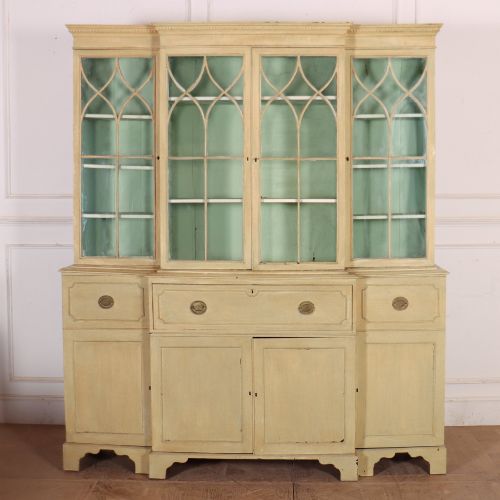


Nineteenth Century Secretaire
A nineteenth century secretaire combines the display of a cabinet with the fitted writing surface of a desk, offering practical utility within domestic spaces.
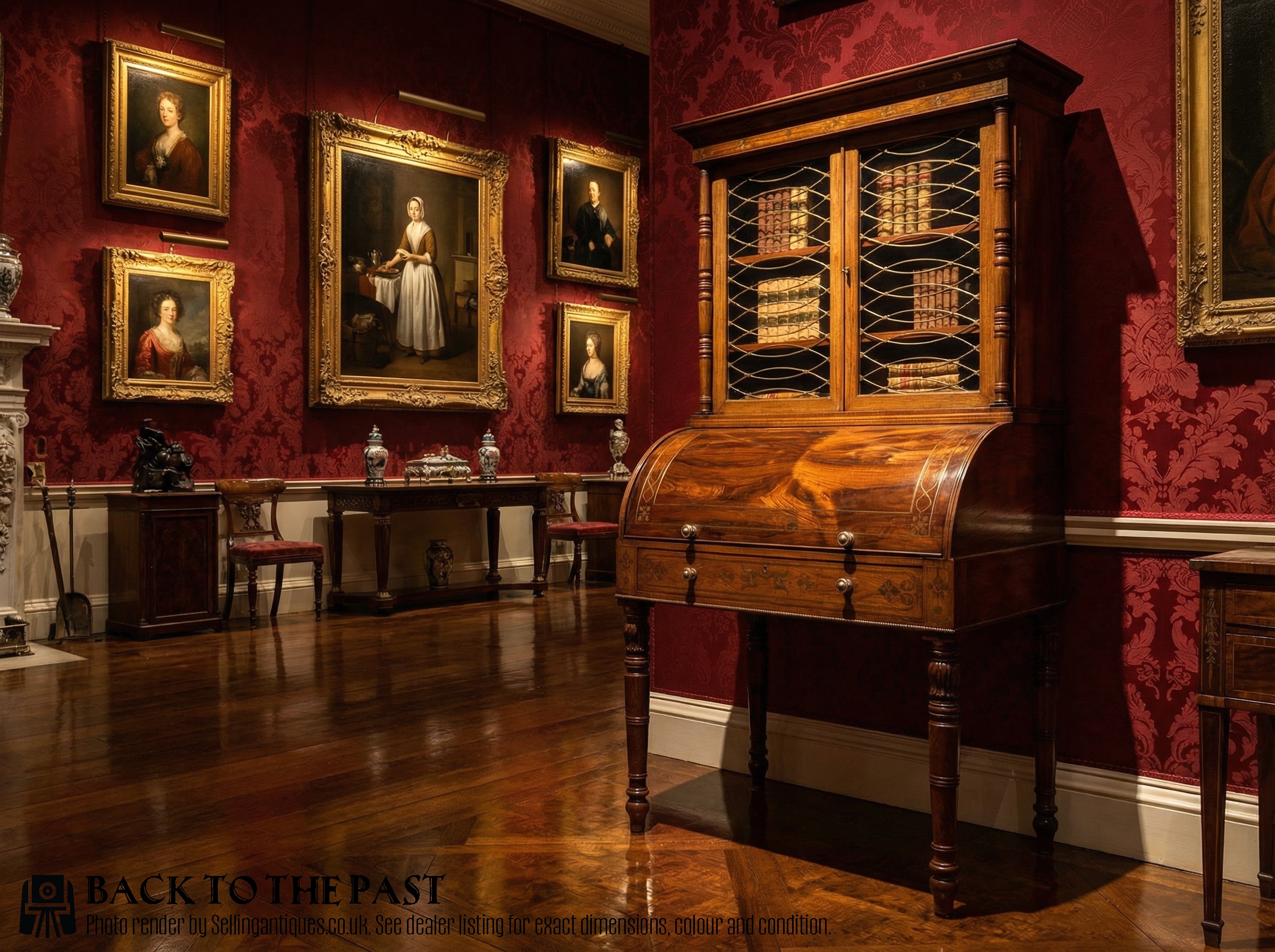
Nineteenth Century Secretaire
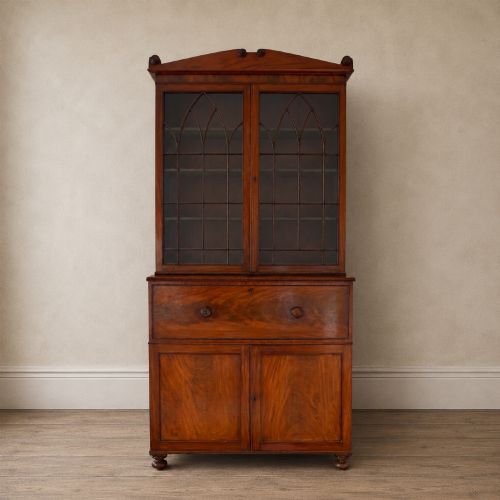
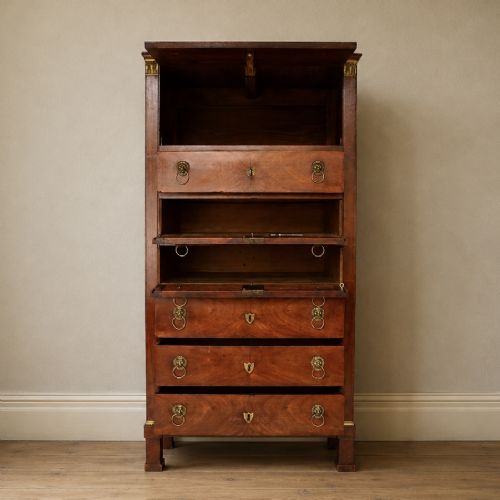
A nineteenth century secretaire encompasses large library bookcases, fall-front cabinets, and compact campaign chests designed for correspondence and storage. The overarching characteristic is a hinged writing drawer or drop-front flap that conceals inner pigeonholes and small drawers.
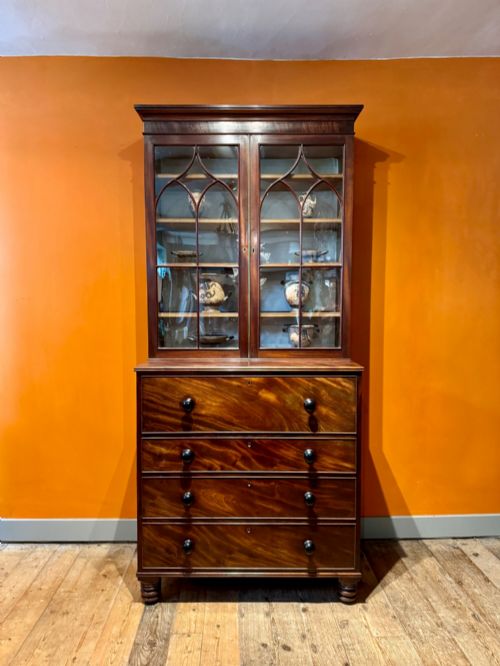
Bookcase variations dominate the selection, combining glazed upper shelves for books with a fitted secretaire drawer at desk height. Smaller chiffoniers, commodes, and freestanding writing cabinets also appear across Georgian, Regency, and Victorian iterations.
How they were made
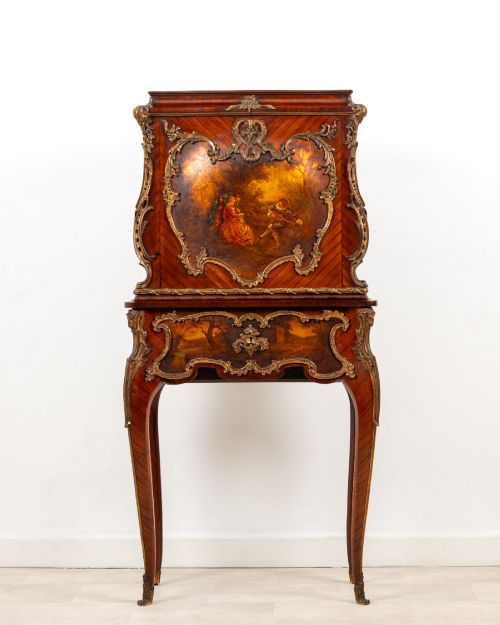
Cabinet makers utilised dense timber foundations of mahogany, walnut, and rosewood, frequently selecting figured veneers such as flame mahogany or pollard oak to cover primary surfaces. Exotic woods like kingwood appear alongside brass hardware, marble tops, and ormolu mounts on continental pieces.
Construction relies on traditional joinery methods paired with hinged mechanisms for drop-front writing surfaces and fitted interior compartments. Glazed doors with wooden astragals enclose upper bookcase sections while structural carcass work houses multiple lower drawers.
Nineteenth Century Secretaire Retail Price Guide 2026
Typical asking prices for nineteenth century secretaire among the pieces listed under this phrase on Sellingantiques today, from the lower quarter to the upper quarter. They describe what is for sale here now, not the wider market.
Period styles span Georgian, Regency, William IV, Victorian, and French Empire designs.
What varies in quality
The selection of timber veneer determines much of the visual character, with highly figured flame mahogany or matched pollard oak marking out superior examples. Plain secondary timbers and repetitive grain patterns indicate standard commercial production.
Interior complexity separates utilitarian items from master-built pieces, particularly the arrangement of secret compartments, satinwood pigeonholes, and small inlaid drawers within the writing section. The integration of bronze ormolu mounts and heavy marble tops further distinguishes continental production.
The Nineteenth Century Secretaire Glossary
- Secretaire
- A desk or cabinet featuring a built-in writing drawer with a drop-front panel that conceals small drawers and pigeonholes. It provides a concealed workspace inside a standard furniture form.
- Secrétaire à abattant
- A tall vertical cabinet featuring a hinged fall-front writing flap that opens forward. It typically includes internal compartments and enclosed lower storage.
- Ormolu
- Gilt-bronze decorative mounts applied to furniture edges and corners. This French technique was favoured on nineteenth-century kingwood and walnut cabinets.
- Biedermeier
- A Central European style from the first half of the nineteenth century emphasising clean lines and polished veneers. It prioritises domestic utility over excessive ornamentation.
- Campaign chest
- A sectional timber chest designed for transport, fitted with brass corners and recessed carrying handles. Examples equipped with a secretaire drawer served officers in the field.
Nineteenth Century Secretaire: Frequently Asked Questions
How do I identify a nineteenth century secretaire bookcase?
Examine the middle section for a deep drawer that pulls out and drops down on hinges to reveal small interior compartments. This drop-front distinguishes the secretaire from a standard chest of drawers or bookcase.
Above this writing level, glazed doors enclose shelving for books, while solid timber doors or drawers occupy the lower base section.
Where were secretaire cabinets used in the home?
These pieces served primarily in libraries, studies, and formal drawing rooms where letter writing and household administration took place. The lockable drop-front kept private correspondence secure when not in use.
Tall bookcases functioned as permanent fixtures for book collections while smaller commodes and chiffoniers sat in reception spaces for occasional writing.
What is the difference between Georgian and Victorian examples?
Georgian and Regency pieces tend to feature restrained classical proportions, architectural cornices, and mahogany or rosewood veneers. They emphasise structural clarity and balanced drawer arrangements.
Victorian variants often display heavier proportions, darker walnut or pollard oak timbers, and revival styling such as Gothic or French Louis XV motifs with elaborate mounts.
How should I care for timber veneer surfaces?
Maintain polished mahogany, walnut, and rosewood surfaces by keeping them away from direct sunlight and fluctuating radiator heat. This prevents the underlying timber from shrinking and the historic veneer from lifting.
Apply traditional beeswax periodically and buff with a soft cloth to nourish the grain without building up synthetic chemical layers.