

Nineteenth Century Landscape Painting
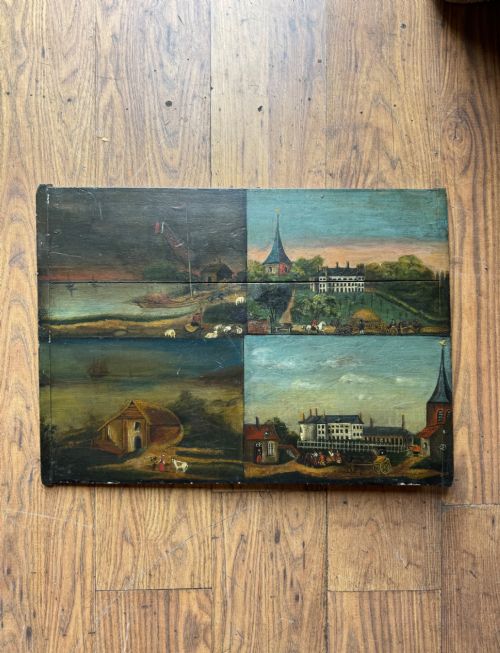
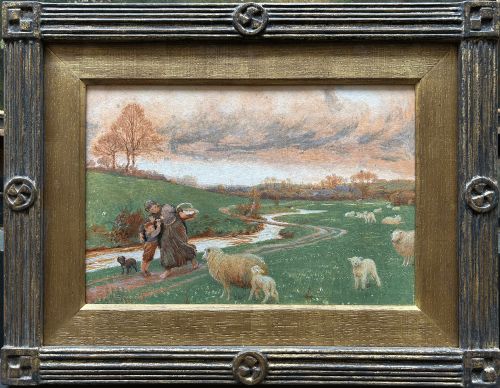
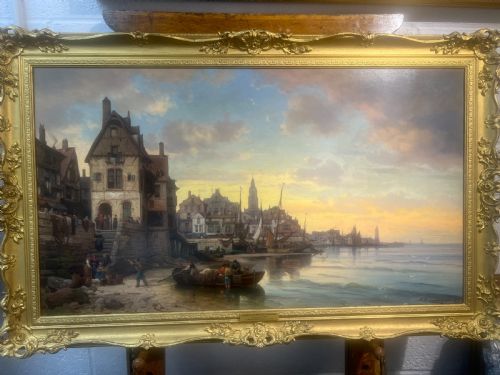
Nineteenth century landscape painting captures countryside vistas on canvas and paper using oils and watercolour.
Defining Nineteenth Century Landscape Painting
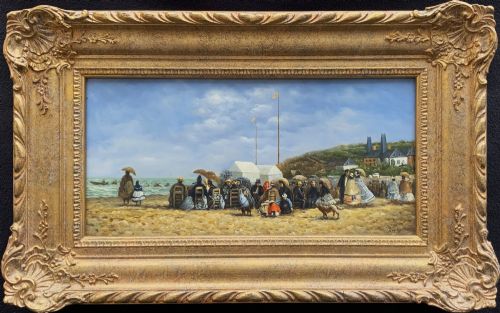
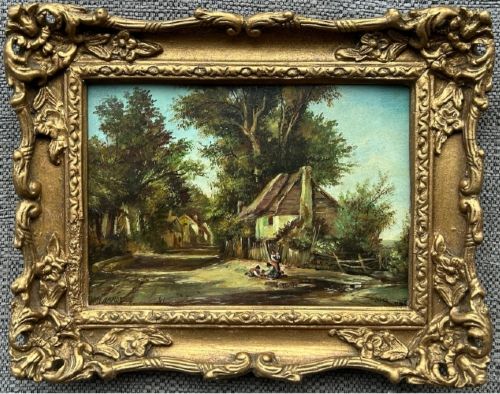
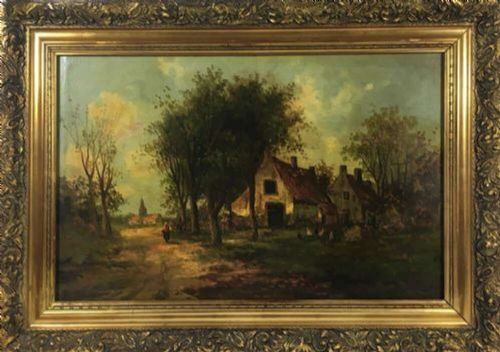
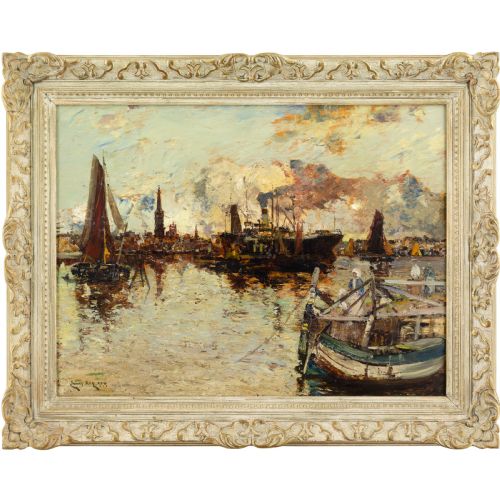
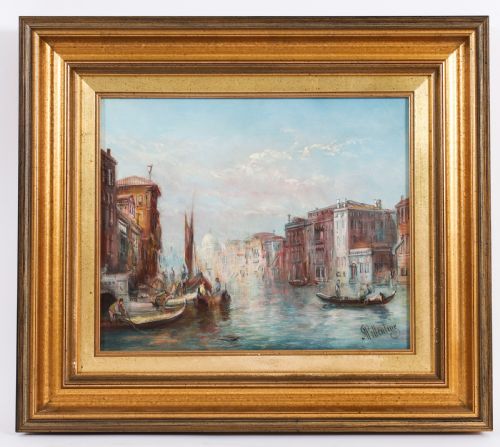
Nineteenth century landscape painting covers works spanning Victorian, Impressionist, and Realist styles from the period. Buyers find pieces depicting rural scenes, rivers, lochs, and village views.
The most common format on this page is oil on canvas, alongside watercolours on paper. Works frequently originate from British artists working in the Victorian era and the early twentieth century.
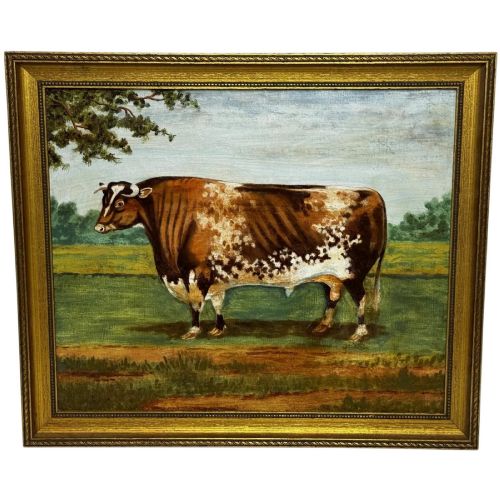
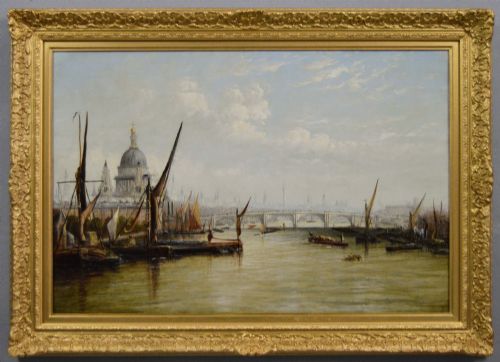
Subjects range from tranquil pastoral scenes and harvesters to specific named locations like Loch Etive and Cumberland. These artworks capture the changing light and rural life of the period.
Materials and Technique
Artists painted primarily with oil paint on canvas or watercolour on paper, mounted within wood frames. Many frames utilise giltwood and gesso finishes to complement the artwork.
Brushwork varies from the tight detail of Victorian naturalism to the looser application seen in Impressionist works. Canvases are stretched over wooden supports while watercolours are executed on paper supports.
Retail Price Guide 2026
Typical UK retail prices for nineteenth century landscape painting, calculated from the Sellingantiques database of over a million retail prices indexed since 2003. This retail price guide relies exclusively on Sellingantiques data; no external sources or auction records are used, so the figures do not describe the wider market.
The selection includes British Impressionism, Victorian Naturalism, and nineteenth century realism styles.
Assessing Quality
Quality rests on the handling of light, atmospheric depth, and the confidence of the brushwork across the canvas or paper. Stronger examples show acute observation of nature and balanced composition.
The sophistication of the original framing, particularly moulded giltwood and gesso work, adds significantly to the overall integrity of the piece.
Henry Hillier Parker·Arthur Walker Redgate·John Syer junior·T.B.Garvie·Alfred Graham·Robert Thorne Waite
The Nineteenth Century Landscape Painting Glossary
- Oil on Canvas
- Pigment mixed with drying oil applied to a woven fabric stretched across a wooden frame. This medium allows for rich colour depth and textured brushwork.
- Watercolour
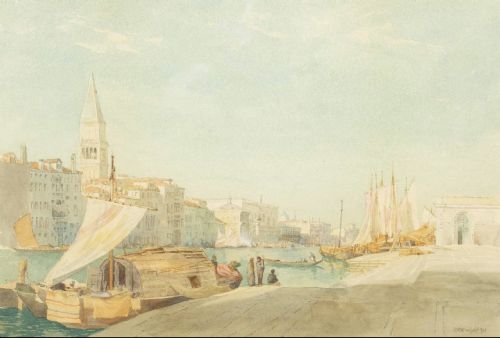
- A paint consisting of water-soluble pigments applied to paper. It produces transparent washes of colour particularly suited to atmospheric skies and light.
- Giltwood
- Wood carved and coated with gold leaf or a gold-coloured metallic finish. It provides a decorative border that enhances the framed painting.
- Gesso
- A paint mixture consisting of a binder mixed with chalk, gypsum, or pigment. It forms a smooth surface on wooden frames before gilding.
- Victorian Naturalism
- An art movement focusing on detailed and accurate representation of the natural world. Artists working in this style observed botanical and topographical elements closely.
Frequently Asked Questions
What subjects appear in these paintings?
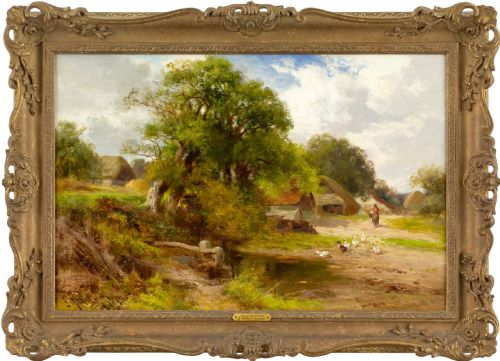
These works depict rural countryside, rivers, harvesters, ducks, and specific named British locations. Artists focused on natural scenery and pastoral life.
Scenes range from calm inland waters to figures walking through fields and country lanes.
How do I hang a heavy oil painting?
Large oil paintings on canvas with giltwood frames require secure wall fixings into masonry or studs. Heavy frames need robust picture wire and appropriate wall hooks.
Ensure the hanging hardware matches the weight of the wooden stretcher and frame combination.
Are watercolours framed differently from oils?
Watercolours on paper require glass protection and mount boards to prevent the paper touching the glazing. Oil paintings on canvas are left unglazed to allow the paint surface to breathe.
Frames for watercolours often use giltwood or simpler wood profiles suited to works on paper.
How do I distinguish an oil from a watercolour?
Oil paint sits with texture and thickness on top of a woven canvas support. Watercolour sinks into paper, creating transparent washes without heavy surface relief.
Oils generally require no glass front, whereas watercolours must be glazed for protection.