


Nineteenth Century Landscape Art
Nineteenth century landscape art brings nineteenth century scenery into domestic interiors through oil and watercolour.
Nineteenth Century Landscape Art
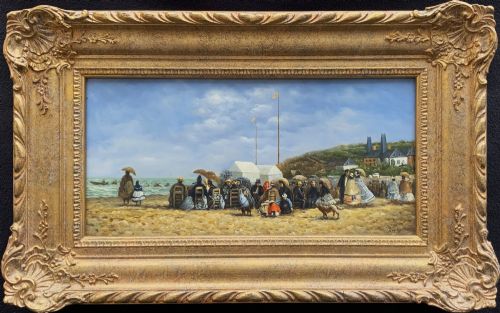
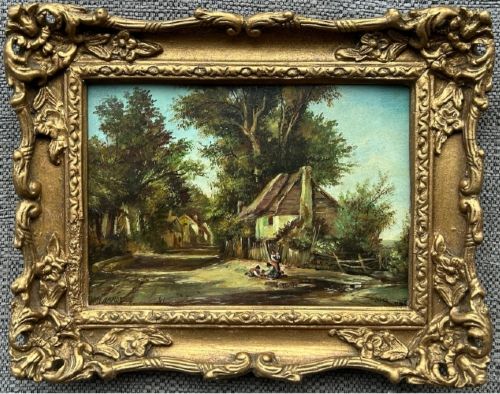
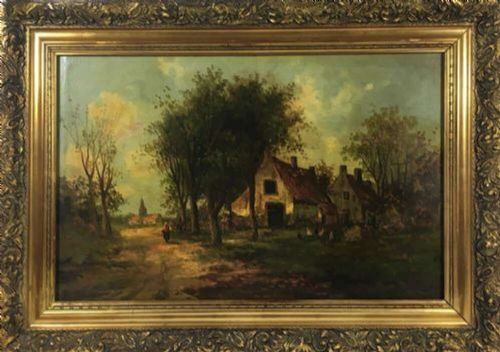
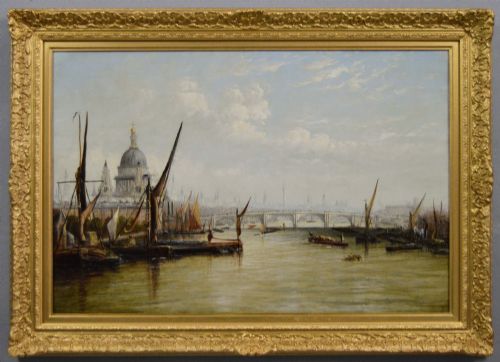
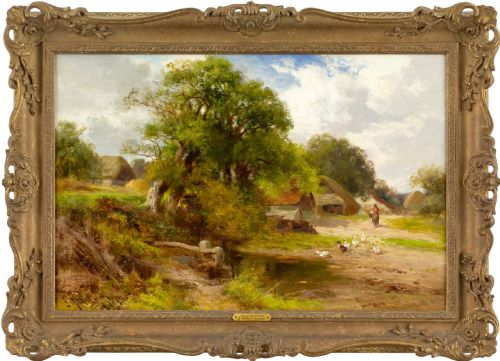
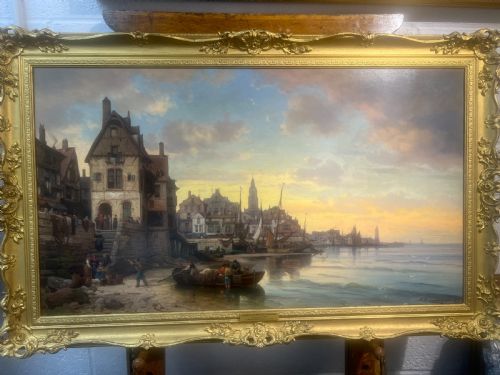
Nineteenth century landscape art captures rural views, rivers, coasts and mountain ranges recorded by British and continental painters. The paintings on this page frequently present oil on canvas or delicate watercolours framed in period wood and gesso.
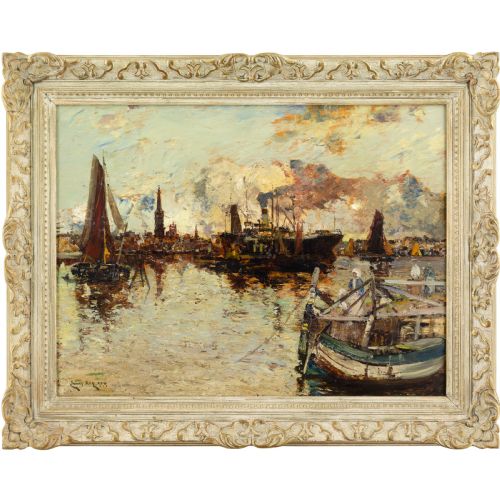
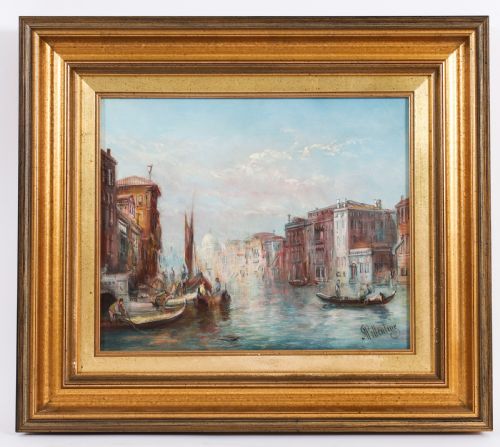
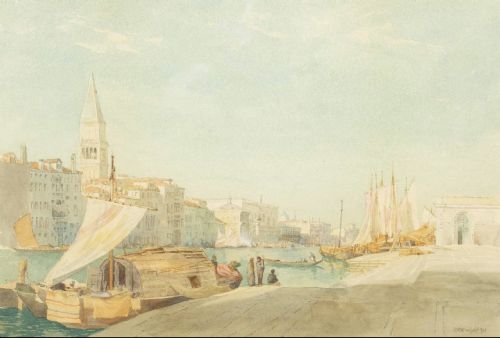
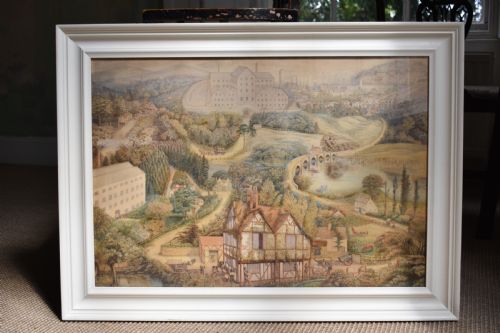
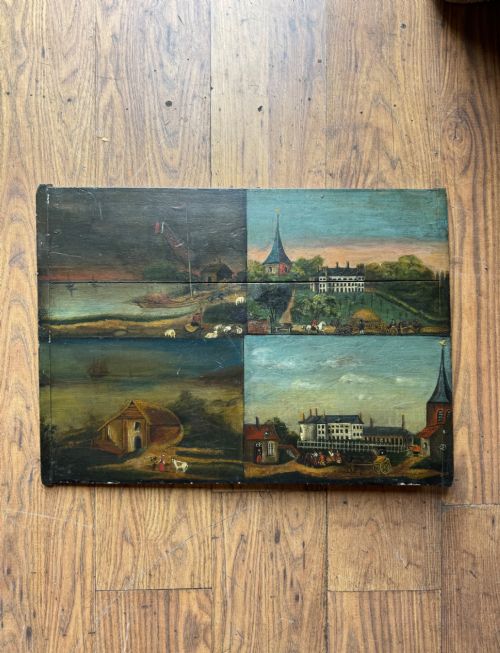
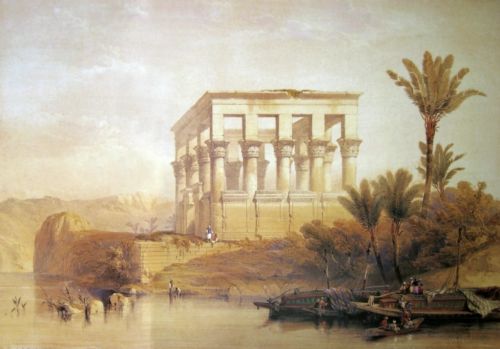
Buyers encounter oil paintings on panel and canvas alongside watercolours on paper depicting scenes from Britain, France, Italy and beyond. These works range from provincial naive folk art to accomplished Barbizon school compositions and Venetian views.
Makers and painters document specific topography, such as Welsh river valleys, Venetian canals and Sussex fields, often signed by the artist. The selection spans rural farmlands, coastal gatherings and pastoral settings characteristic of the Victorian era.
Materials and technique
Artists painted primarily with oil on canvas or panel, or applied watercolour pigments onto paper. Canvases received layers of pigment sealed with varnish, whilst watercolours utilised washes to capture light across skies and water.
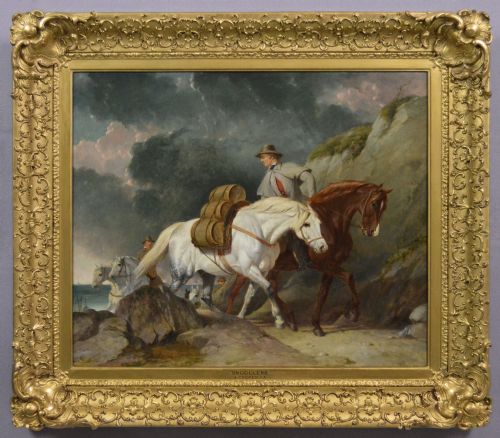
Frames combined wood, gesso and elaborate giltwood mouldings to protect and display the artwork. These frames often match the period of the painting, utilising ornate plasterwork finished in gold leaf.
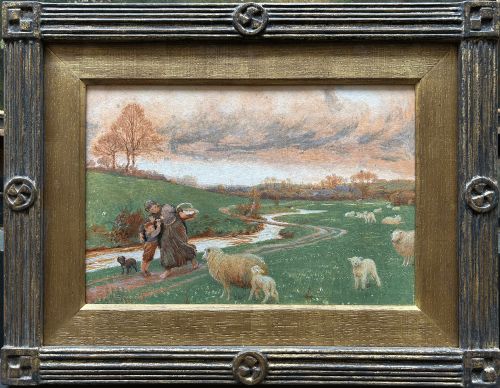
Several canvases record stubborn livestock, capturing prize bulls, resting cattle, and grazing sheep alongside quiet rivers.
Judging quality
Quality rests in the handling of light, atmospheric depth and the precision of brushwork across foliage, water and skies. Superior examples demonstrate confident draughtsmanship and careful compositional balance rather than stiff mechanical reproduction.
The integrity of the original support, the stability of the paint or watercolour surface, and the condition of the period giltwood or gesso frame influence the overall character of the piece.
William Howard Hardy·James Kay·Alfred Pollentine·Francis Moltino·Richard Henry Wright·John Horace Hooper·David Roberts·Frederick Walker·Charles Euphraisie Kuasseg·Abraham Cooper·Paul Desire Trouillebert·Johann Friedrich Voltz·William Yale·Cornelius Pearson·Edwin Lord Weeks·Jean Baptiste Olive·Thomas Edward Roberts·Henry Hillier Parker·William Barraud·Henry John Yeend King·Andre de Moller·Sidney Richard Percy·Robert John Hammond·Willem Anton Alexander Knip·Giulio Cecchini
The Nineteenth Century Landscape Art Glossary
- Barbizon School
- A nineteenth century French art movement centred on realism in landscape painting, focusing on direct observation of nature. Painters associated with this group worked closely from the rural environment.
- Gesso
- A plaster mixture applied to wood frames to create a smooth surface for gilding. It is carved or moulded into decorative patterns.
- Giltwood
- Wood that has been coated with a thin layer of gold leaf or gold paint. Frames finished in this manner were standard for fine nineteenth century paintings.
- Watercolour
- A painting method in which the paints are made of pigments suspended in a water-based solution. Works on paper require glass protection.
- Post-Impressionism
- An art movement extending roughly from the late nineteenth century, rejecting naturalistic depiction in favour of expressive forms. It builds upon impressionist foundations.
Nineteenth Century Landscape Art: Frequently Asked Questions
How should I hang these paintings?
Position paintings at eye level away from direct sunlight and fluctuating heat sources. Stable indoor climates protect both canvas and the original gesso frame.
Ensure adequate wall fixings match the weight of the timber and giltwood frame. Heavy oil paintings require secure wall anchors to support the frame safely.
How do I clean nineteenth century frames?
Dust giltwood and gesso frames gently with a soft, dry brush to remove accumulated particles. Avoid moisture or chemical cleaners which strip the gold leaf.
Professional conservators should handle repairs to chipped gesso or split timber. Domestic cleaning products cause irreversible damage to historic frame finishes.
Are watercolours different from oil paintings?
Watercolours utilise paper supports and require protective glass framing to prevent atmospheric damage. Oils use canvas or wood panels with durable varnished surfaces.
Oil paintings tolerate ambient light better than watercolours, which fade under harsh illumination. Both media reflect the distinct techniques of nineteenth century artists.
How can I identify the painting period?
Examine the canvas weave, stretcher frames, framing style and pigment characteristics. Victorian and nineteenth century works often carry stretcher marks and artist signatures.
Examine the reverse of the panel or canvas for old exhibition labels, dealer stamps or inscriptions. These details frequently record the exact date and location.