
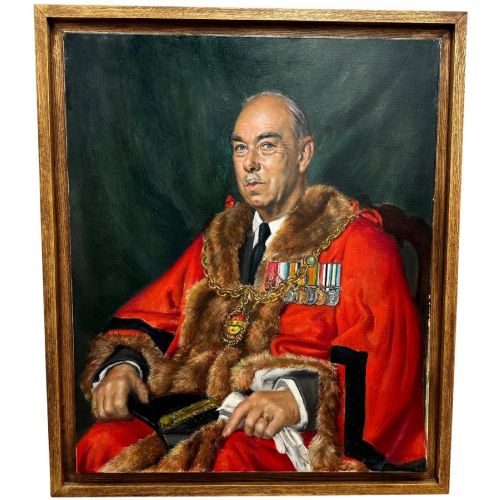



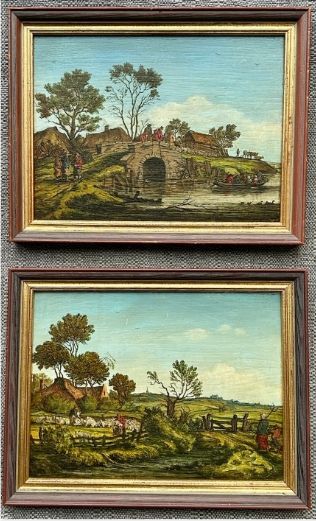
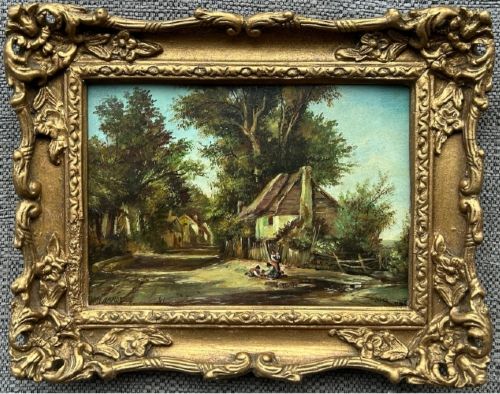
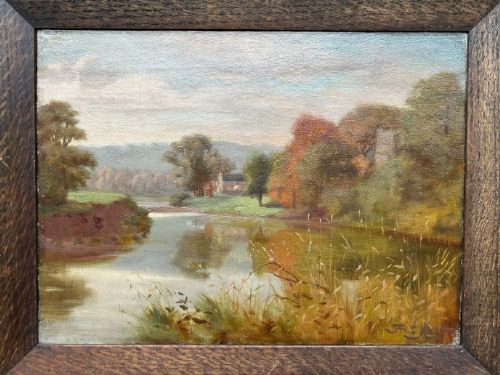
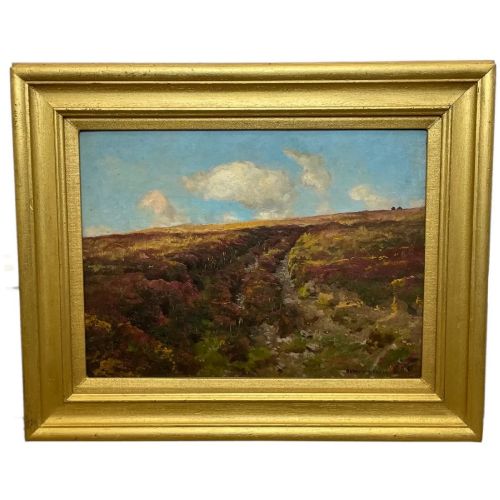
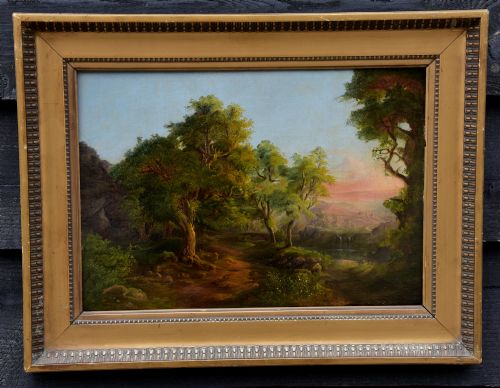
Original Oil Painting Framed
An original oil painting framed brings tactile depth and centuries of pigment into a room.
What these pieces are
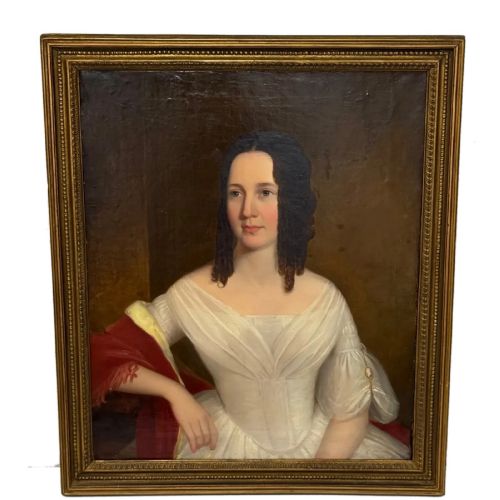
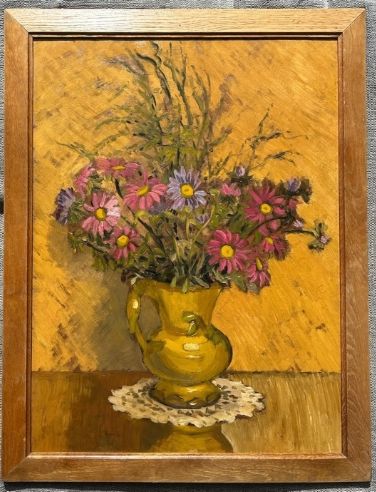
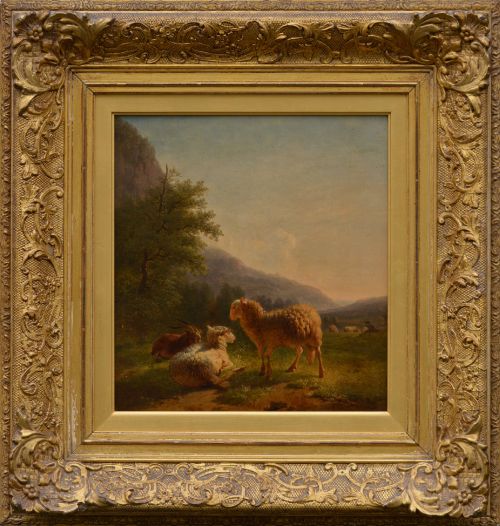
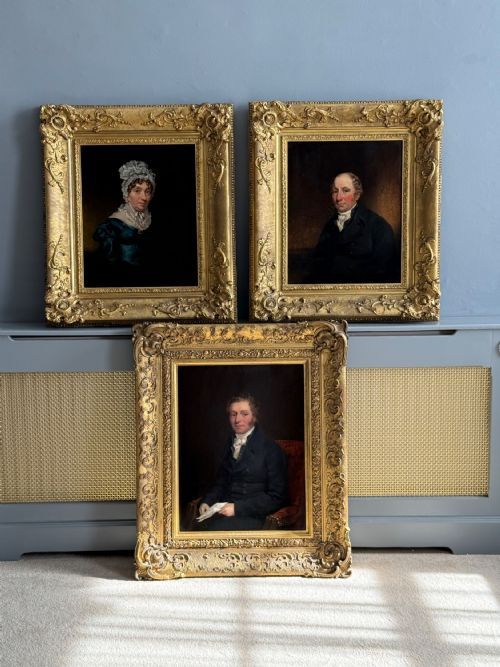
An original oil painting framed consists of pigment suspended in drying oil, applied to canvas, wood panel, card, or board, and enclosed in a protective border. These works span portraits, landscapes, cityscapes, and still lifes from the eighteenth century through the mid-twentieth century. The most common iteration met on this page is the nineteenth-century or early twentieth-century framed landscape or portrait.
The selection encompasses diverse regional schools, including Modern British, Barbizon School, Scandinavian Realism, and Mid-Century Impressionism. Whether depicting a Welsh valley, a Venetian canal, or a quiet domestic interior, each piece represents a singular artistic vision realised in oil paint. The accompanying frames range from ornate nineteenth-century giltwood to simpler period wood mouldings.
How they were made
Artists built these works by applying oil paint onto prepared supports such as woven canvas, wooden panels, card, or sturdy board. Oil paint allowed makers to blend colours smoothly, build thick impasto textures, and work across extended periods as the medium dried slowly.
Frames were constructed primarily from wood, often finished with layers of gesso, gold leaf, or giltwood to accentuate the artwork. The combination of durable oil pigments and substantial wooden housings ensured these paintings survived centuries of environmental shifts.
Retail Price Guide 2026
Typical UK retail prices for original oil painting framed, calculated from the Sellingantiques database of over a million retail prices indexed since 2003. This retail price guide relies exclusively on Sellingantiques data; no external sources or auction records are used, so the figures do not describe the wider market.
Listings feature works executed on canvas, wood panel, card, and board across the nineteenth and twentieth centuries.
What varies in quality
Quality rests upon the artist's handling of light, brushwork confidence, and anatomical or spatial proportion. Superior works demonstrate deliberate control over tone and atmosphere, whereas weaker examples rely on formulaic repetition without observational depth.
The integrity of the physical support and the sympathetic pairing of the canvas to its frame also influence the standard of a piece. Original giltwood frames that retain their crisp moulding and original gilding elevate the overall execution compared to later, mismatched replacements.
Harry Kluge·Henry H Parker·Hubert Wellington·Alfred Pollentine·Jeffrey Pratt·Alfred Arthur Brunel de Neuville·Fred Lawson·Mary Lord·William Staveley·Gordon Clifford Barlow·Claude Horsfall·Vincent Galloway
The Original Oil Painting Framed Glossary
- Impasto
- Paint applied thickly to a canvas or panel, standing out in relief from the surface so that the marks of the brush or palette knife remain visible.
- Giltwood
- Wood carved and coated with a thin layer of gold leaf or metallic powder, frequently utilised for ornate nineteenth-century picture frames.
- Wood panel
- A rigid wooden support used by artists as an alternative to woven canvas, common in earlier and regional painting traditions.
- Barbizon School
- A nineteenth-century French art movement focused on realist landscape painting, emphasising direct observation of nature and atmospheric rural scenes.
- Provenance
- The documented history of ownership surrounding a work of art, establishing its authenticity and passage through time.
Frequently Asked Questions
How do I hang a heavy framed oil painting?
Heavy works require secure picture hooks screwed directly into wall studs or heavy-duty wall anchors rated for the weight of the wood and glass-free frame.
Ensure the hanging wire or brass D-rings affixed to the frame back are tightly secured to support the vertical load safely.
Should I clean the surface of an old oil painting?
Surface dust can be removed gently with a very soft, dry brush, but accumulated grime or discoloured varnish requires professional conservation.
Household liquids or abrasive cloths will damage the delicate oil pigments beneath.
How do I identify the period of a frame?
Frame styles often align with the era of the canvas, displaying hand-carved gesso details, corner mitres, and oxidation patterns consistent with age.
Comparing the construction methods on the reverse of the moulding helps distinguish original housings from later framing.
Where should I place these paintings in my home?
Display works away from direct sunlight, radiators, and damp spaces to protect the canvas, wood panel, and oil pigments from warping or fading.
Stable indoor temperatures preserve both the structural integrity of the support and the vibrancy of the colours.