
Gold Frame Still Life
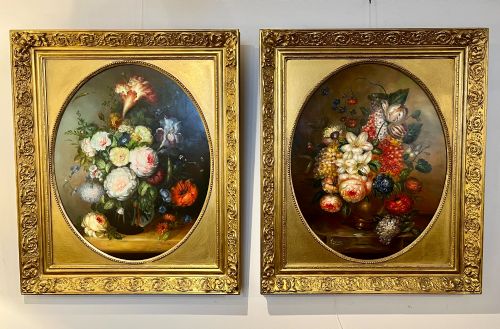
A gold frame still life brings the quiet weight of fruit and flowers onto the wall, held in a heavy gilded border.
Understanding gold frame still life
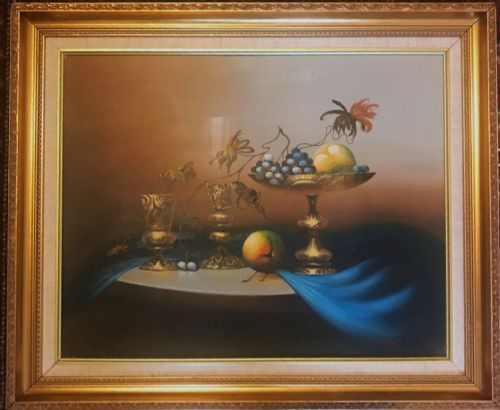
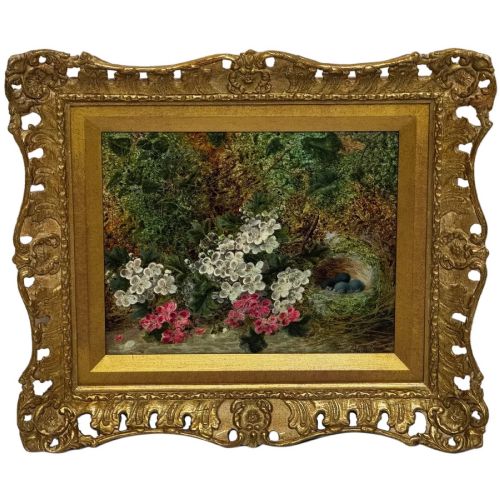
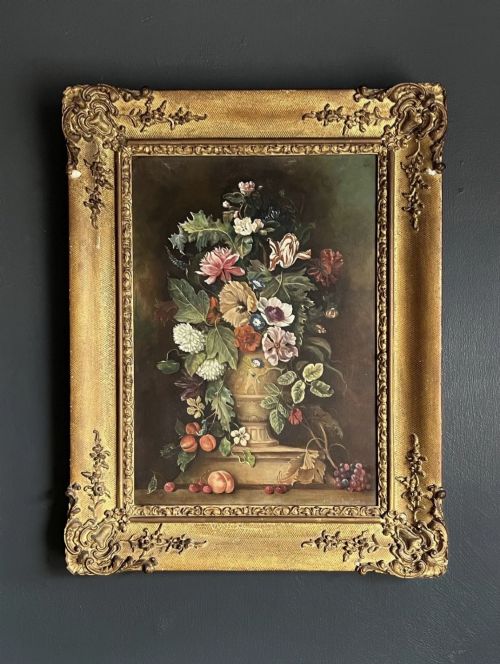
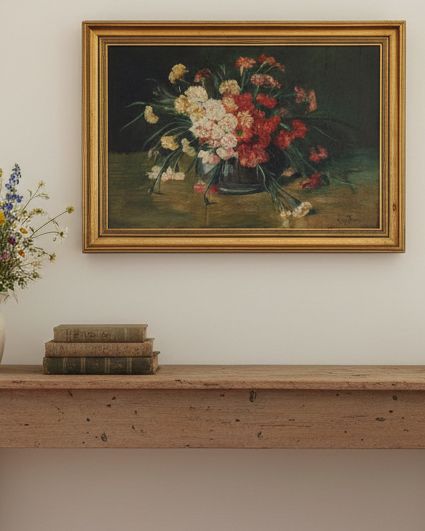
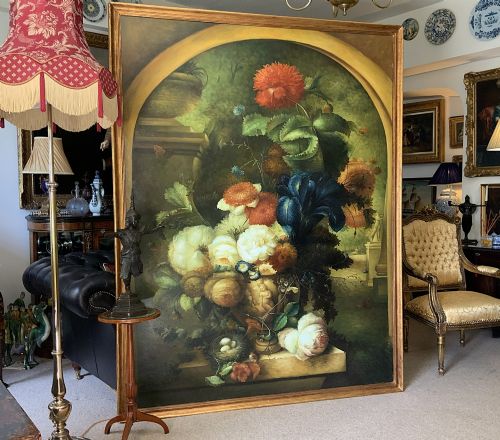
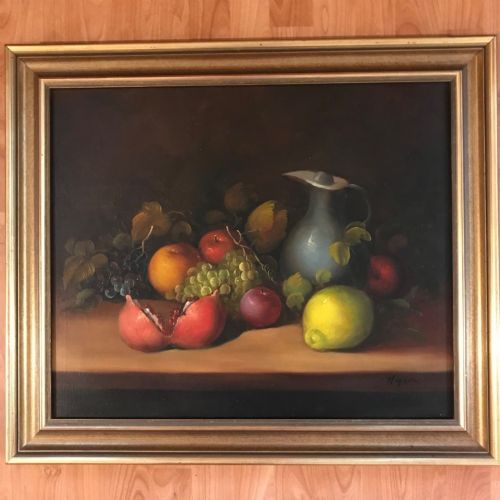
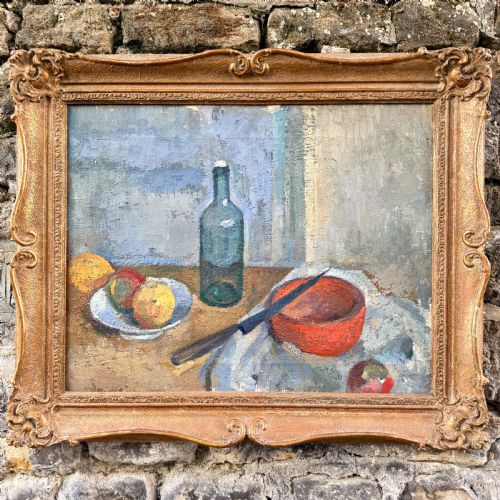
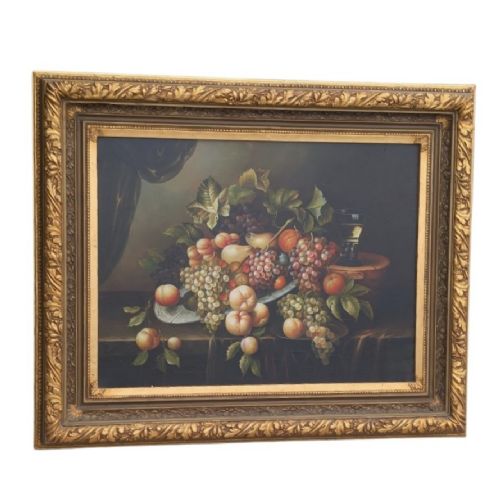
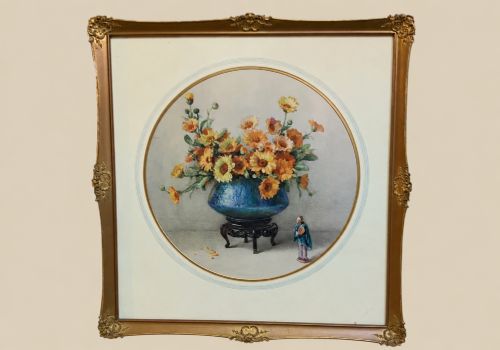
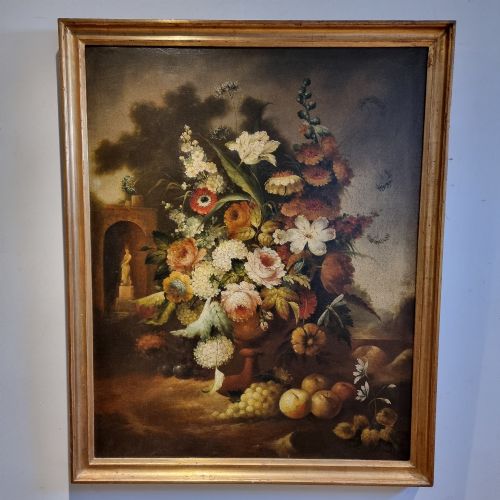
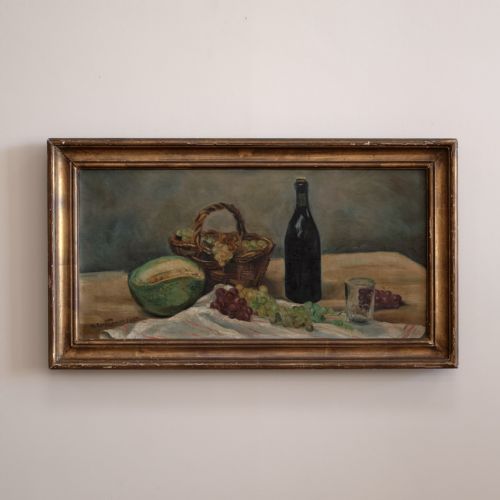
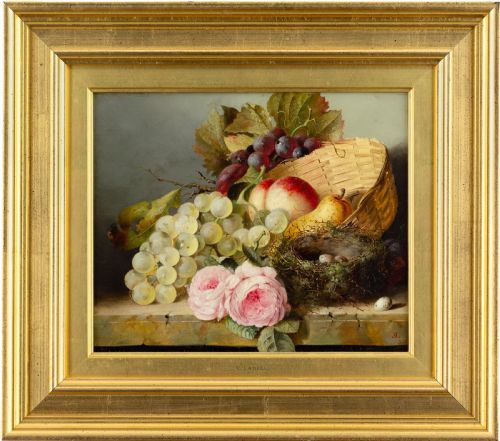
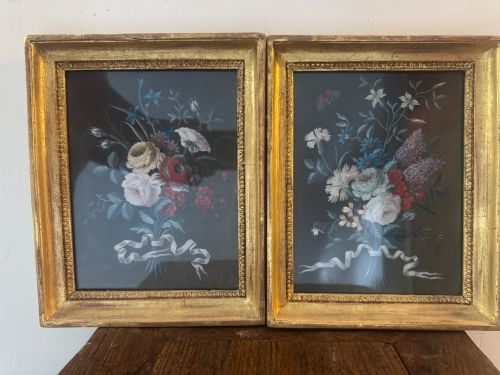
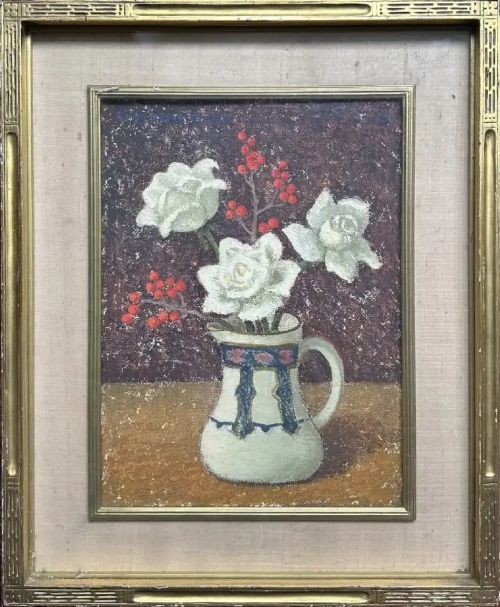
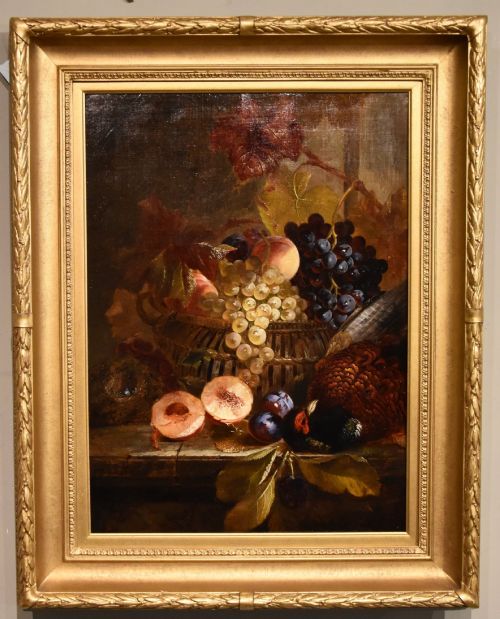
A gold frame still life centres on oil paintings of fruit and everyday domestic arrangements, housed in ornate or moulded wooden borders finished in gilt or gold leaf. These works span from the mid-nineteenth century through the Victorian era and into mid-century European modernism, capturing tangible textures of apples, grapes and vessels.
Buyers browsing this selection encounter nineteenth-century British and French canvases alongside post-impressionist compositions and mid-century European studies. The unifying element across these varied periods remains the oil on canvas medium paired with a prominent gilded enclosure, whether simple or deeply carved.
The subjects focus heavily on dessert fruit and botanical arrangements, reflecting centuries of interior display traditions. Each piece balances the painter's brushwork with the luminous reflection of the surrounding frame.
Materials and construction
The foundation of these works is oil paint applied to stretched canvas or wooden panels, building up layers of rich pigment to describe the skin of fruit and the sheen of glazed pottery. Artists utilised traditional oils to achieve deep shadows and subtle highlights that catch the light.
The frames are constructed from wood, finished with layers of gilt or gold leaf to create a bright, reflective boundary around the canvas. This framing technique protects the edge of the fabric while drawing the eye directly into the painted composition.
Retail Price Guide 2026
Typical UK retail prices for gold frame still life, calculated from the Sellingantiques database of over a million retail prices indexed since 2003. This retail price guide relies exclusively on Sellingantiques data; no external sources or auction records are used, so the figures do not describe the wider market.
The inventory spans four distinct decades from the nineteenth and twentieth centuries, featuring oil on canvas framed in wood and gilt.
Assessing quality and depth
The distinction between standard works and finer examples lies in the precision of the brushwork and the depth of the oil pigment. Skilled painters render the translucent skin of grapes and the soft textiles of a tabletop with distinct physical presence.
Frame construction also dictates the standing of a piece, separating simple moulded timber from deep, hand-carved giltwood surrounds that complement the era of the canvas. The harmony between the painting's palette and the tone of the gold leaf determines the overall visual balance.
Maud Frances Eyston Sumner·Oliver Clare·Alfred Arthur Brunel de Neuville·James and William Ward
The Gold Frame Still Life Glossary
- Giltwood
- Wood carved and treated with a thin layer of gold leaf or metallic powder to create a bright, reflective surface.
- Oil on canvas
- A painting technique where pigmented oil paints are applied to a woven fabric support stretched over a wooden frame.
- Post-Impressionism
- An art movement following impressionism that explored expressive colours and structural forms beyond strict optical realism.
- Still life
- An artwork depicting mostly inanimate subject matter, typically commonplace objects such as fruit, flowers and vessels.
Frequently Asked Questions
Where do these paintings hang best?
These works suit dining rooms, libraries and hallways where traditional oil paintings add warmth and historical character to the interior space.
Avoid placing them in direct sunlight or damp areas to protect both the oil canvas and the wooden gilt frame from degradation.
How do I identify a Victorian oil painting?
Victorian canvases often feature detailed realism focusing on nature, domestic scenes or traditional fruit arrangements with rich, dark varnish layers.
Examining the stretcher bars, canvas texture and framing style helps confirm the nineteenth-century origins of the piece.
What defines mid-century European still life?
Mid-century European compositions move away from strict academic realism, employing bolder brushstrokes and simplified forms to render everyday objects.
These later works bring a brighter, more modernist sensibility while retaining the traditional oil medium and gilt framing.