
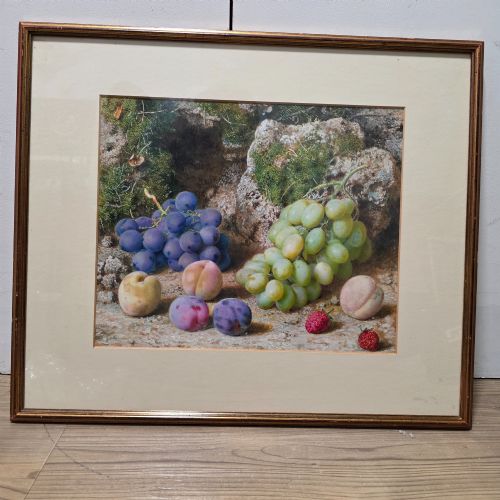
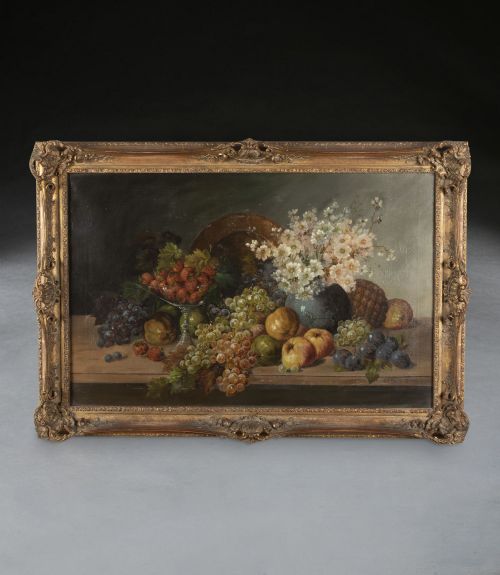


Victorian Fruit Still Life
These Victorian fruit still life pieces capture the rich texture of 19th-century domestic interiors and bring traditional visual warmth into a room.
Victorian fruit still life paintings
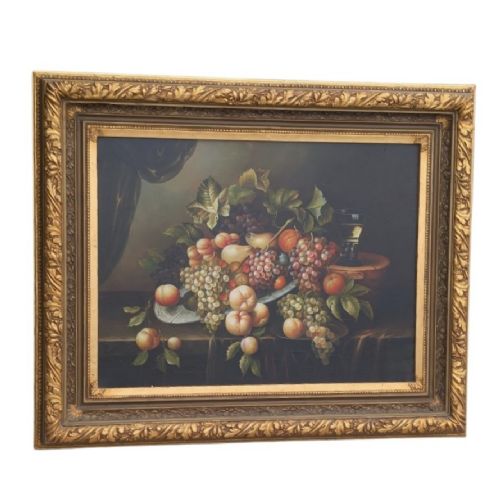
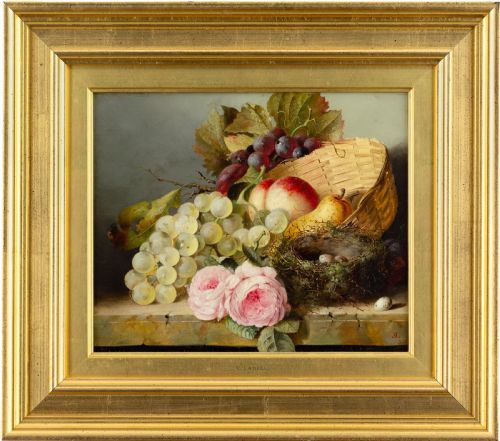
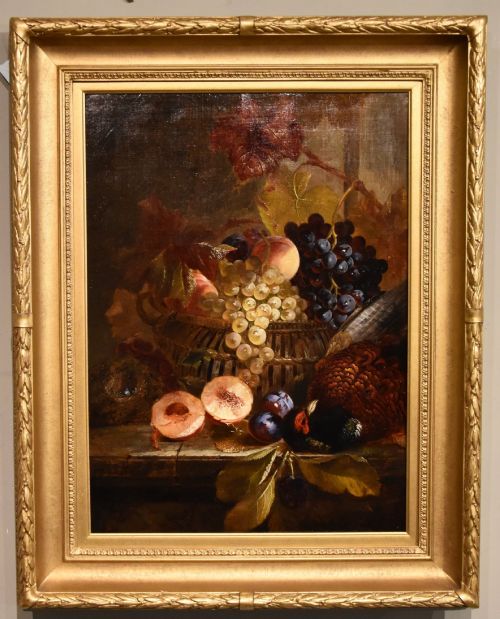
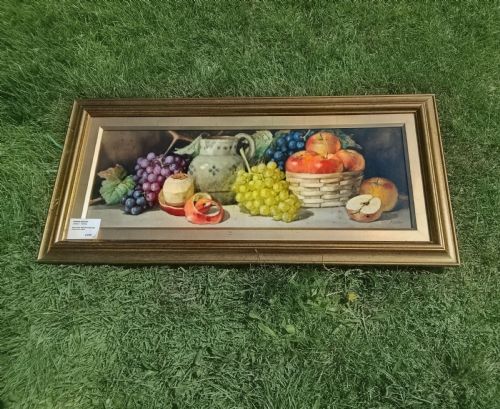
A victorian fruit still life represents a tradition of detailed botanical and domestic arrangement from the nineteenth century. Buyers encounter oil paintings on canvas, porcelain panels, and watercolour on paper depicting natural harvest arrangements.
The compositions frequently include wicker baskets, Chinese ginger jars, walnuts, apples, grapes, and melons. Some works incorporate birds' nests or exotic birds alongside the traditional arrangement of produce.
Most examples date from the nineteenth century, including specific works attributed to known artists active between the mid and late Victorian period. These paintings range from intimate watercolours to large oil works housed in giltwood frames.
Materials and technique
Artists painted primarily in oil on canvas, though some works utilise watercolour on paper or oil paint applied directly to porcelain panels. Canvases are stretched over wood supports and occasionally housed within heavy gilt or gesso frames.
Techniques rely on careful layering of oil paint to render the varied textures of fruit skins, porcelain glazes, and woven wicker. Giltwood and gesso frames provide a complementary decorative finish that enhances the depth of the canvas.
Retail Price Guide 2026
Typical UK retail prices for victorian fruit still life, calculated from the Sellingantiques database of over a million retail prices indexed since 2003. This retail price guide relies exclusively on Sellingantiques data; no external sources or auction records are used, so the figures do not describe the wider market.
Listings feature works in oil on canvas, oil on porcelain, and watercolour on paper from the 19th century.
Judging quality
Quality rests upon the precision of brushwork and the artist's ability to render light across contrasting surfaces such as smooth fruit skins and rough basketry. Finer examples display subtle tonal variations that give grapes and melons a tangible sense of volume.
The integration of secondary elements, such as porcelain jars or avian subjects, influences the visual complexity of the composition. Original frames, particularly carved giltwood and gesso surrounds, add significantly to the historical integrity of the piece.
Edward Ladell·John Sherrin·William Rayworth·E Cremer·Oliver Clare·George Lance
The Victorian Fruit Still Life Glossary
- Gesso
- A plaster-like material applied to wooden frames before gilding, allowing for ornate moulded decoration. It forms the base for the gold leaf finish found on many nineteenth-century picture frames.
- Porcelain panel
- A flat ceramic support used instead of canvas for oil painting. This smooth surface allows for minute detail and a luminous finish.
- Giltwood
- Timber that has been coated with a thin layer of gold leaf. It provides a bright, reflective border characteristic of period framing.
- Watercolour on paper
- A painting method using water-soluble pigments on a paper support. This medium yields a lighter, more transparent quality than oil paint.
Frequently Asked Questions
What is a victorian fruit still life?
A victorian fruit still life is a nineteenth-century artwork depicting arrangements of produce, often including items like grapes, apples, and melons.
These pieces reflect the Victorian appreciation for abundance and domestic decoration, executed in oil or watercolour.
What materials were used?
Painters utilised oil on canvas, oil on porcelain panels, and watercolour on paper.
Works are frequently mounted in wood, gilt, or gesso frames that reflect period framing styles.
How do I date these paintings?
Dating relies on recorded artist lifespans, stylistic markers of the nineteenth century, and framing materials.
Many pieces carry specific dates or attributions pointing to the mid to late 19th century.
How should I display them?
These paintings suit traditional interior settings where their rich colours and heavy frames can complement existing decor.
Ensure they are placed away from direct sunlight to protect the pigments on canvas or paper.