


French Village Oil Painting
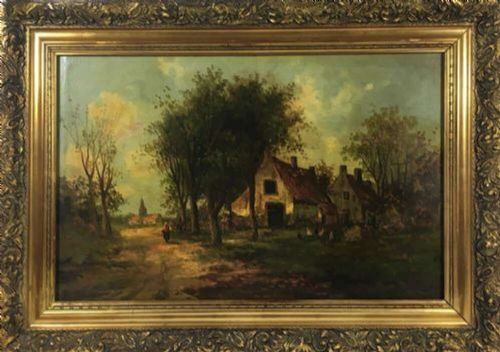
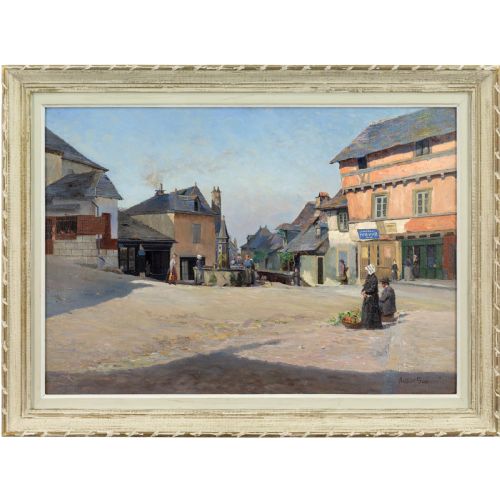
A French village oil painting captures rural life and provincial architecture through evocative brushwork.
French Village Oil Painting
A french village oil painting brings rural and provincial scenery into the home, depicting domestic buildings, streets, and agricultural landscapes. Buyers encounter works stretching from the eighteenth century through to the mid-twentieth century, capturing changing interpretations of pastoral communities.
The selection here encompasses specific artistic movements, including Post-Impressionism, French Impressionism, and the Barbizon School. These canvases range from intimate panels to larger compositions framed in wood and giltwood.
Rural streetscapes, farmyards, and coastal fishing villages feature prominently across the available works. Artists employ varied approaches, from traditional academic renderings to avant-garde and abstracted modern interpretations.
Materials and construction
Pigments bound in oil are applied to supports of woven canvas or rigid wood panels. These materials provide the tactile surface texture characteristic of these regional landscapes.
Works are frequently housed within period wood and giltwood frames that complement the painting. The combination of oil paint and textured grounds allows artists to build up tone and atmosphere across the surface.
French Village Oil Painting Retail Price Guide 2026
Typical asking prices for french village oil painting among the pieces listed under this phrase on Sellingantiques today, from the lower quarter to the upper quarter. They describe what is for sale here now, not the wider market.
Listings span from the eighteenth century to the mid-twentieth century, utilising oil on canvas and wood panel.
Assessing quality and execution
Quality rests in the confidence of the brushwork and the artist's command of light within a provincial setting. Superior examples demonstrate deliberate handling of pigment that creates depth in architectural and natural forms.
The integration of the frame with the canvas contributes to the overall integrity of the piece. Well-preserved surfaces retain their original pigment vibrancy and structural stability across canvas and panel.
Arthur Gué·Paul-Élie Gernez·Mario Pinetti·Mercedes Legrand·Jeffrey Pratt·Eugene Battaille·Henri Therme·Martin Lamotte
The French Village Oil Painting Glossary
- Barbizon School
- A nineteenth-century French art movement dedicated to realistic, tonal landscape painting en plein air. Practitioners focused on rural scenery and naturalistic light.
- Oil on Canvas
- A painting medium where pigments are suspended in a drying oil and applied to stretched woven fabric. This combination allows for rich blending and textured impasto.
- Post-Impressionism
- An artistic development following Impressionism that retained vibrant colour while exploring heavier structure and emotional resonance. Artists pushed form beyond mere optical recording.
- Giltwood
- Wood carved and coated with a thin layer of gold leaf or gilt powder. It is commonly found on traditional frames surrounding European fine art.
- Wood Panel
- A rigid wooden support used instead of fabric for painting. It provides a stable, smooth ground for detailed brushwork.
French Village Oil Painting: Frequently Asked Questions
What periods do these paintings cover?
The selection spans from the eighteenth century through to the mid-twentieth century.
Works reflect diverse movements such as the Barbizon School, Impressionism, and mid-century modernism.
How were these artworks created?
Artists used oil paint applied to woven canvas or rigid wood panels.
Many pieces retain their original wood or giltwood frames.
Where do these scenes take place?
The compositions depict French rural locations, including village squares, farmyards, and coastal fishing ports.
Specific regional settings such as Normandy, Corrèze, and Ile d'Oleron appear in the titles.
How should I display a panel painting?
Rigid wood panels benefit from stable indoor environments away from direct heat sources.
Proper framing helps protect the edges of both canvas and panel supports.