




Stone Bridge Oil Painting
A stone bridge oil painting brings quiet rivers and historic masonry into a room through rich brushwork.
Stone Bridge Oil Painting
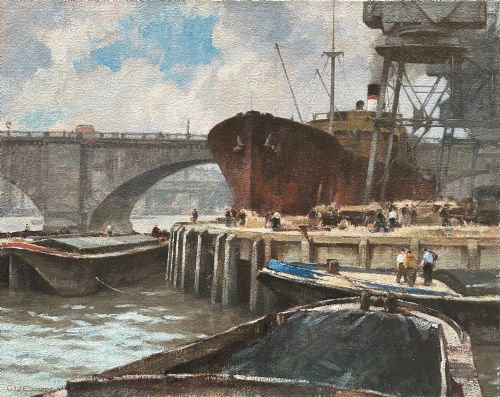
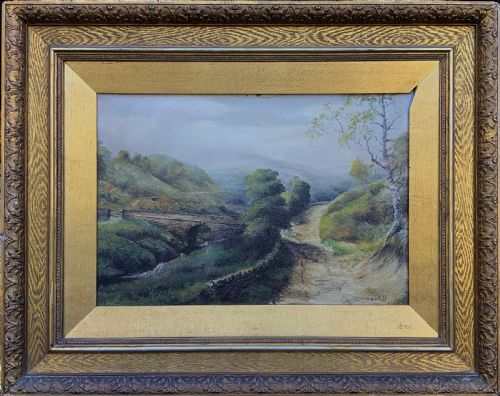
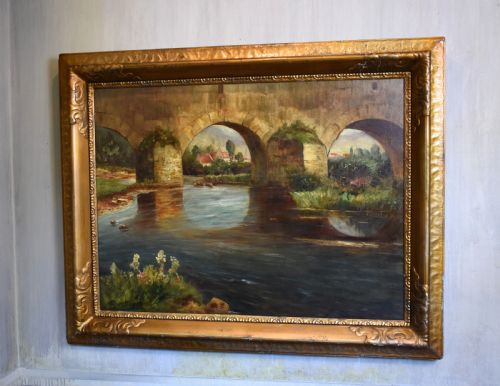
A stone bridge oil painting captures structural engineering set against rural rivers, Welsh valleys, and urban canals. These works span the Victorian era, the nineteenth century, and the early decades of the twentieth century.
Most examples found here present landscapes executed by British and European artists working in realist, impressionist, and post-impressionist idioms. Subjects range from Scottish highlands and Yorkshire mills to Venetian waterways.
Canvases and wood panels form the primary supports for these landscapes, often framed in period gilt wood. The physical form ranges from intimate panel studies to large wall canvases.
Materials and technique
Artists built these compositions using oil paint applied to stretched canvas, prepared wood panels, and occasionally terracotta plates. The medium allowed for both smooth academic blending and thick, textured impasto marks.
Gilt wood frames completed the works, providing a decorative border that reflected light off the painted surface. Painters layered pigments to render the texture of aged masonry and the reflection of water beneath arches.
Stone Bridge Oil Painting Retail Price Guide 2026
Typical asking prices for stone bridge oil painting among the pieces listed under this phrase on Sellingantiques today, from the lower quarter to the upper quarter. They describe what is for sale here now, not the wider market.
Regional British landscapes dominate the selection, alongside continental European scenes from Venice.
Evaluating quality
Quality rests upon the artist's handling of light and perspective, particularly in how the stone architecture integrates with the surrounding natural landscape. Stronger works demonstrate confident brushwork and a balanced composition that guides the eye through the arch.
The integrity of the support and the preservation of the pigment layer dictate the longevity of the piece. Finer examples retain their original surface tension and frame harmony without excessive retouching.
Cyril Walduck Edwards·Florence Adelina Hess·Franz Reder Broili·Charles Edmund Rene His·Fred Elwell·Owen Bowen
The Stone Bridge Oil Painting Glossary
- Impasto
- Paint applied thickly to a canvas or panel, standing out in relief from the surface. This technique adds tactile weight to foliage or the rough blocks of an architectural arch.
- Wood Panel
- A rigid flat wooden support used by artists instead of woven fabric. Panels provide a stable surface for detailed brushwork.
- Gilt Wood
- Carved timber finished with a thin layer of gold leaf or metallic gilt. These frames add warmth and period context to nineteenth and twentieth-century canvases.
- British Impressionism
- A painting style characterised by visible brushstrokes and an interest in natural light developed by British artists. It departs from strict academic realism to capture momentary atmospheric effects.
Stone Bridge Oil Painting: Frequently Asked Questions
How do I clean a painted canvas?
Surface dust can be removed gently with a soft, dry artist brush. Avoid using water, liquid cleaners, or household cloths on the pigment.
Professional conservators should handle deeper cleaning or varnish removal. Improper moisture exposure damages both the oil medium and the canvas substrate.
Are these works signed by the artist?
Many pieces carry signatures, monograms, or attribution to specific regional schools. Signatures often appear in the lower corners of the canvas or panel.
Unsigned works are attributed based on stylistic evidence, subject matter, and historical framing. Documentation from previous exhibitions also aids attribution.
Where should I hang an oil painting?
Select an interior wall away from direct sunlight and sudden temperature shifts. Stable humidity prevents wood panels from warping and canvas from sagging.
Keep paintings away from active fireplaces and damp exterior walls. Proper placement preserves the structural integrity of both paint and frame.
What frames are original to these pieces?
Nineteenth and early twentieth-century works frequently retain their period gilt wood frames. These frames show age-appropriate wear and patination matching the canvas.
Replacement frames occur when earlier mouldings deteriorated beyond repair. Matching a period frame enhances the historical presentation of the artwork.