
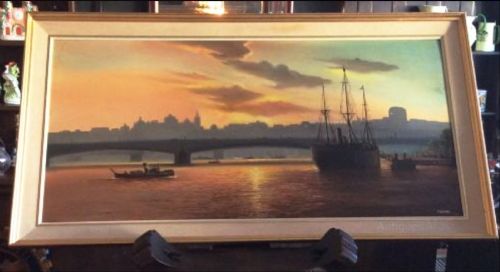
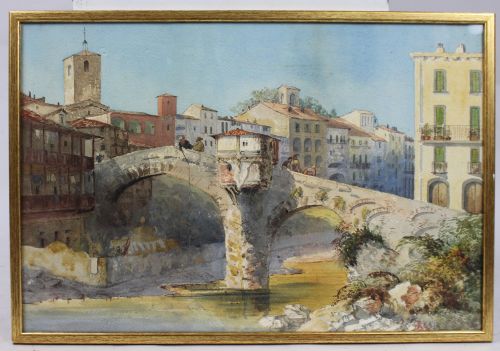
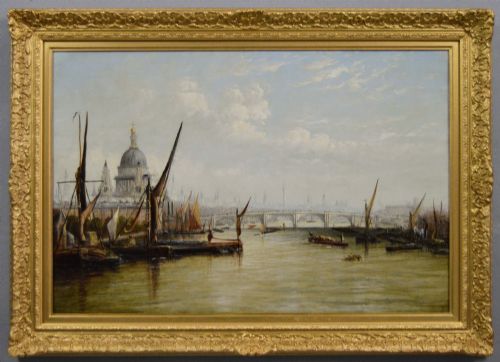
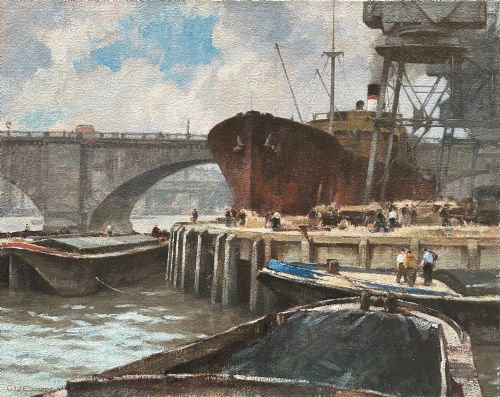



Antique Bridge Painting
When you search for an antique bridge painting, you find historic depictions of rivers, canals, and architectural spans captured in oil and watercolour.
Antique Bridge Painting
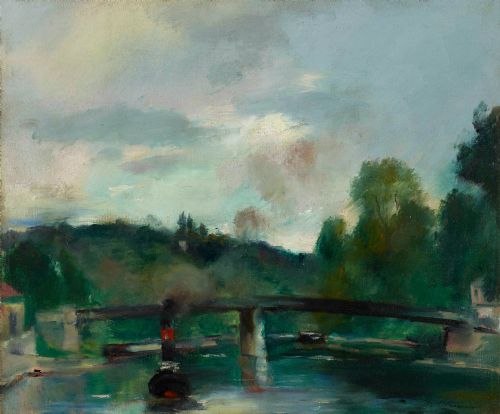
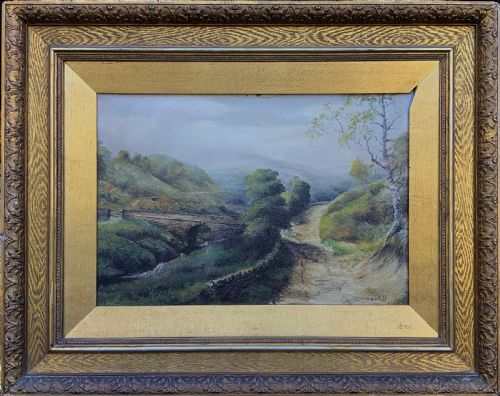
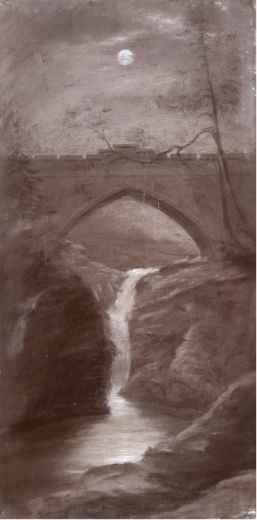
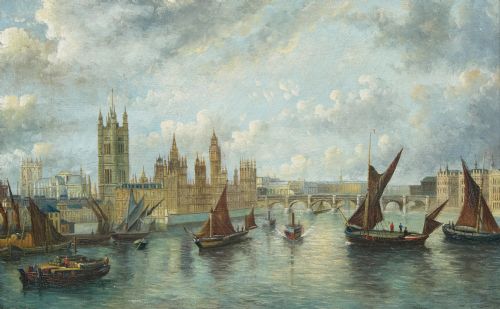
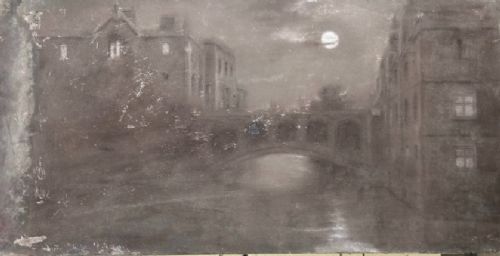
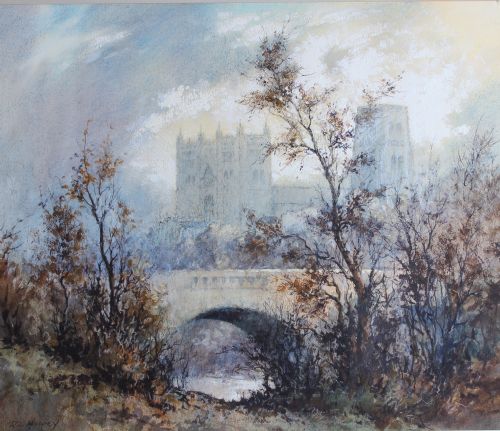
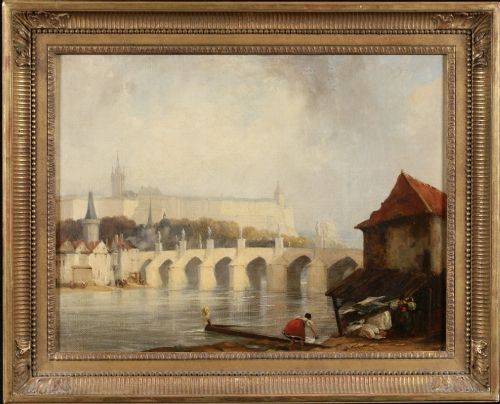
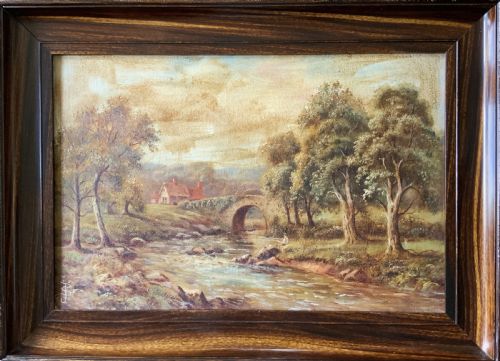
An antique bridge painting captures structural spans set within rural, urban, or maritime landscapes, ranging from stone medieval arches to industrial iron crossings. These artworks frequently document specific locations across Britain and continental Europe, including the Thames in London, Venetian canals, and Highland streams.
The selection encompasses works from the nineteenth century through the early twentieth century, spanning Victorian academic traditions and later British and European impressionism. Buyers encounter diverse scales, from intimate watercolour sketches on paper to large oil paintings on canvas and wood panel.
Many pieces record historical infrastructure that has since been altered or replaced, offering topographical value alongside artistic merit. Townscapes and pastoral river scenes predominate, often featuring figures, boats, or livestock near the water's edge.
How They Were Made
Artists worked primarily in oil and watercolour, applying pigments to prepared canvas, wood panels, heavy paper, or occasionally ceramic plates. Oil paintings often utilise layered glazes and textured brushwork to render water reflections and masonry, while watercolours rely on transparent washes and fine charcoal underdrawings.
Supports varied according to the period and scale of the composition, with nineteenth-century works typically utilising stretched canvas or card, and early twentieth-century examples frequently employing board. Framing and stretching techniques reflect workshop practices of the period, occasionally retaining inscribed stretcher bars and artist studio stamps.
Antique Bridge Painting Retail Price Guide 2026
Typical asking prices for bridge painting among the pieces listed under this phrase on Sellingantiques today, from the lower quarter to the upper quarter. They describe what is for sale here now, not the wider market.
The selection includes depictions of urban Thames crossings alongside remote highland stone bridges and continental waterways.
What Varies in Quality
Compositional balance and spatial depth distinguish accomplished bridge paintings from standard topographical records, particularly in how the artist integrates architectural geometry with natural surroundings. Stronger works demonstrate confident handling of light and atmospheric perspective, effectively capturing water movement and shadow upon stone structures.
The preservation of the paint surface and paper support significantly influences overall integrity, including the stability of the pigment and the absence of heavy discolouration or damp damage. Provenance, legible artist signatures, and period inscriptions on reverse stretchers or mounts add verifiable context to individual pieces.
Francis Moltino·Henri Ottmann·Sydney Yates Johnson·William Grant Murray·Frederick Waters Watts·Henry Dawson·John Wilson Carmichael·George Edmund Butler·George Fall·Albert Kinsley·William Greaves·Robert Gallon·Thomas Colman Dibdin·Edward Richardson·WT Longmire·James Drummond·William Grey·William Alister MacDonald·Philip Connard·Clarkson Frederick Stanfield·Edwin Dolby·John Wright Oakes·Fred Elwell·David Motley·Thomas Danby
The Antique Bridge Painting Glossary
- Watercolour
- A painting method where fine pigment is suspended in a water-soluble binder and applied to paper. It allows for luminous, transparent washes of colour.
- Oil Paint
- A slow-drying medium composed of pigments suspended in drying oils such as linseed. This technique permits rich blending and varied surface textures.
- Canvas
- A heavy woven fabric stretched across a wooden frame to serve as a painting surface. It was widely adopted for oil paintings from the nineteenth century onward.
- Panel
- A rigid flat support made of wood used instead of canvas for painting. Panels offer a firm surface favoured by many nineteenth-century landscape artists.
- Provenance
- The documented history of ownership of an artwork. It helps establish authenticity and records the passage of the piece through time.
Antique Bridge Painting: Frequently Asked Questions
How do I date an antique bridge painting?
Dating relies on stylistic evidence, artist signatures, and period framing materials. Inscriptions on the reverse stretcher or backing paper often record specific dates and locations.
Changes in architectural styles depicted within the artwork also provide a reliable chronological indicator for the composition.
Where were these bridge scenes usually painted?
Artists painted locations across Britain and Europe, with frequent depictions of London river crossings, Welsh valleys, and Venetian canals. Urban and rural waterways formed primary subjects for topographical and impressionist painters alike.
Many works record specific bridges that held historical or commercial importance during the nineteenth and early twentieth centuries.
How should I care for an antique watercolour?
Watercolours require protection from direct sunlight to prevent the fading of delicate pigments on paper. Displaying them away from moisture sources preserves the paper support and prevents foxing.
Acid-free mounting materials and UV-filtering glass help maintain the long-term stability of works on paper.
What is the difference between oil and watercolour bridge paintings?
Oil paintings utilise heavy pigments on canvas or wood panel, offering rich textures and deep tonal layering. Watercolours employ translucent washes on paper, achieving lighter atmospheric effects.
Both mediums were widely used to capture river landscapes, differing primarily in weight, texture, and surface finish.