




Nineteenth Century Jars
Nineteenth century jars are vessels of storage and display that bring period character and hand-finished detail to a room.
Nineteenth Century Jars
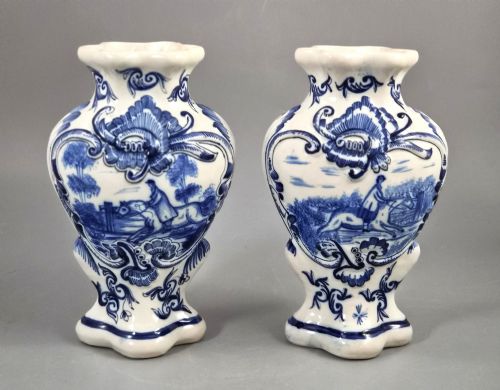
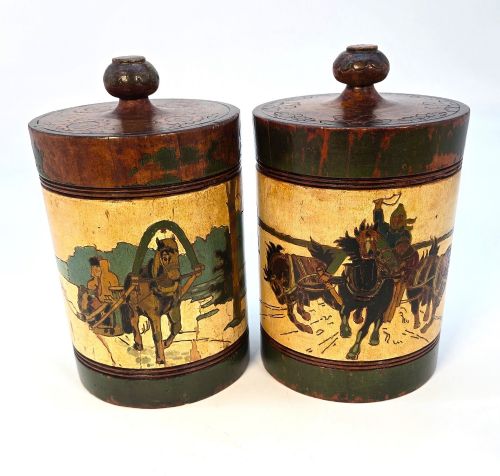
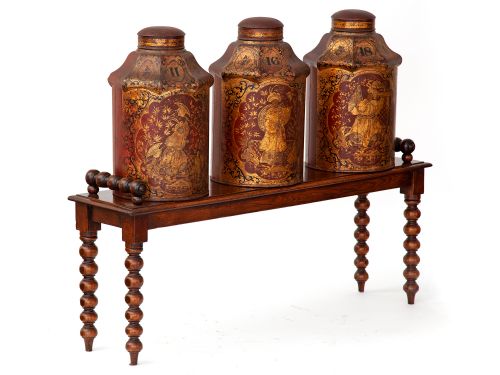
Nineteenth century jars encompass a diverse group of utilitarian and decorative vessels created across Europe and Asia. When you explore this selection, you encounter forms ranging from apothecary drug jars and tobacco containers to large ornamental porcelain urns and covered storage pieces.
The objects frequently reflect the stylistic preferences of the Victorian era, the Meiji period, and the Qing dynasty. Many of these pieces serve dual purposes today, functioning as lamps, decorative accents, or traditional display containers in domestic interiors.
How they were made
Maker workshops utilised traditional media such as porcelain, earthenware, ceramic, and glass, frequently combining them with brass mounts, gold leaf, or carved wood. Surface decoration required skilled hand-painting, glazing, and intricate blue-and-white or polychrome detailing.
Techniques varied from the slip-cast earthenware and majolica processes of European factories to the refined throwing and hand-painting traditions of Japanese kilns and Chinese dynasties.
What varies in quality
Quality in nineteenth century jars depends upon the precision of the hand-painted decoration, the clarity of the glaze, and the preservation of original lids or mounts. Pieces produced by documented workshops or notable makers generally exhibit superior artistic execution.
The integrity of the material, whether delicate porcelain or heavy ironstone, and the depth of colour within patterns like Imari or Famille Rose distinguish standard utility wares from exhibition-grade pieces.
Fourmaintraux-Courquin·Mason’s Ironstone·Kinrin Workshop·Samson of Paris·Minton
The Nineteenth Century Jars Glossary
- Albarello
- A type of majolica earthenware jar originally used by apothecaries for holding ointments and dry drugs. These cylindrical vessels often feature an indented waist for easier handling.
- Imari palette
- A distinct decorative style originating in Japan, characterised by a strong colour scheme of underglaze blue, iron red, and gilt highlights. Pieces in this palette were widely imitated in Europe.
- Majolica
- A type of earthenware coated with an opaque tin-lead glaze and brightly painted. It gained popularity in the nineteenth century for sculptural and utilitarian forms.
- Tsubo
- A large Japanese storage jar traditionally used for holding tea leaves or other dry goods. They are valued for their substantial proportions and robust ceramic bodies.
Nineteenth Century Jars: Frequently Asked Questions
How do I clean nineteenth century jars?
Dust porcelain and glass gently with a soft dry cloth. Avoid soaking painted or gilded surfaces in water.
Keep earthenware and unglazed items away from excessive moisture to protect the historic material.
Were these jars used for food storage?
Many nineteenth century jars served practical domestic functions, including holding tobacco, tea, or dry provisions. Apothecary versions held medical compounds and oils.
Today, these vessels are primarily decorative or used for dry display rather than modern food storage.
How do I identify a Meiji period jar?
Meiji period Japanese pieces often display characteristic motifs and refined porcelain or bronze techniques dating from the late nineteenth century. Look for specific workshop signatures or traditional Imari and Kutani decorative styles.
Compare the glaze quality and painting precision with documented examples from the same era.
Can I use an antique jar as a lamp?
Conversion into table lamps is a traditional method of giving nineteenth century jars a practical role in modern lighting. Many oriental jars and vases arrived with electrical fittings already installed.
Ensure any wiring meets current safety standards while preserving the original body of the vessel.