



Nineteenth Century French Vases
Nineteenth century french vases bring decorative presence to a room through varied porcelain bodies, bronze castings, and classical revival forms.
Nineteenth Century French Vases
Nineteenth century french vases encompass diverse decorative vessels including campana urns, cassolettes, and jardinieres created across the century. Buyers encounter forms ranging from simple goblet shapes to monumental lidded garnitures designed for mantelpieces and display furniture.
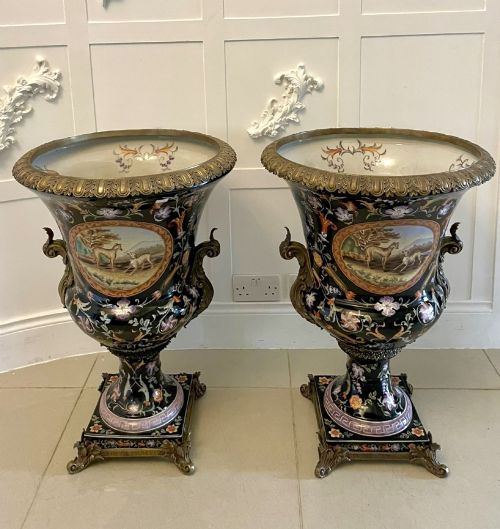
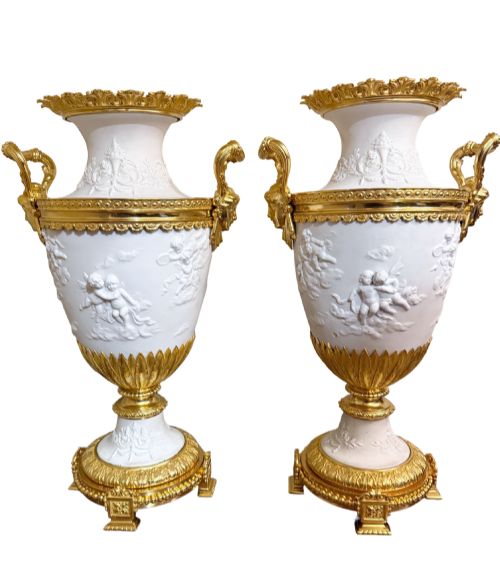
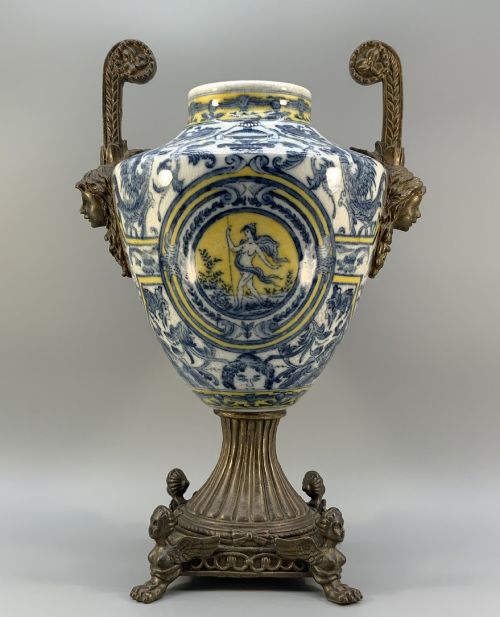
The selection on this page relies heavily on porcelain bodies paired with gilt bronze or ormolu mounts, alongside cast bronze and faience pieces. These items draw on historical aesthetics such as Rococo Revival, Neoclassical, and Renaissance Revival styles.
Origins span major French production centres and makers, reflecting the tastes of the Georgian, Regency, and Victorian eras adapted through Parisian workshops.
Materials and construction
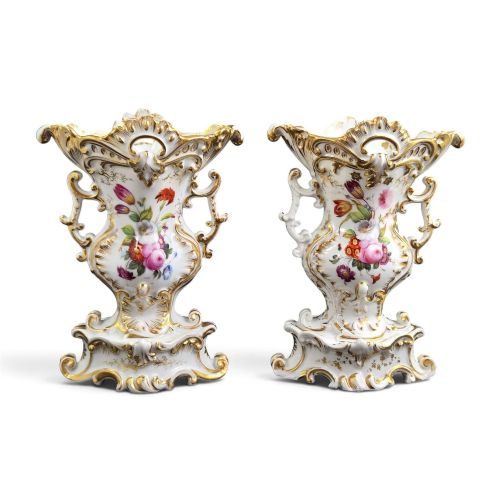
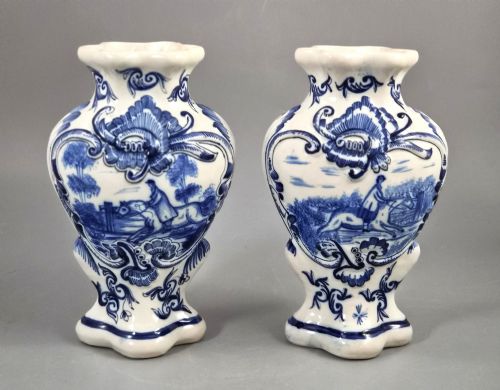
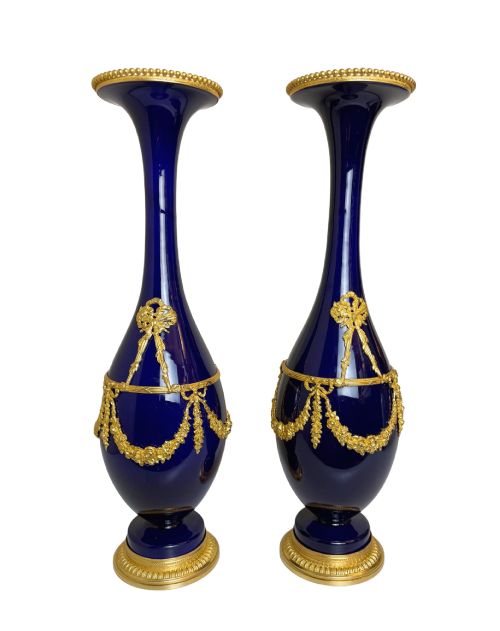
Porcelain bodies form the core of many pieces, often decorated with hand-painted enamel scenes, floral motifs, or rich cobalt blue glazes. These ceramic elements frequently integrate with cast bronze mounts, ormolu trim, and brass hardware.
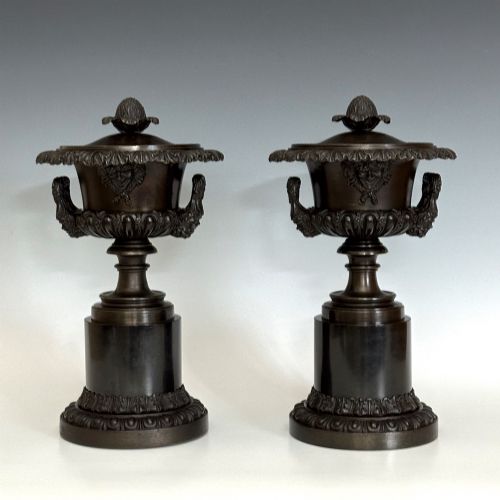
Metalwork utilises techniques like lost-wax casting for bronze and spelter figures, finished with gilding or silvering. Marble bases in siena and other varieties provide stable, heavy foundations for tall metal urns and cassolettes.
Exotic birds perch permanently on painted porcelain surfaces, requiring no feeding whatsoever.
Standards of execution
Quality rests primarily on the sharpness of the metal chasing and the depth of the casting in the ormolu and bronze mounts. Finer pieces demonstrate crisp detail in foliate scrolls and figural elements without residual casting seams.
Ceramic quality shows in the control of the glaze, the precision of hand-painted enamels, and the integration between the porcelain body and its metal mounts. Superior execution avoids clumsy joins and shows balanced proportions across pairs and garniture sets.
Jacob Petit·Fourmaintraux-Courquin·Barbedienne
The Nineteenth Century French Vases Glossary
- Ormolu
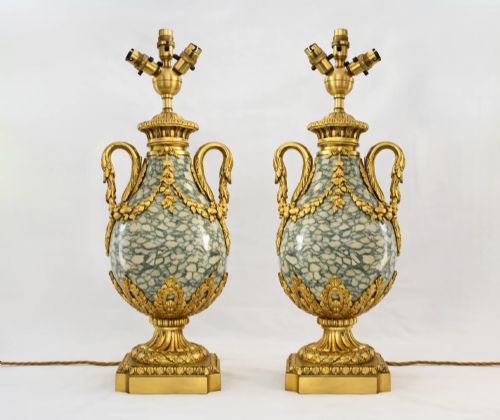
- Gilt bronze mounted on decorative objects, created by applying finely ground gold mercury amalgam to cast bronze. This technique produced a rich, durable golden surface on nineteenth-century mounts and handles.
- Cassolette
- A decorative vessel shaped like a vase or urn featuring a reversible lid that functions as a burner or solid cover. These pieces often incorporate marble and gilt bronze.
- Garniture
- A matching set of three or more vases or urns designed to sit together symmetrically on a mantelpiece or sideboard. They typically feature a central larger vessel flanked by smaller matching companions.
- Campana urn
- A classical vase shape resembling an inverted bell with flaring rims and looped handles. This ancient Roman form inspired numerous nineteenth-century French bronze and porcelain adaptations.
Nineteenth Century French Vases: Frequently Asked Questions
What is an old paris porcelain vase?
Old Paris porcelain refers to items produced by numerous small independent factories operating in and around Paris during the late eighteenth and nineteenth centuries. These pieces are characterised by expressive hand-painted decoration and bright gilding.
They often mimic the soft-paste look of earlier royal manufactories while utilising harder porcelain bodies suited for domestic display.
How do you display a garniture set?
Garniture sets are traditionally arranged on a mantelpiece, sideboard, or large console table with the tallest vase in the centre and the matching pair flanking it. This balanced layout creates a focal point in a formal room.
Ensure the surface is stable and deep enough to accommodate the wide bases and handles common to nineteenth-century urns.
What distinguishes sevres style vases?
Sevres style pieces emulate the signature aesthetic of the historic royal French porcelain manufactory, featuring rich coloured grounds like cobalt blue or pink paired with elaborate gilding. They frequently display hand-painted pastoral scenes or portraits.
Many nineteenth-century pieces adopt these decorative conventions as a tribute rather than direct factory output.