
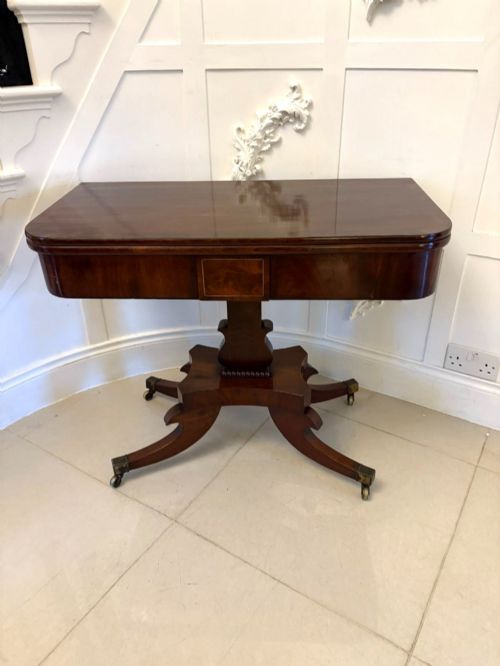
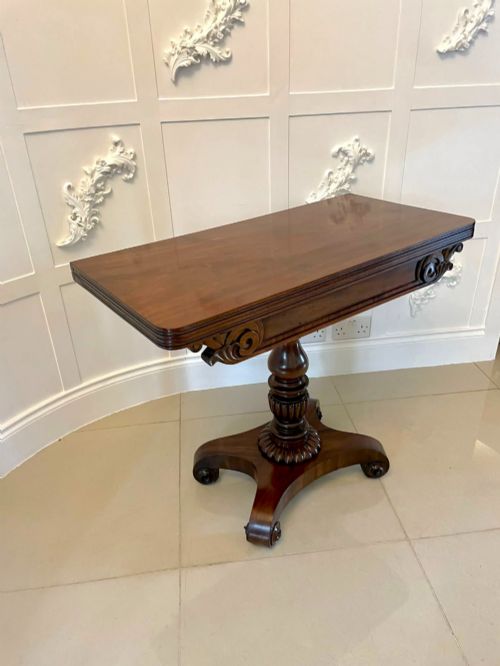

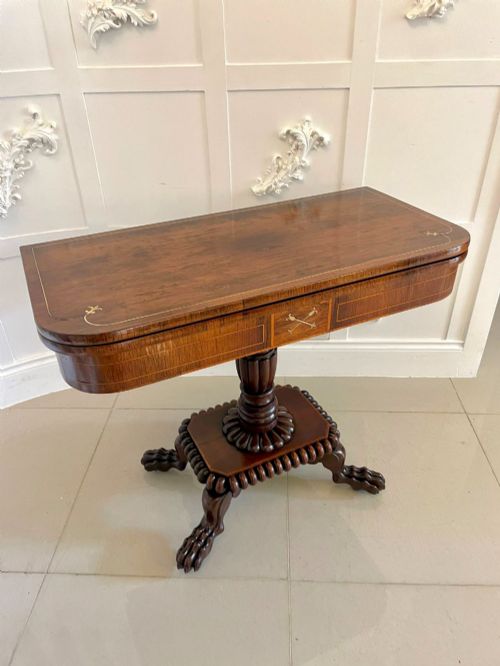
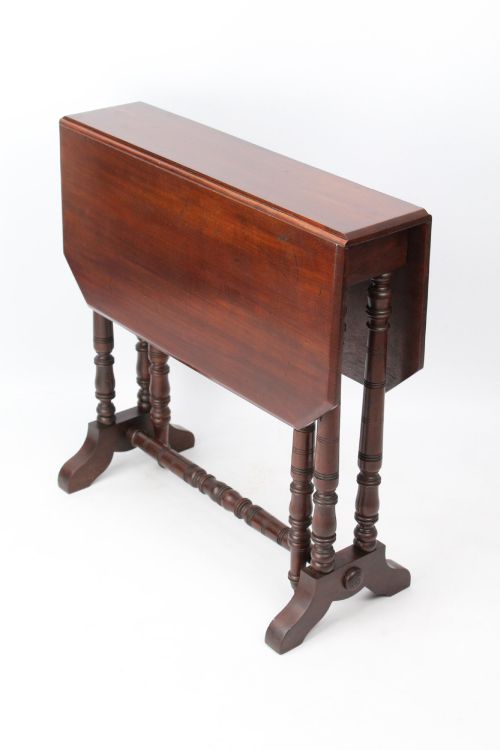
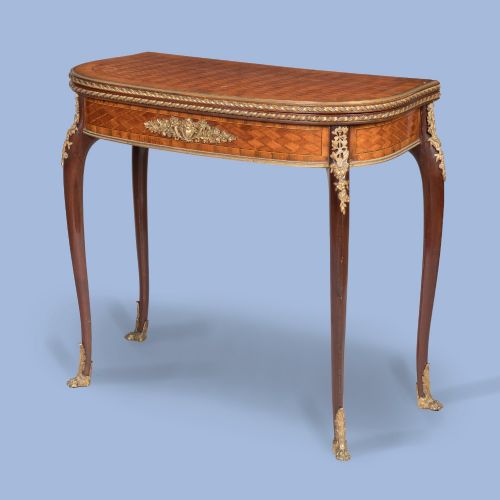
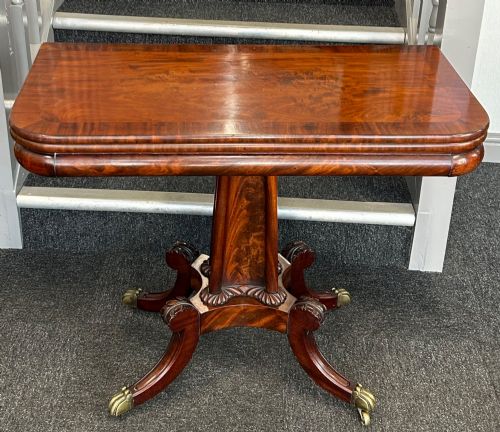


Nineteenth Century Folding Table
A nineteenth century folding table brings adaptable surface space and period craftsmanship into a room.
Nineteenth Century Folding Table
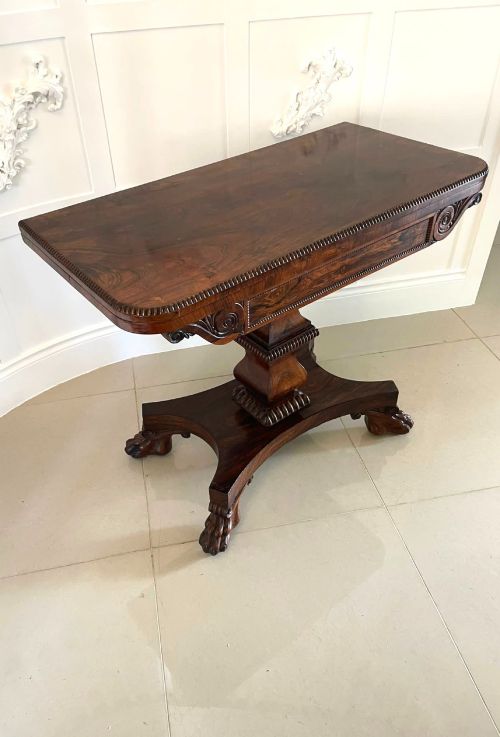
A nineteenth century folding table provides a versatile surface designed to transform from a compact console or side piece into a larger table for tea, cards or games. These pieces emerge from periods spanning Georgian, Regency, William IV and Victorian eras, reflecting changing domestic habits.
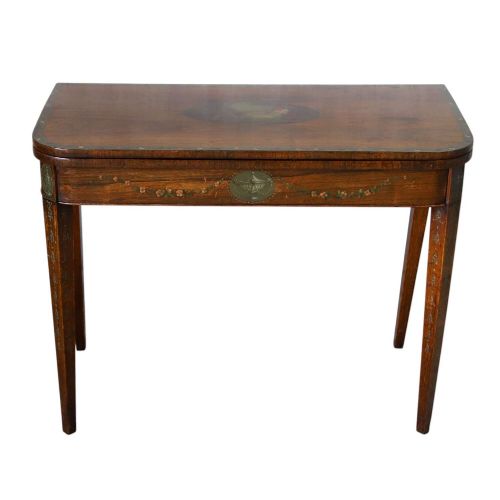
The most common formats on this page are card tables, tea tables and Sutherland tables, which fold, swivel or drop to save space when not in use. Mahogany and rosewood form the backbone of these offerings, often shaped into D-shapes, octagonal forms or rectangular silhouettes.
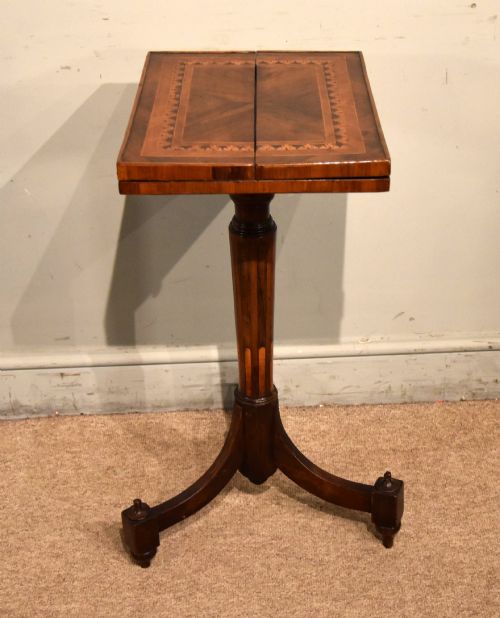
Examples range from restrained mahogany models to ornate ormolu-mounted parquetry and brass-inlaid rosewood designs. Regional variations such as Anglo-Indian Hoshiapur work and Maltese olive and satinwood pieces also appear among the standard British cabinetmaker styles.
Materials and construction
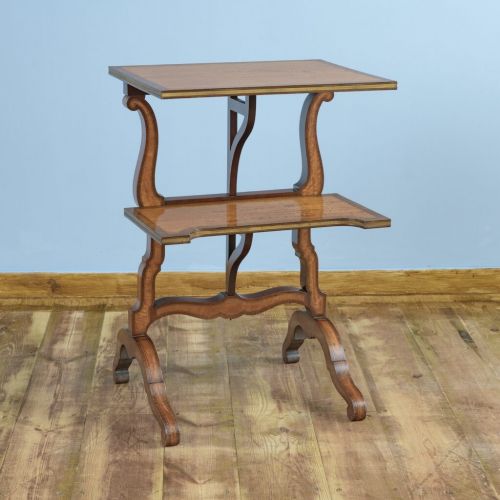
Cabinetmakers built these tables using dense timbers like mahogany, rosewood and burr walnut, frequently applying veneers of satinwood, kingwood or birdseye maple over secondary woods. Brass inlay, ormolu mounts and carved wooden elements such as dolphin bases or lyre supports decorate the structural frames.
Hinged leaves, pivoting tops and drop-down mechanisms require precise joinery to ensure the surface remains level when opened. Timber selection prioritised figured grains that catch the light, finished with traditional polishes that highlight the natural pattern of the wood.
Some Regency tables feature carved wooden dolphins supporting the base rather than standard pillars.
Quality and craftsmanship
The distinction between standard utility pieces and exceptional examples rests on the depth of figure in the timber and the precision of the brass inlay or carved details. Finer tables exhibit crisp carving on pedestal bases and seamless alignment when the fold-over top is closed.
Attribution to known workshops or makers elevates a piece, as does the survival of original patination and uncompromised hinges and swivel mechanisms. The complexity of the parquetry, the choice of exotic veneers and the harmony of the proportions separate basic workshop items from top-tier productions.
George Bullock·Maison Giroux·François Linke·Gillows·William Trotter·Jenks & Woods
The Nineteenth Century Folding Table Glossary
- Sutherland table
- A narrow drop-leaf table with exceptionally small leaves supported by swinging gate legs. It folds down flat for storage against a wall.
- Card table
- A specialised folding table designed for evening card games, usually featuring a baize-lined interior surface when opened.
- Tea table
- A small folding or drop-leaf table utilised for serving tea in domestic settings during the eighteenth and nineteenth centuries.
- Ormolu
- Gilt bronze ornamentation applied to furniture, often cast and chased with decorative motifs.
- Parquetry
- Geometric wood mosaic work used for decorative surfaces on tabletops and cabinets.
Nineteenth Century Folding Table: Frequently Asked Questions
How do I use a folding table daily?
These tables function well as console or side pieces against a wall until you need extra surface area for dining, writing or entertaining. Simply swivel or unfold the top to reveal the extended board.
Keep the timber away from direct heat sources and strong sunlight to protect the polish and prevent the wood from warping over time.
What is the difference between a card table and a tea table?
Card tables typically open to reveal a baize or felt playing surface intended for games, often with storage space for counters inside the frame. Tea tables are designed primarily for serving refreshments and usually feature polished wooden tops when unfolded.
Both use folding, pivoting or fold-over mechanisms to reduce their footprint when not in active use.
How do I date a nineteenth century table?
Dating relies on stylistic clues, such as the heavy scrolling and rosewood veneers of the William IV period or the restrained classical lines of Regency pieces. Supporting hardware, timber choices and construction methods also help place the piece within a specific decade.
Cabinetmakers shifted from Georgian mahogany traditions toward elaborate Victorian walnut and aesthetic ebonised finishes as the century progressed.
Where should I place a Sutherland table?
Sutherland tables suit narrow spaces like hallways, landings or behind sofas because their dropped leaves create a very slim profile. They move easily around a room when you need a temporary surface for drinks or books.
Their gateleg action provides sturdy support when both leaves are raised for use.