

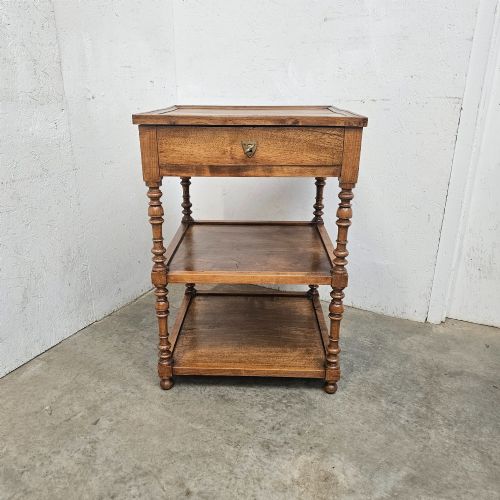

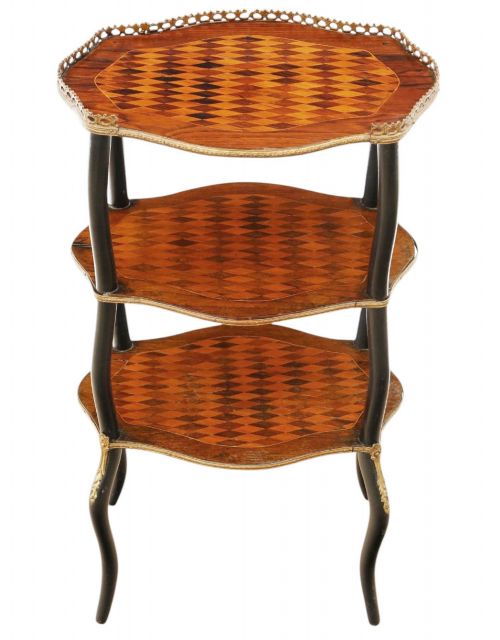
Antique Display Shelf Table
An antique display shelf table brings stacked tiers and open surfaces together for holding books, ornaments and everyday objects in any room.
Antique Display Shelf Table
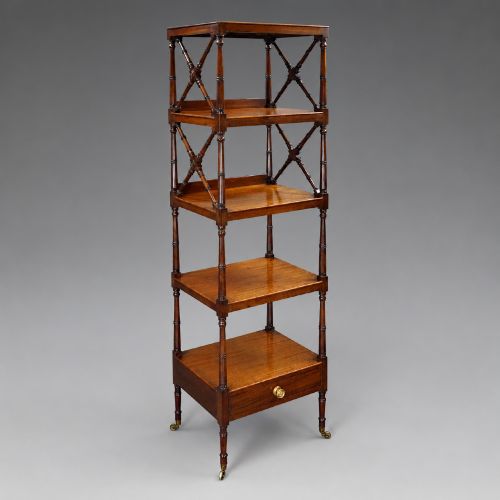
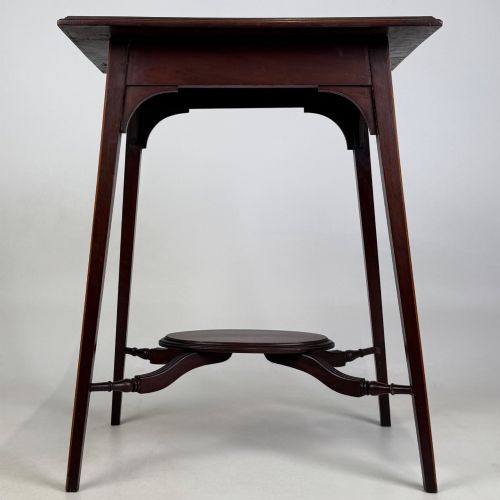
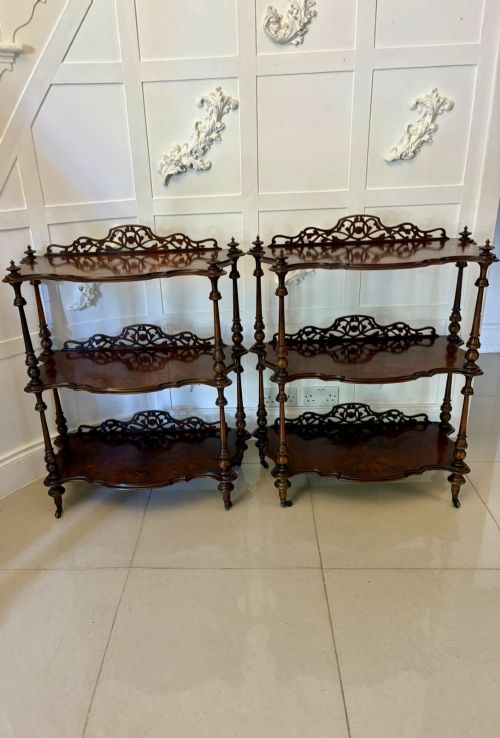
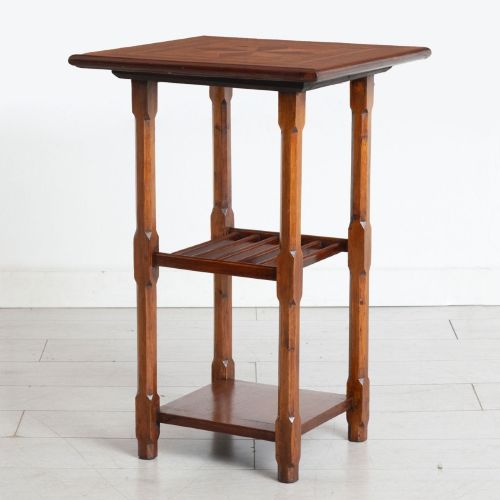
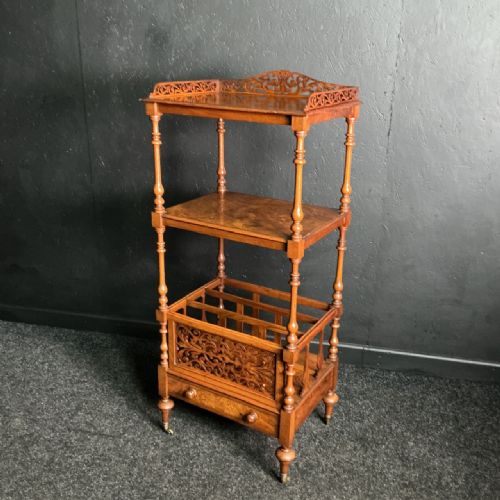
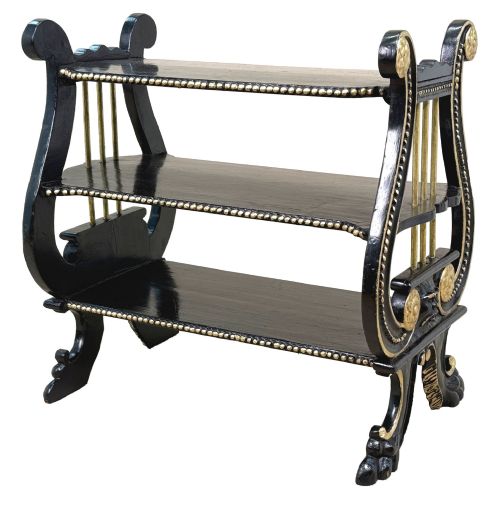
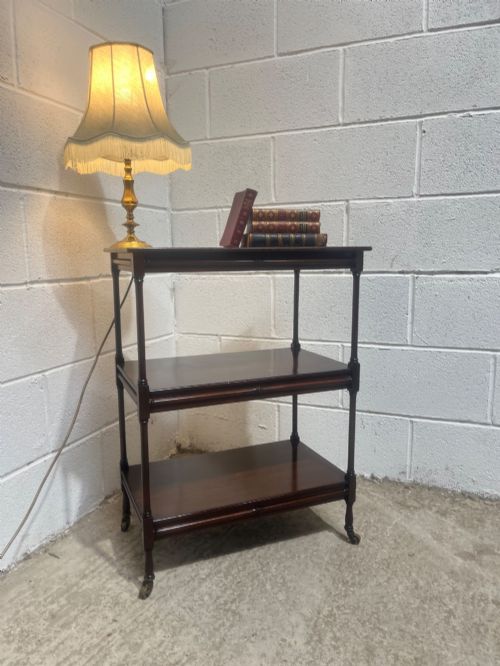
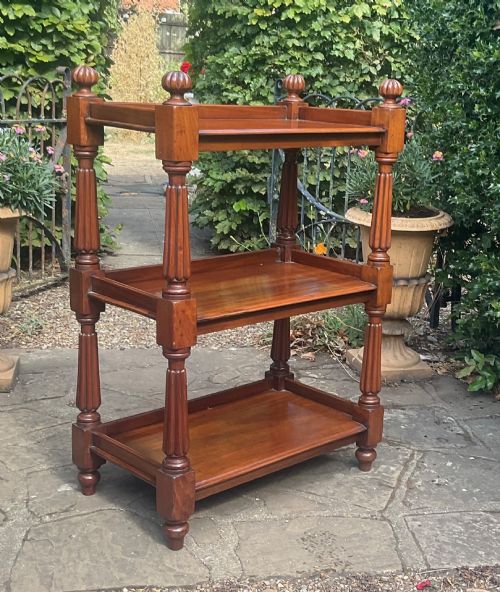
When you search for an antique display shelf table, you encounter multi-tiered furniture built to show and store possessions, most often found as whatnots, etagere tables or multi-tiered side tables from the Victorian, Edwardian and Regency periods.
These pieces provide several levels of open shelving supported by turned or carved uprights, combining the flat top surface of a standard table with the vertical storage of a bookcase.
Originating predominantly in mahogany, walnut and rosewood, the forms span from slender three-tier corner or bedside stands to larger cabinet-topped iterations.
How they were made
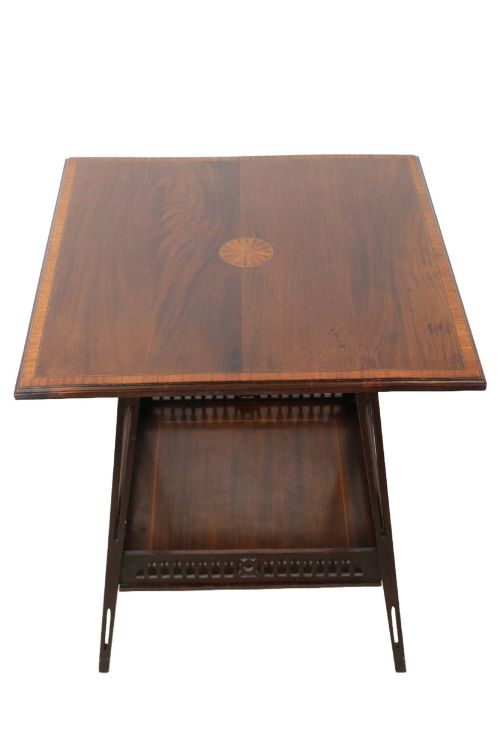
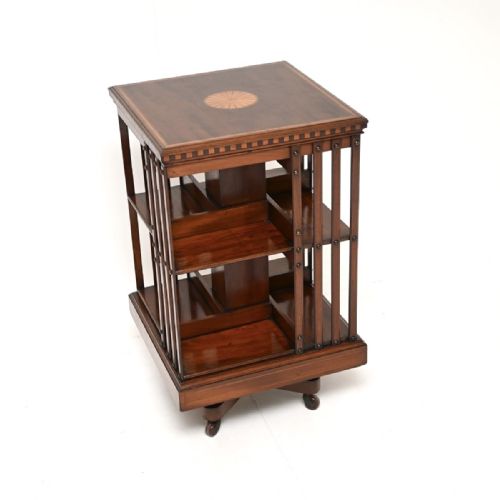
Cabinetmakers utilised dense hardwoods like mahogany, walnut and rosewood, often selecting burr veneers and satinwood inlay to create decorative contrast on top surfaces and friezes.
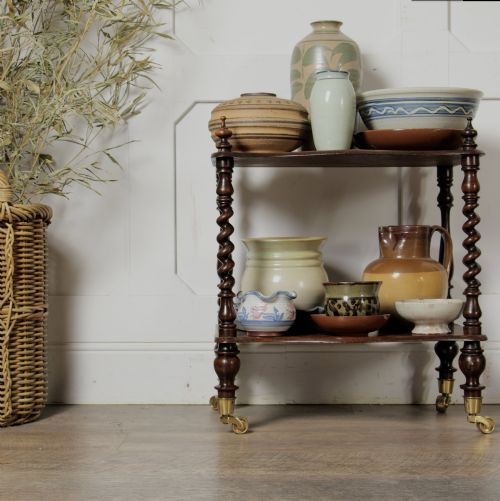
Structural integrity relied on sturdy turning for legs and upright supports, sometimes augmented by brass castors, mounts and gallery rails to secure the tiers.
Joinery techniques such as dovetailed drawers and secure tenon joints allowed multi-tiered frames to support the weight of books and ceramics without sagging.
Mahogany and walnut dominate the listed materials, appearing across Victorian, Edwardian and Regency periods alongside brass fittings and glass.
What varies in quality
The choice of timber grain and the precision of marquetry inlay dictate the visual standard of a piece, with figured burr walnut and delicate satinwood stringing marking out finer examples.
Construction details such as the thickness of shelf timber, the weight of brass mounts and the crispness of turned barley-twist or reeded supports distinguish standard production from superior craftsmanship.
Trevor Page & Co·Maison Giroux
The Antique Display Shelf Table Glossary
- Whatnot
- A moveable set of open shelves used for displaying ornaments or books. This form emerged in the late eighteenth century and remained popular through the Victorian era.
- Etagere
- A piece of furniture consisting of a set of open shelves for displaying small objects. The term derives from the French language and often denotes a lighter, more decorative stand.
- Marquetry
- The art and craft of applying pieces of veneer to a structure to form decorative designs. Cabinetmakers utilised contrasting timbers to picture flowers, geometric patterns or pastoral scenes.
- Burr walnut
- Wood taken from a tree growth where the grain has grown in a deformed manner, resulting in intricate swirls and patterns. It was sliced into thin veneers for tabletops and cabinet doors.
- Parcel gilded
- Partially covered with gold leaf or gold paint to highlight carved details. This treatment draws the eye to specific decorative motifs on ebonised or dark wood frames.
Antique Display Shelf Table: Frequently Asked Questions
What is an antique display shelf table used for?
These pieces function primarily as versatile display and storage furniture in living rooms, hallways or bedrooms. Their multiple tiers accommodate books, ceramics and decorative objects while occupying minimal floor space.
The open design allows items placed on lower shelves to remain visible from multiple angles, making the furniture as practical as it is decorative.
How do I tell a Victorian whatnot from an Edwardian one?
Victorian examples tend to feature darker timbers like burr walnut or ebonised wood, often incorporating heavy turned supports, barley twists and rich marquetry inlay. They lean toward ornate and substantial designs.
Edwardian pieces generally present lighter mahogany frames with subtle satinwood stringing, simpler inlaid motifs and a more slender profile reflecting a shift toward airier domestic interiors.
Are these tables sturdy enough for heavy books?
Most tiers are constructed from solid hardwoods or thick veneered panels supported by substantial uprights designed to bear moderate weight. However, very tall or slender etageres suit lighter displays rather than heavy volume storage.
Checking the stability of the upright joints and the thickness of the shelf boards helps determine whether a specific table suits books or lighter decorative ceramics.
Where should I place an etagere table at home?
An etagere table works effectively beside a sofa, in an empty corner or against a neutral wall where its open shelves can be appreciated without visual clutter. Because light passes through the tiers, they do not block illumination from windows.
Placing them away from direct heat sources protects the timber veneers and prevents the dry air from affecting old joinery.