


Nineteenth Century Etagere Table
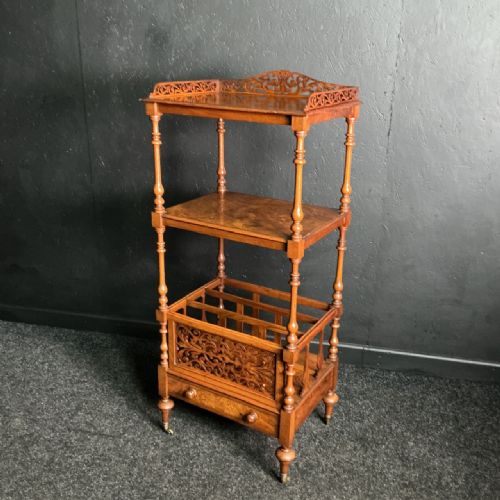
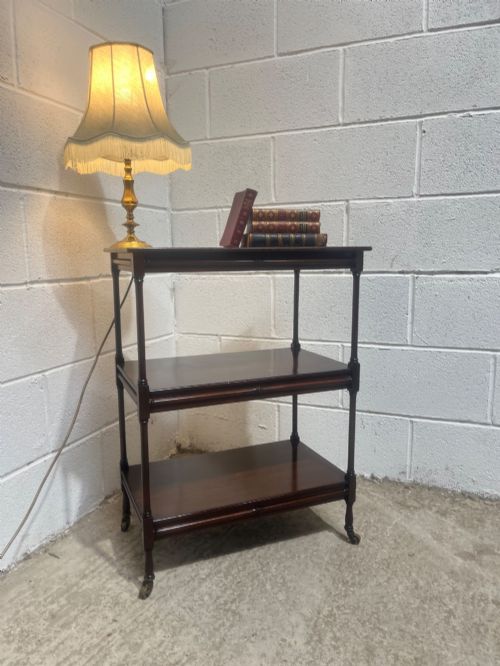
A nineteenth century etagere table offers tiered display surface, combining open shelving with cabinet work in walnut, mahogany and rosewood.
Nineteenth Century Etagere Table
When you search for a nineteenth century etagere table, you encounter tiered display furniture designed for decorative storage and serving. These pieces span multiple decades, drawing on Regency, Victorian and Edwardian periods.
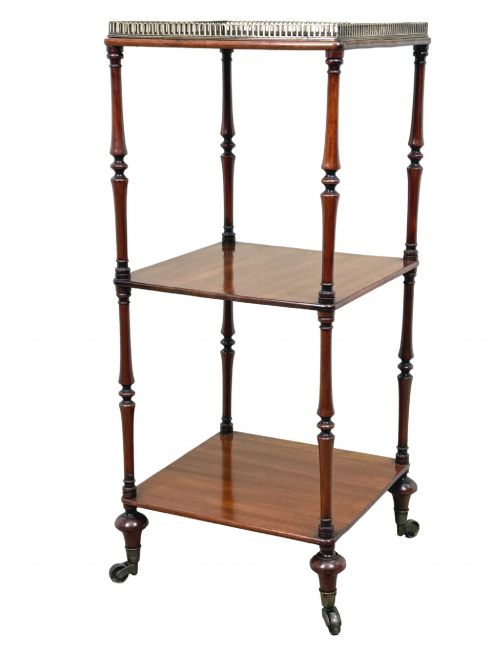
The forms on this page include traditional whatnots, multi-tier trolleys, console tables and occasional tables. Walnut, mahogany and rosewood dominate the listings, alongside brass mounts and marquetry inlay.
Makers and designers of these multi-tier structures produced both English and French examples, incorporating styles from Louis XV Revival to Sheraton Revival and campaign furniture.
Materials and construction
Cabinet makers utilised dense hardwoods such as mahogany, rosewood and burr walnut for the structural tiers and upright supports. Marquetry inlay and satinwood banding add decorative surface detail to French and English examples.
Brass castors, gallery rails and mounts provide functional reinforcement and contrast against the dark timber grains. Joinery involves precise tier alignment and sturdy upright turnings or columns.
One piece includes a jewellery cabinet compartment.
Distinctions in quality
The choice of timber veneer governs visual appeal, with figured burr walnut and rich rosewood marking out superior examples. Cabinet work intricacy, from detailed marquetry to fine brass gallery casting, separates standard production from exhibition pieces.
Proportion and scale dictate the success of a design, with unusually small or inventive forms commanding greater attention. The crispness of carved detail and the integrity of the tiered construction reflect the workshop standard.
The Nineteenth Century Etagere Table Glossary
- Etagere
- A piece of furniture consisting of a set of open shelves for displaying small objects or ornaments. It originated in France during the eighteenth century and remained popular through the Victorian era.
- Marquetry
- Decorative veneer work where pieces of wood, ivory or shell are fitted together to form geometric or pictorial designs. It appears frequently on tabletops and tier surfaces.
- Campaign washstand
- Portable furniture designed for travel, featuring brass mounts, folding elements and utilitarian timber construction. Examples often include compartments for washing equipment.
- Ormolu
- Gilded bronze mounts and decorative elements applied to furniture. It provides metallic contrast against dark woods like rosewood and mahogany.
Nineteenth Century Etagere Table: Frequently Asked Questions
What is an etagere table used for?
These tiered tables served as display surfaces for porcelain, silver and decorative ornaments in period drawing rooms.
Today, they function as side tables, bedside surfaces or open storage units in contemporary interiors.
How do I identify a Regency etagere?
Regency pieces often display classical restraint, utilising mahogany or rosewood with simple brass inlay and elegant turned supports.
They date from the early nineteenth century and reflect architectural influences of the period.
What is the difference between a whatnot and an etagere?
The terms are largely interchangeable in nineteenth-century British and French furniture terminology.
Both describe multi-tiered open shelving units, though whatnot often implies English vernacular manufacture while etagere suggests French influence.
How should I care for a walnut etagere?
Keep the timber away from direct sunlight and heat sources to prevent veneer lifting or wood splitting.
Apply a traditional beeswax polish sparingly to maintain the lustre of the polished walnut surface.