




French Satinwood Furniture
French satinwood furniture brings luminous timber and polished mounts into the room, offering tables, cabinets and desks defined by fine grain.
French Satinwood Furniture
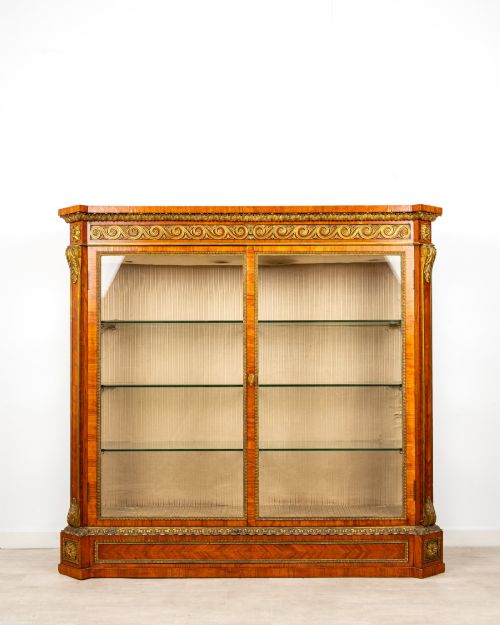
When you search for french satinwood furniture, you encounter a selection spanning the eighteenth, nineteenth, and early twentieth centuries. These pieces encompass writing desks, display cabinets, console tables, commodes, and occasional tables originating from various European workshops.
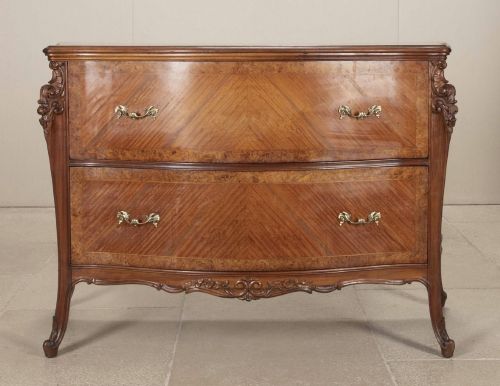
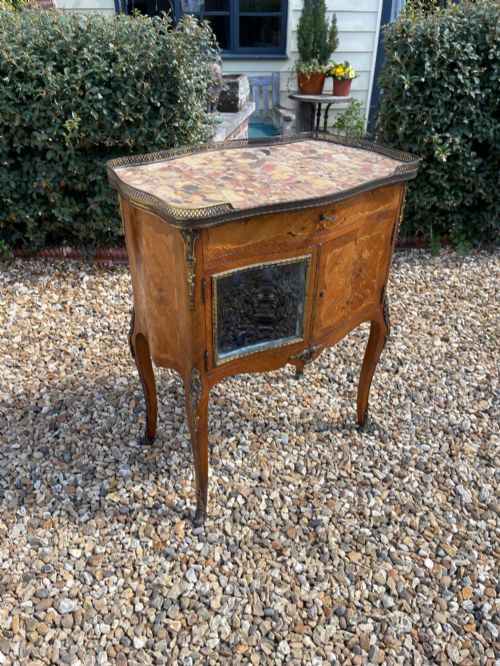
The nineteenth century dominates the offerings, with Revival styles and Victorian interpretations appearing frequently. You meet writing desks fitted with leather inserts alongside glazed cabinets and serpentine commodes.
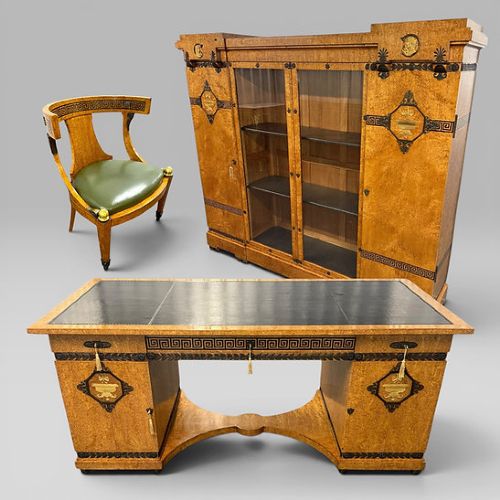
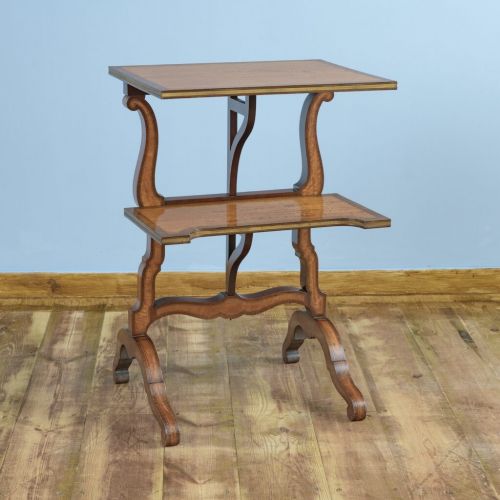
Forms range from compact folding tea tables to large console tables and complete office sets. Satinwood serves as the primary timber, often combined with mahogany, walnut, kingwood, or rosewood.
Materials and construction methods
Cabinetmakers utilised satinwood veneers applied over secondary timbers, often incorporating marquetry and parquetry patterns. Floral marquetry designs sit within panelled borders, utilising contrasting woods such as rosewood, amboyna, and harewood.
Mounts in ormolu, gilt-bronze, and brass accent corners, friezes, and feet. Glass panels enclose display cabinets and credenzas, while marble tops frequently finish commodes and console tables.
The selection includes nineteen-century pieces featuring satinwood combined with mahogany, ormolu, and glass across various table and cabinet forms.
Distinctions in quality
The refinement of the marquetry and the crispness of the ormolu mounts dictate the calibre of a piece. Finer examples display intricate floral inlay executed with tight joints and varied timber tones.
Structural integrity and the quality of the timber selection separate standard production from masterwork pieces. Original mounts, intact veneers, and signed cabinetmaker plaques elevate the standing of desks and commodes.
H. J. Hatfield & Sons·Mercier Frères·Maison Giroux·Donald Ross·JEAN FAURE
The French Satinwood Furniture Glossary
- Satinwood
- A dense, yellowish timber known for its reflective sheen and smooth grain. It provides a pale, luminous ground for marquetry and inlay.
- Ormolu
- Gilded bronze applied to furniture mounts, feet, and handles. This technique adds metallic contrast to wood surfaces.
- Marquetry
- Decorative patterns formed by fitting together small veneers of various coloured woods. Floral and geometric motifs appear across tabletops and cabinet doors.
- Commode
- A low chest of drawers or cabinet originating in France. These pieces frequently feature serpentine fronts and marble tops.
- Bonheur de jour
- A small lady's writing desk featuring a set of drawers or a cabinet on the upper surface. This form gained popularity during the eighteenth and nineteenth centuries.
French Satinwood Furniture: Frequently Asked Questions
How do I care for satinwood surfaces?
Dust regularly with a soft, dry cloth to prevent abrasion to the polished timber. Avoid placing pieces near direct heat sources or strong sunlight, which can fade the wood and dry out veneers.
Apply a microcrystalline wax periodically to nourish the surface and protect the finish. Take care around ormolu mounts and marquetry borders during cleaning.
What rooms suit a satinwood desk?
Writing desks and bonheur de jour pieces function effectively in studies, libraries, or living spaces. Their reflective timber brightens corners and provides a functional writing surface.
Pair them with complementary seating and neutral backgrounds to highlight the grain and marquetry work without visual clutter.
Are these pieces purely French in origin?
While the style draws heavily on French Neoclassical and Rococo Revival traditions, English makers also produced similar pieces. Victorian workshops and Edwardian cabinetmakers adopted French forms using satinwood and exotic veneers.
Attributions often point to specific London or Parisian firms based on construction methods, timber choices, and signature mounts.
How do I distinguish nineteenth-century revival pieces?
Nineteenth-century revival furniture employs earlier decorative vocabulary, such as Louis XVI or Empire styles, executed with nineteenth-century joinery techniques. Examine the secondary timbers and interior construction for clues to the exact manufacturing period.
Cabinetmakers during this era frequently combined traditional marquetry with machine-sawn veneers and modern brass fixings.