

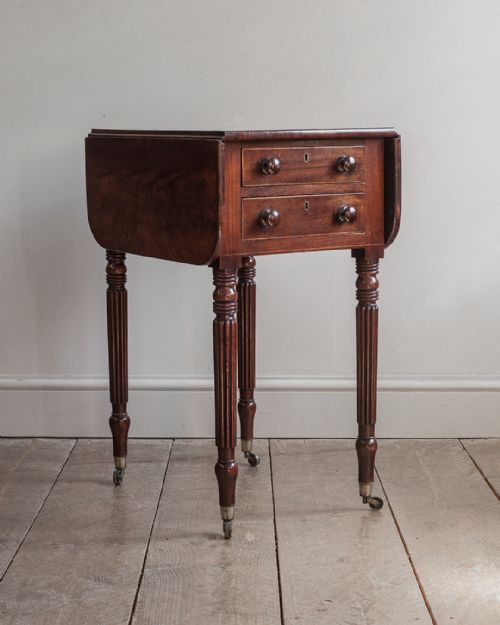


Nineteenth Century Drop Table
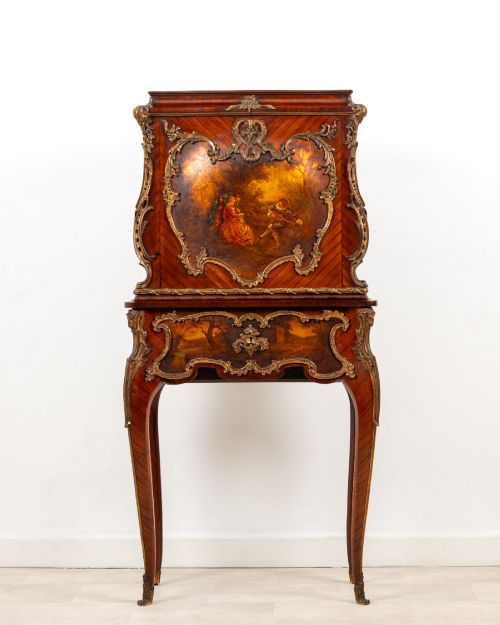
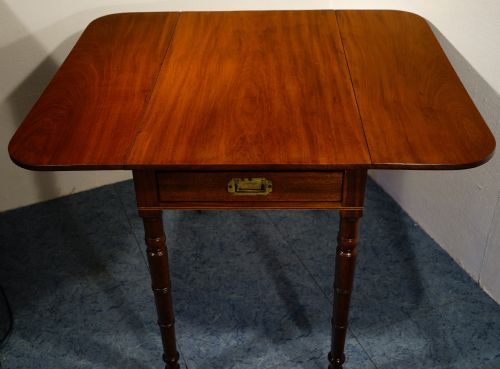
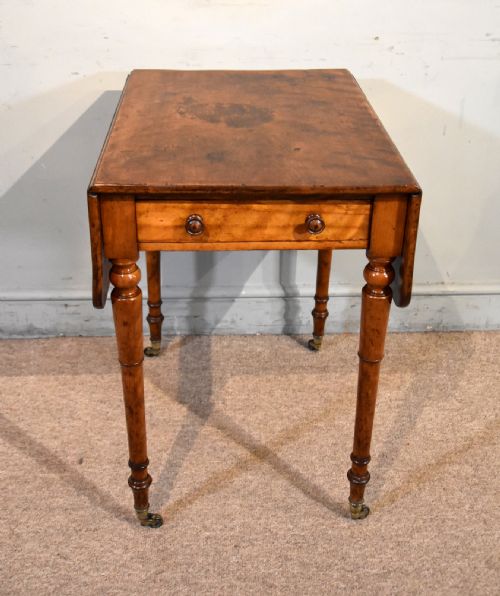
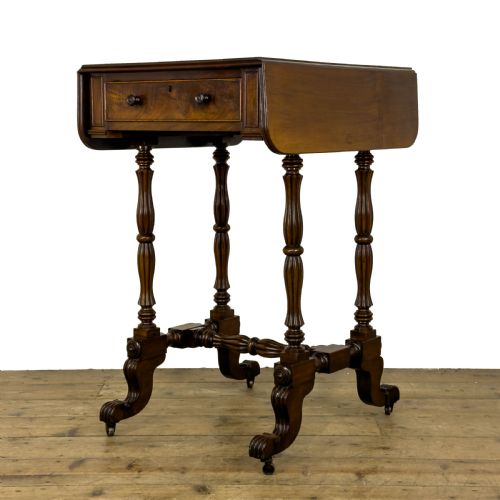
A nineteenth century drop table brings functional folding leaves and rich mahogany, rosewood, or walnut timber into a room.
Nineteenth Century Drop Table
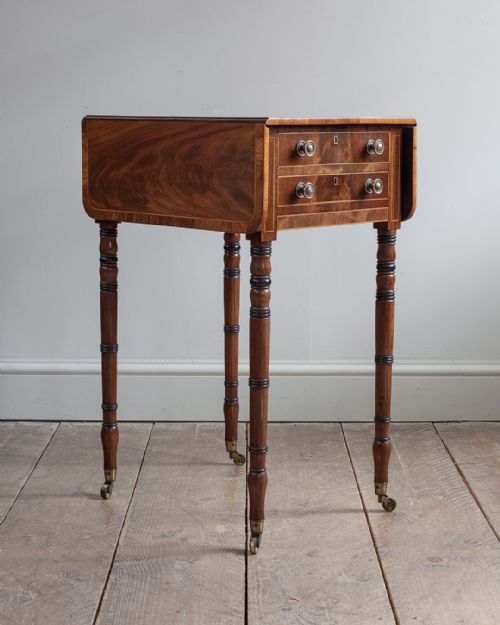
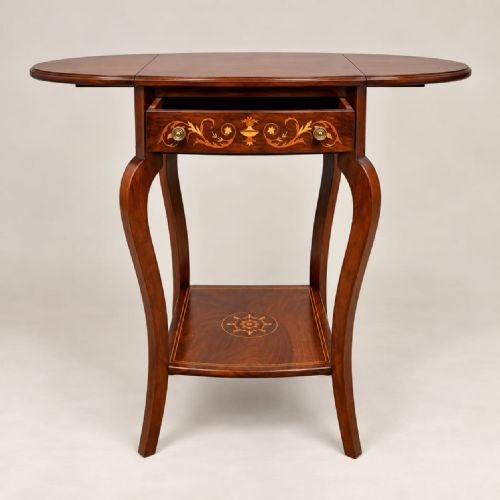
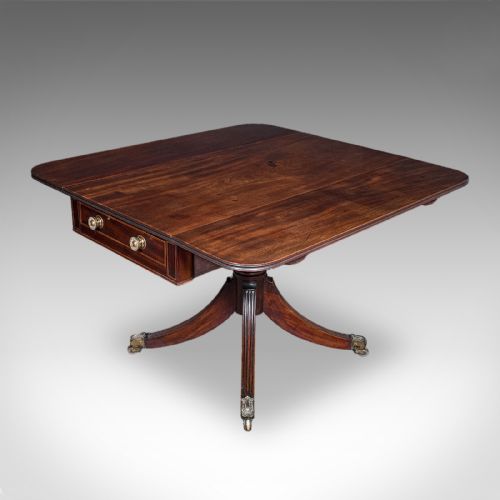
When searching for a nineteenth century drop table, buyers encounter a variety of forms including sofa tables, Pembroke tables, work tables, and Sutherland tables. These pieces date across the Georgian, Regency, George IV, and Victorian periods.
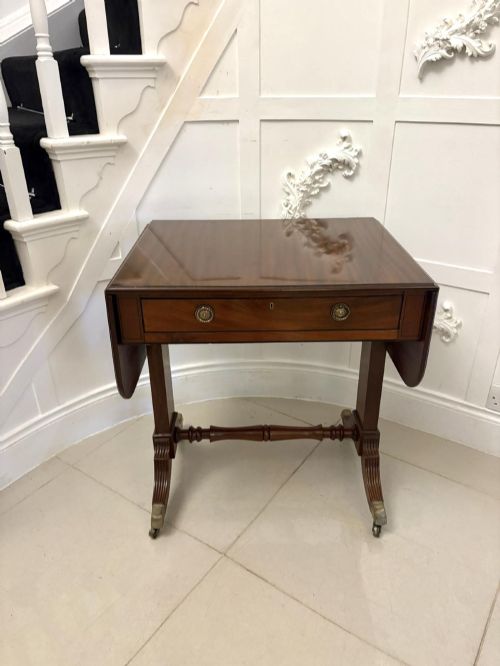
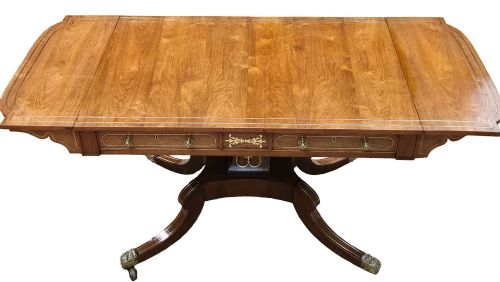
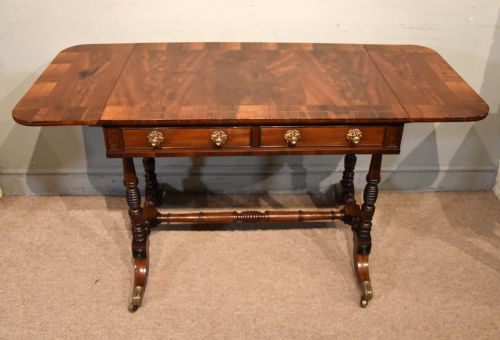
The sofa table is especially prominent among listings, often featuring twin pedestals or lyre ends with drop leaves on either side. Alongside these, Pembroke tables and drop-leaf occasional tables provide compact surfaces that expand when needed.
Origins span English workshops as well as French, Scottish, and Swedish makers, utilising native and exotic timbers. Buyers are most likely to find mahogany and rosewood examples from the Regency and Victorian eras.
Materials and construction
Cabinetmakers utilised solid and veneered timbers such as mahogany, rosewood, burr walnut, and satin birch, frequently enhanced by crossbanding. Brass mounts, castors, and porcelain or ceramic elements appear regularly on Regency and Victorian examples.
Drop-leaf mechanisms rely on hinged flaps supported by rule joints, swing brackets, or fly legs. Tables built for sewing or writing often incorporate fitted interior compartments, drawers, and fabric-lined bags.
Listings feature mahogany, rosewood, walnut, and satin birch, spanning the Regency, Georgian, and Victorian periods.
Distinctions in craftsmanship
Quality reveals itself in the selection of figured timbers, such as flame mahogany or burr walnut, matched symmetrically across the top and leaves. Finely executed details like brass inlay, parcel gilding, and carved lyre ends distinguish superior examples.
Structural integrity depends on the precision of the joinery in the drop-leaf hinges and the stability of the pedestal base or legs. Pieces retaining original brass castors and uncompromised rule joints represent the higher tier of surviving tables.
Johnstone and Jeanes·James Mein·Jenks and Woods
The Nineteenth Century Drop Table Glossary
- Drop leaf
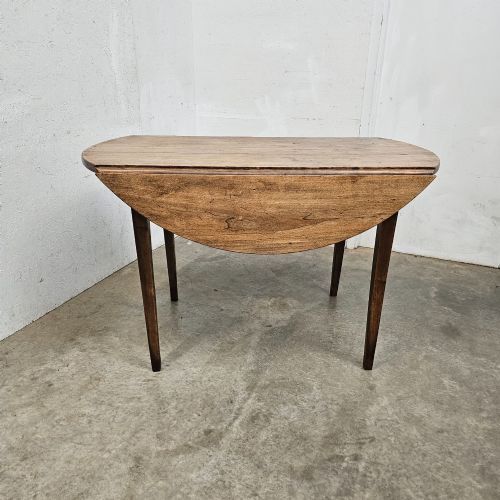
- A hinged flap attached to the side of a table that folds down when not in use. This mechanism allows the furniture to save space.
- Sofa table
- A long, narrow table traditionally placed behind a sofa, featuring drop leaves at either end. They often stand on twin pedestals or trestle ends.
- Pembroke table
- A small rectangular table with two folding flaps on opposite sides and usually one or two drawers. It was designed for breakfast or writing.
- Sutherland table
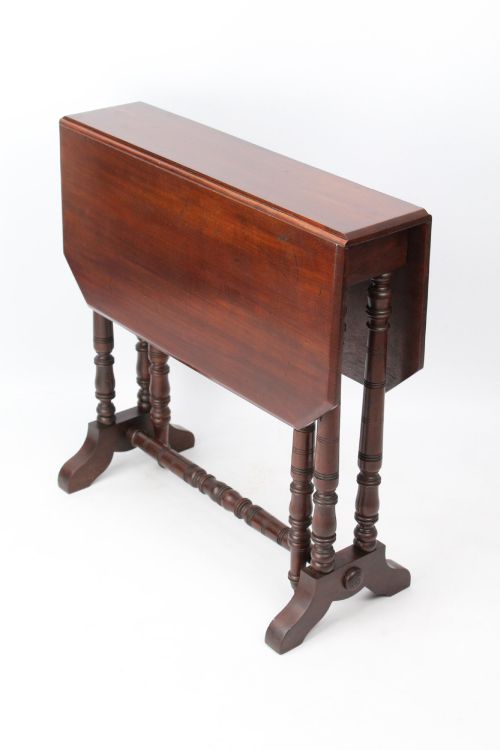
- A narrow drop-leaf table where the leaves comprise a large portion of the top and are supported by swing legs. They fold down to a very slim profile.
- Crossbanding
- A strip of veneer laid around the border of a tabletop with the grain running perpendicular to the centre. This technique frames the primary timber.
Nineteenth Century Drop Table: Frequently Asked Questions
What is a Pembroke table?
A Pembroke table is a compact occasional table featuring two hinged drop leaves on opposing sides and typically one or two drawers beneath the top. These versatile pieces were easily moved about a room for dining, writing, or needlework.
First appearing in the eighteenth century, they remained popular throughout the nineteenth century in mahogany and rosewood. Their ability to expand or contract made them practical for smaller spaces.
How do I use a sofa table?
A sofa table is traditionally placed against the back of a sofa or freestanding in the centre of a room. With its drop leaves lowered, it occupies minimal floor space.
Raising the leaves provides an extended surface for writing, lamps, or displaying decorative objects. Many examples also include drawers for storage.
What is a Sutherland table?
A Sutherland table is a narrow drop-leaf table where the folding leaves are exceptionally wide, often comprising most of the tabletop surface. When lowered, the table becomes very slender.
When raised, the leaves are supported by pivoting gatelegs that swing out from the central frame. This design allows the table to be stored flat against a wall.
How do I date a nineteenth century table?
Dating relies on observing the prevailing style, timber choices, and construction methods associated with specific reigns and decades. Regency pieces often showcase rosewood and brass inlay, while Victorian tables frequently utilise burr walnut or heavier mahogany.
Hardware such as castors, hinge types, and dovetail construction also provide clues to the period of manufacture. Makers' marks or stamps, when present, offer definitive attribution.