



Compact Folding Tea Table
A compact folding tea table offers a clever drop-leaf surface that drops away when space is at a premium.
Compact Folding Tea Table
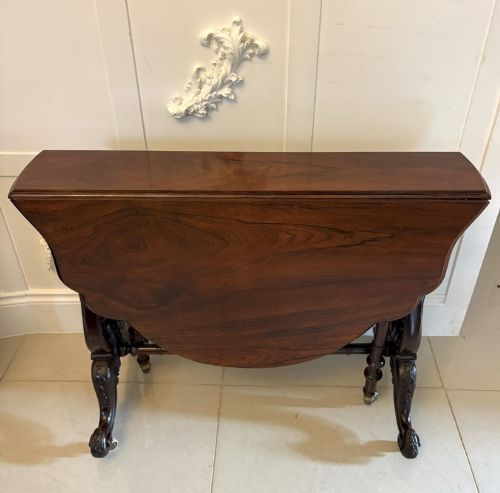
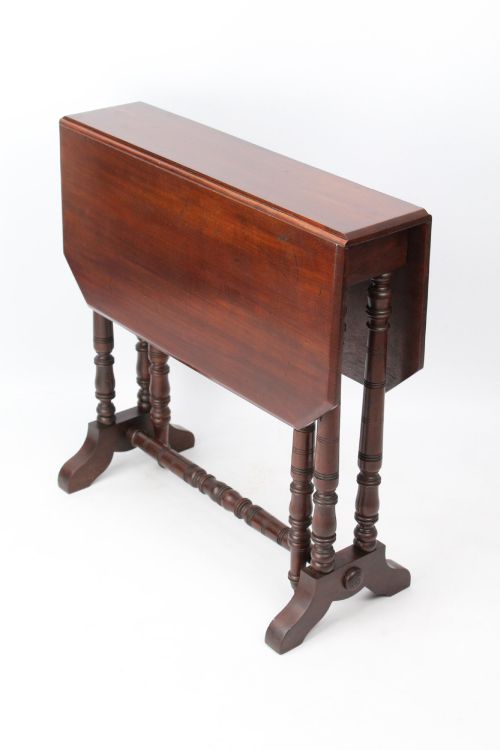
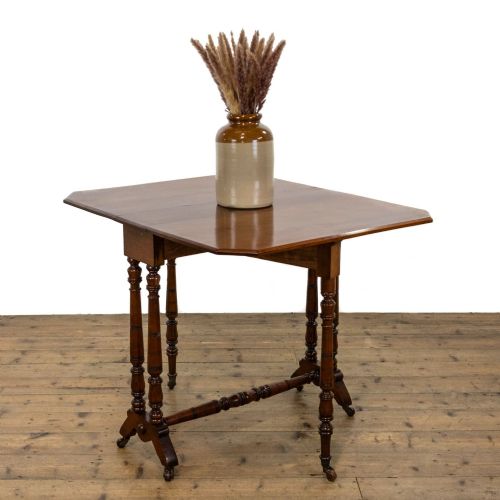
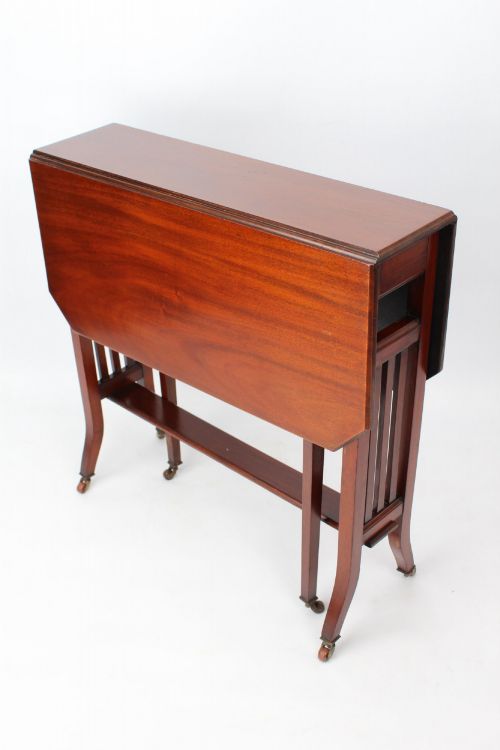
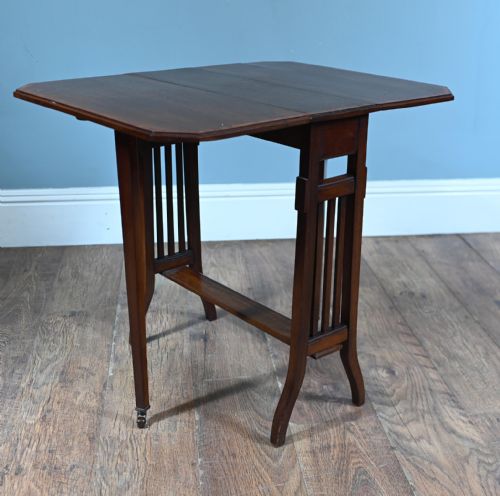
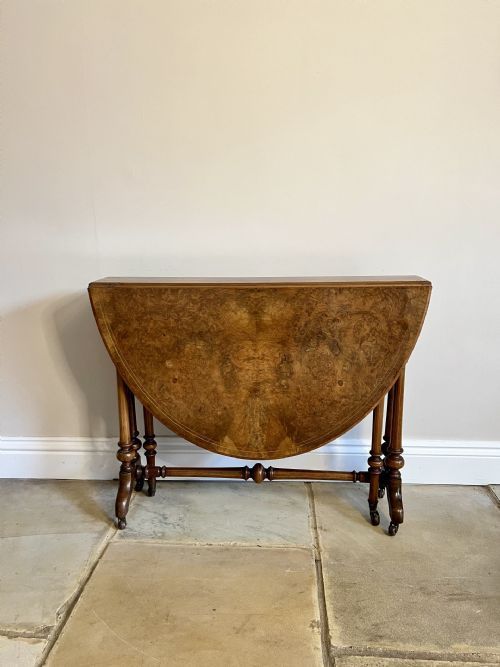
A compact folding tea table is primarily represented here by Victorian and Edwardian Sutherland tables, along with related drop-leaf and gateleg forms designed to tuck away easily when not in use. These occasional pieces emerged in various sizes, ranging from standard proportions down to baby and double-tiered variants suited for smaller rooms.
The materials span mahogany, walnut, and burr walnut, occasionally accented with satinwood inlay or brass fittings. Their defining characteristic is the hinged drop-leaf mechanism supported by swinging gate legs, allowing the surface to expand for tea or fold flat against walls.
Materials and construction
Cabinet makers relied on solid timbers and rich veneers, notably burr walnut and mahogany, chosen for their distinctive grain patterns and durability. Satinwood banding and delicate inlay work frequently decorated the table tops of Edwardian examples.
The structural integrity relies on sturdy gateleg pivots and drop-leaf hinges that support the folding leaves smoothly. Internal framing uses traditional joinery to ensure the slender legs remain stable under daily use.
Some double-tiered variants provide extra shelf space below for hiding away yesterday's newspapers.
What separates the best from the rest
Superior examples distinguish themselves through the choice and matching of timber veneers, particularly the richness of burr walnut figures and fine satinwood bandings. Subtle details such as inlaid decoration and the precision of the drop-leaf hinge mechanism mark out finer workshops.
Proportion and scale also dictate distinction, with smaller baby or double-tiered configurations demonstrating greater joinery skill. The stability of the gateleg action and the crispness of the turned or spider legs indicate the original maker's standard.
Maple & Co
The Compact Folding Tea Table Glossary
- Sutherland table
- A narrow drop-leaf table with exceptionally slender legs and leaves that fold down almost vertically. This form became a staple of Victorian and Edwardian drawing rooms.
- Gateleg table
- A table featuring legs that swing outward on hinges to support folding leaves. The design provides a sturdy underframe when extended and a minimal footprint when closed.
- Burr walnut
- A prized wood veneer harvested from the gnarled growths of walnut trees. It exhibits swirling, highly decorative grain patterns favoured in Victorian cabinet making.
- Drop leaf
- A hinged table section that can be raised to enlarge the surface area or dropped down to save space. It forms the primary functional element of these occasional tables.
- Satinwood inlay
- Contrasting light-coloured wood inserted into the primary timber surface to create decorative borders. This technique is frequently seen on Edwardian pieces.
Compact Folding Tea Table: Frequently Asked Questions
What is a Sutherland table?
A Sutherland table is a specific type of drop-leaf tea table featuring hinged leaves that hang down very steeply when folded. They were designed to occupy minimal floor space when closed.
These pieces typically rest on slender gate legs that swing out to support the leaves when raised for use.
How were these tables used?
They served primarily as flexible tea tables or occasional surfaces in Victorian and Edwardian sitting rooms. Their folding design allowed servants or residents to expand or clear the surface quickly.
Today, they function well as side tables or occasional stands in compact modern interiors.
How do I date a Victorian piece?
Dating relies on timber choices, construction methods, and stylistic cues recorded in the period evidence. Victorian examples often feature rich burr walnut or solid mahogany.
Later pieces from the Edwardian era frequently incorporate satinwood inlay and lighter mahogany frames.
What is a baby Sutherland table?
A baby Sutherland table is a smaller-scaled version of the standard drop-leaf design. These diminutive pieces were built for tighter spaces or intimate sitting rooms.
Despite their reduced proportions, they retain the characteristic gateleg action and folding leaves of larger models.
Are these tables sturdy?
The structural stability depends on the gateleg pivots and the alignment of the drop-leaf hinges. Well-made examples distribute weight evenly across the swinging legs when extended.
Careful handling of the hinged leaves ensures the mechanisms remain sound during daily use.