

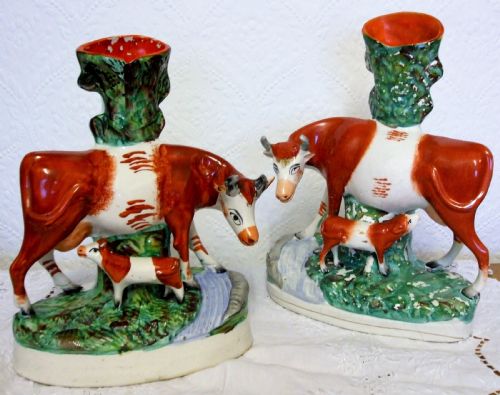


Nineteenth Century Ceramic Figure
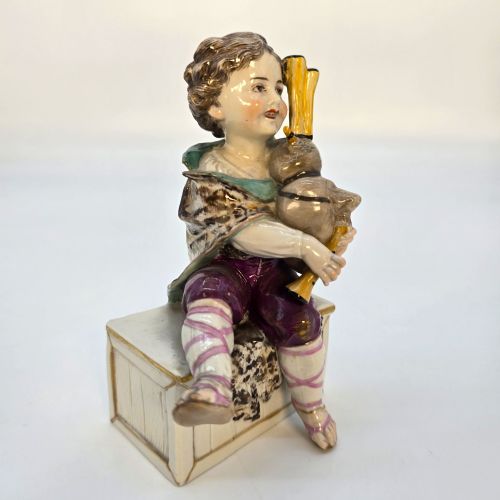
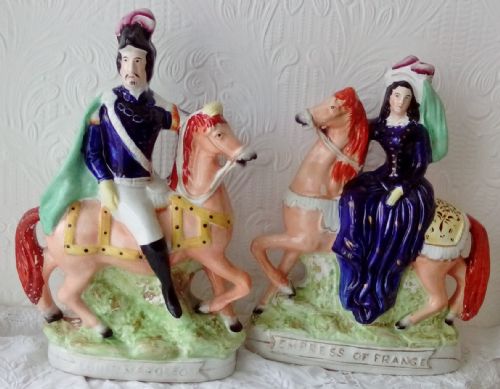
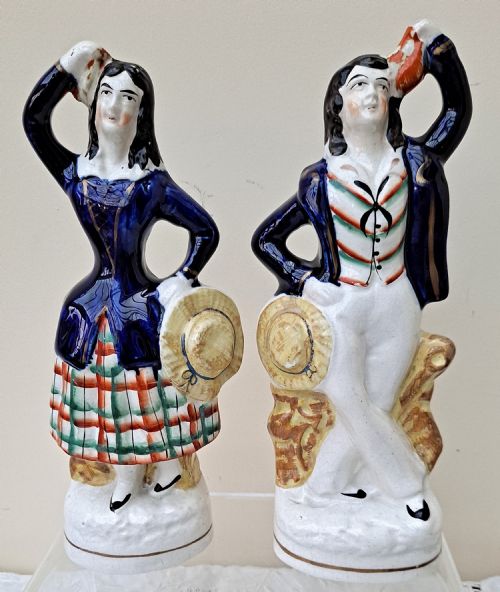
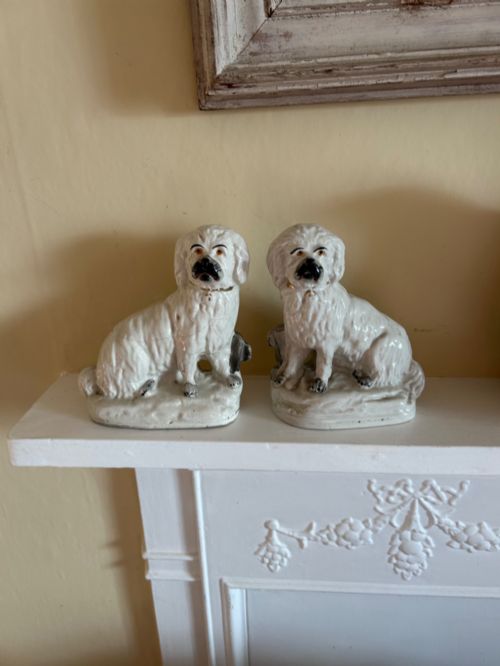
These nineteenth century ceramic figure pieces range from Staffordshire animals to continental porcelain dancers, offering domestic charm and sculptural presence.
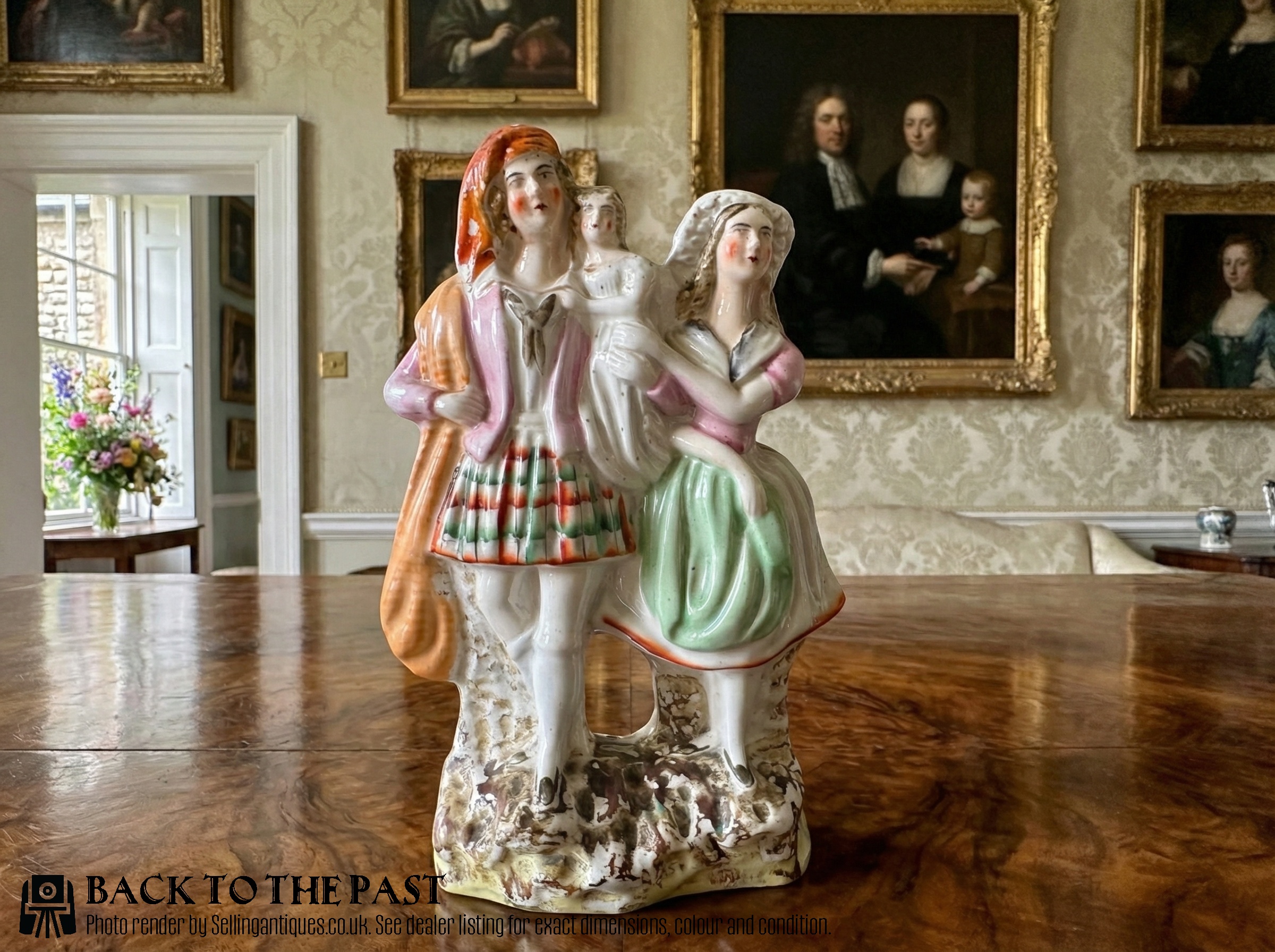
Nineteenth Century Ceramic Figure
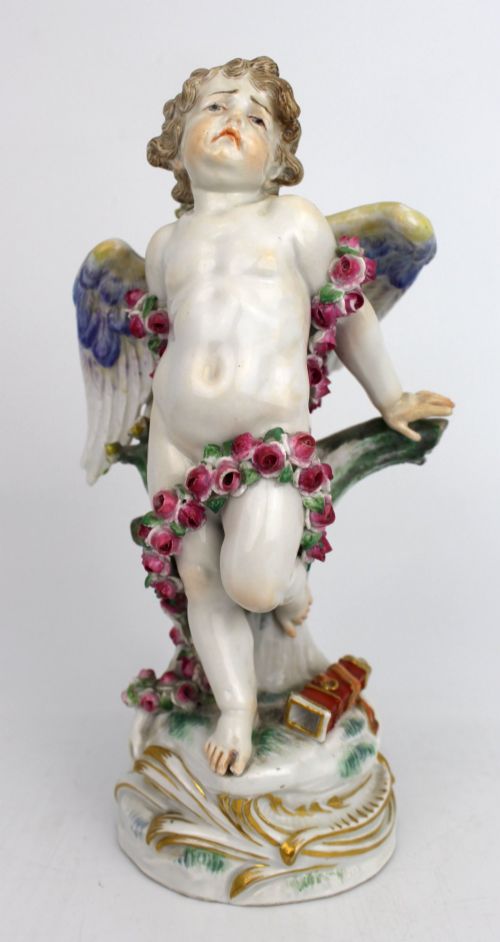
A nineteenth century ceramic figure encompasses a diverse array of three-dimensional works, from earthenware animals to porcelain portraits. The selection spans earthenware, porcelain, and terracotta forms produced across Europe and Asia.
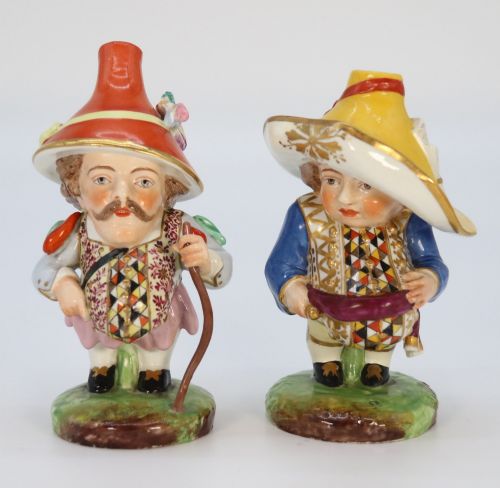
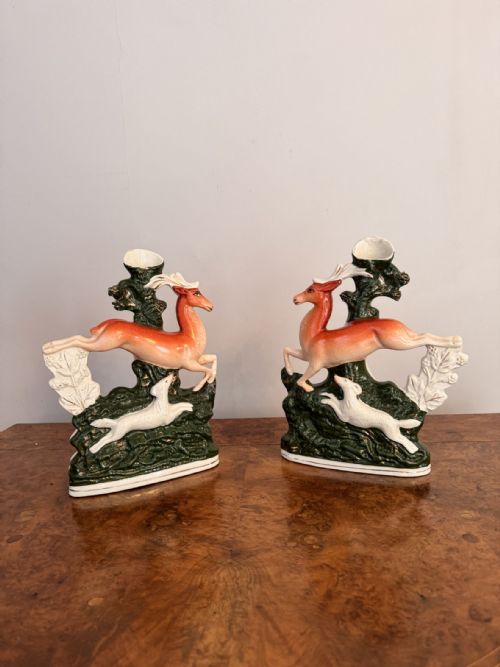
Most examples found here are British Staffordshire earthenware or continental porcelain figures, frequently modelled as pairs of animals, historical figures, or theatrical characters. These objects served primarily as mantelpiece ornaments in Victorian parlours.
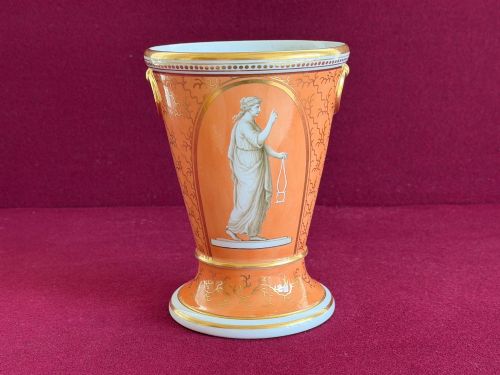
Beyond earthenware figures, the grouping includes utilitarian vessels incorporating figural elements, such as spill vases, quill holders, and money boxes. Each type reflects the domestic tastes and decorative priorities of the period.
How they were made
Potters shaped these objects using press-moulding techniques in earthenware or slip-casting in porcelain, often finishing the greenware by hand before firing. Earthenware figures received lead glazes or enamel colours, while finer porcelain versions utilised bisque or glazed surfaces decorated with hand-painted pigments and occasional gold leaf.
Several Staffordshire figures depict famous nineteenth century prize-winning animals, ensuring domestic mantlepieces shared space with celebrated livestock.
What varies in quality
The application of glaze and enamel also dictates quality, with finer works avoiding pooling, running, or dull patches. Well-executed pieces maintain consistent firing temperatures that preserve the integrity of the ceramic body and the vibrancy of the applied colours.
Flight and Barr Worcester·Volkstedt Rudolstadt Factory·Goldscheider pottery·Royal Worcester·Ernst Bohne and Soehne·Sitzendorf porcelain
The Nineteenth Century Ceramic Figure Glossary
- Bisque porcelain
- Unglazed porcelain fired once to produce a matte, marble-like surface texture. This finish highlights fine sculptural detail without reflective sheen.
- Spill vase
- A hollow tubular vase designed to hold taper spills for lighting candles and pipes. These were frequently modelled as tree stumps beside animal figures.
- Parian ware
- A fine-grained, unglazed white porcelain developed in England to imitate carved marble. It gained popularity for classical portrait busts and sculptural figures.
- Earthenware
- Porous pottery fired at lower temperatures than stoneware or porcelain. It requires an applied glaze to become impermeable to liquids.
- Enamel
- Opaque glass-like pigments applied over a fired glaze and heated again to fuse with the surface. This technique allows for bright, permanent polychrome decoration.
Nineteenth Century Ceramic Figure: Frequently Asked Questions
What are Staffordshire figures?
Staffordshire figures are earthenware ceramic sculptures made by potteries in the Staffordshire region of England during the nineteenth century. They typically depict animals, historical personalities, and theatrical scenes designed for display on mantelpieces.
These pieces were press-moulded, hand-painted with underglaze or enamel colours, and finished with a clear glaze. They represent a distinct tradition of affordable domestic ornamentation from the Victorian era.
How were ceramic figures used?
Nineteenth century ceramic figures served primarily as decorative ornaments placed on mantelpieces, sideboards, and brackets in domestic interiors. Certain forms combined decoration with utility, functioning as spill vases, money boxes, or quill holders.
Larger porcelain groupings and parian busts were displayed in drawing rooms to signal cultural literacy and refined taste. Smaller earthenware animals and pairs of dogs were standard furnishings in middle-class parlours.
Are these figures hand-painted?
Many nineteenth century ceramic figures feature hand-painted details applied over moulded ceramic bodies. Painters used mineral enamels to render facial expressions, clothing patterns, and naturalistic markings on animals.
Factory production methods varied, with some simpler earthenwares utilising stamped or sponge-applied patterns alongside brushwork. Finer porcelain pieces from European factories typically received more extensive individual hand-painting.