


Antique British Royal Porcelain
These pieces of antique British royal porcelain carry hand-painted scenes and fine gilding that mark them out for a serious cabinet collection.
Antique British Royal Porcelain
When you search for antique british royal porcelain, you are looking at fine bone china and porcelain pieces created by prominent English factories, most notably Royal Worcester and Royal Doulton. These items span the Victorian, Edwardian, and Art Deco periods, reaching through the nineteenth and early twentieth centuries.
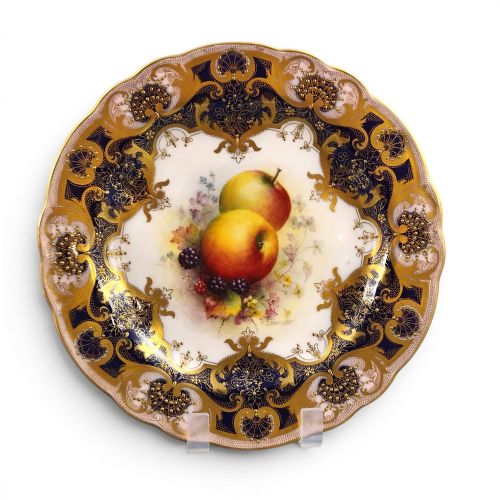
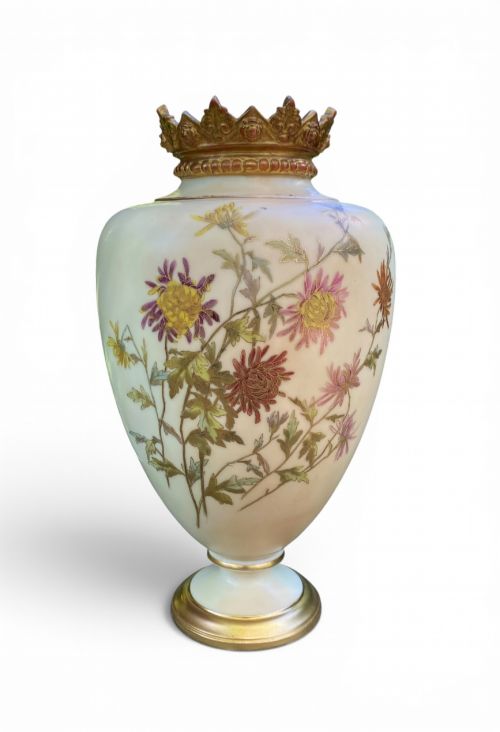
The objects on this page take the form of decorative vases, cabinet plates, ewers, wall art plaques, and decorative figurines. Many of these pieces feature intricate hand-painted animal or landscape subjects, alongside rich enamel and gold leaf applications.
You are most likely to meet Royal Worcester vessels bearing the signatures of renowned painters such as James Stinton, Harry Stinton, and Richard Sebright. These works showcase the high standard of British ceramic artistry from the eighteen-sixties up to the nineteen-thirties.
How they were made
Makers fashioned these pieces from fine bone china and standard porcelain bodies, often employing delicate reticulation techniques to pierce and shape the wet clay before firing. Skilled artisans then applied hand-mixed enamel paints and detailed brushwork to depict birds, cattle, and scenic views directly onto the glazed surface.
Gilding played a central role in the finishing process, with craftsmen applying gold leaf and gilt highlights by hand around borders, handles, and rims. Final firings fixed these metallic sheens and enamel pigments into the glaze, creating the durable yet lustrous finish seen on cabinet plates and vases.
Object forms include decorative vases, ewers, cabinet plates, wall art plaques, and decorative figurines.
What varies in quality
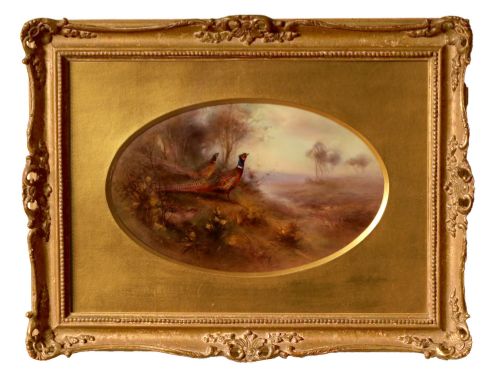
The skill of the individual painter dictates much of the distinction in these ceramics, as signed works by recognised artists command greater attention than anonymous factory output. Naturalistic detail in hand-painted subjects like Highland cattle or pheasants reveals the precise brush control of the decorator.
The complexity of the manufacturing technique also separates standard items from exceptional ones, particularly where reticulation or extensive raised gilding is involved. Preservation of the original enamel colours and the brightness of the gold leaf without rubbing further distinguishes finer examples.
Royal Worcester·Royal Doulton
The Antique British Royal Porcelain Glossary
- Fine bone china
- A type of porcelain incorporating bone ash, known for its high strength, chip resistance, and milky translucency. It served as the primary canvas for detailed nineteenth and twentieth-century painting.
- Reticulation
- The delicate process of cutting geometric or interlaced patterns out of unbaked porcelain clay. This technique requires immense precision to avoid warping during high-temperature kiln firings.
- Enamel
- Opaque vitreous glass compounds fused to the porcelain surface through firing. These coloured pigments provided decorators with vibrant palettes for pictorial scenes.
- Gilt
- A thin layer of gold applied to the surface of the porcelain or framing materials. It accentuates the rims, handles, and borders of decorative vessels.
- Cabinet plate
- A display plate intended for visual appreciation rather than dining use. These often feature elaborate painted centres and gilded borders designed for cabinet or wall exhibition.
Antique British Royal Porcelain: Frequently Asked Questions
What periods do these pieces date from?
The items span from the mid-nineteenth century through the Victorian and Edwardian eras, extending into the Art Deco period of the early twentieth century.
Dates on these ceramics typically correspond to factory marks and artist signatures recorded between eighteen-sixty and nineteen-thirty-six.
How were cabinet plates displayed?
Cabinet plates were designed primarily for visual display in enclosed glass cabinets or mounted on walls as decorative plaques rather than used at the dining table.
Their hand-painted central scenes and delicate gilded borders required protection from daily wear and tear.
Who painted these porcelain pieces?
Prominent ceramic artists such as James Stinton, Harry Stinton, Richard Sebright, and George Owen decorated many of these vessels.
Their signatures often appear alongside factory marks to denote individual artistic authorship of the painted scenes or reticulated work.
What subjects appear on the porcelain?
Decorators frequently painted naturalistic subjects such as Highland cattle, game birds, cock pheasants, and detailed landscapes onto the porcelain surface.
Portrait figures of historical personages like the Queen of England also appear in Staffordshire ceramic productions from the period.