
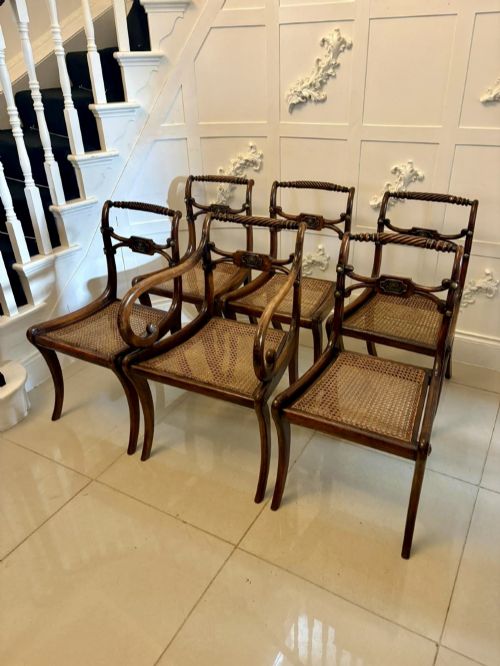
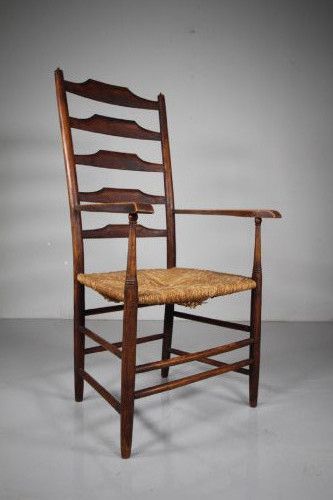
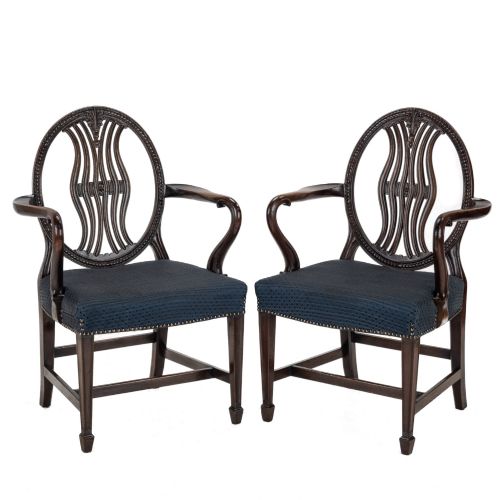

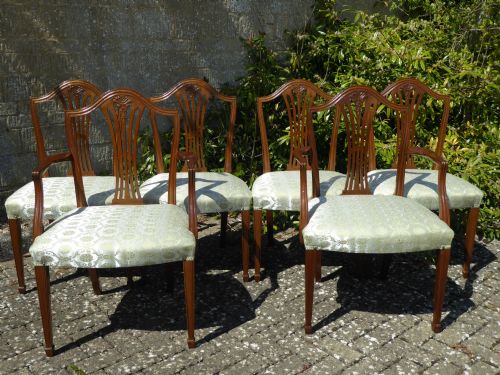
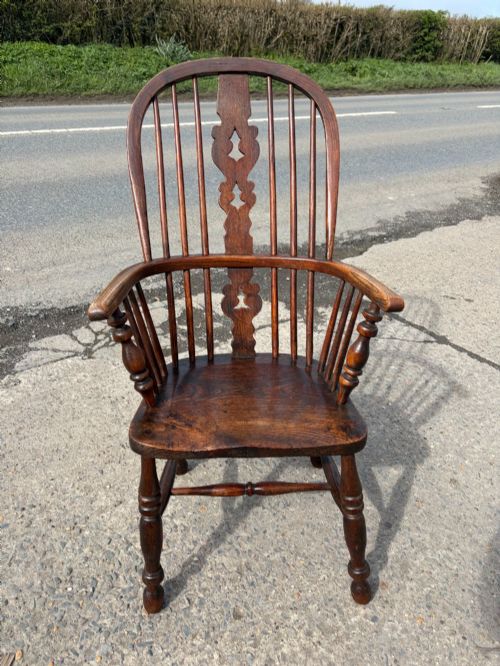


Nineteenth Century Carvers
Nineteenth century carvers are sturdy elbow chairs designed to anchor a dining table or sit alone in a room.
Nineteenth Century Carvers
Nineteenth century carvers appear as part of larger dining sets or stand alone as reading and armchairs. Buyers find them shaped by formal Regency and Victorian workshops or built in simpler vernacular rural traditions.
The form bridges formal mahogany dining suites and heavy country Windsor seating. Many examples survive within larger sets where two armchairs match a larger group of single chairs.
Materials and construction
Cabinetmakers relied heavily on solid mahogany, often enriched with brass inlay or polished to a dark sheen. Regional makers turned to domestic timbers including elm, beech, yew, ash, and fruitwood.
Seats utilise woven cane, rushed cord, leather, fabric upholstery, or solid timber planks. Frames employ traditional joinery with turned spindles, carved splats, and curved arm supports.
Listings feature mahogany, elm, yew, and beech across Regency, Victorian, and vernacular country styles.
Evaluating craftsmanship
Quality rests in the crispness of the timber carving and the selection of figured wood grains. Superior pieces show careful proportion in the arms and back rail.
Construction integrity defines the better examples, where joints remain tight and original timber surfaces survive without excessive intervention.
Philip Clissett·E W Godwin·Henry Thomas Peters·John Gee
The Nineteenth Century Carvers Glossary
- Carver
- An armchair, traditionally placed at the head of a dining table to match a set of single chairs.
- Splats
- The vertical wooden strip down the centre of a chair back, often shaped or pierced.
- Vernacular
- Everyday regional furniture made by local joiners rather than urban cabinetmakers.
- Windsor
- A timber-framed chair with spindles inserted into a solid wooden seat.
Nineteenth Century Carvers: Frequently Asked Questions
What is a carver chair?
A carver is an armchair designed to sit at the head of a dining table. These pieces match or complement the accompanying single chairs.
Historically, the host or head of the household occupied this seat during formal meals.
How do I date a nineteenth century chair?
Dating relies on stylistic shifts from Regency curves to heavy Victorian proportions and revival designs. Wood choice and construction methods also indicate the period.
Examination of the underframe and joinery reveals the age and manufacturing techniques used.
Are Windsor chairs comfortable?
Windsor chairs feature sculpted wooden seats shaped to fit the body. Spindle backs provide supportive structure for upright sitting.
Adding a loose squab cushion can increase softness for prolonged sitting.
Can I mix carvers with modern tables?
These timber chairs pair well with plain wooden or glass dining tables. The contrast highlights the grain and age of the antique frame.
Ensure the arm height fits comfortably beneath the underside of the table rim.