





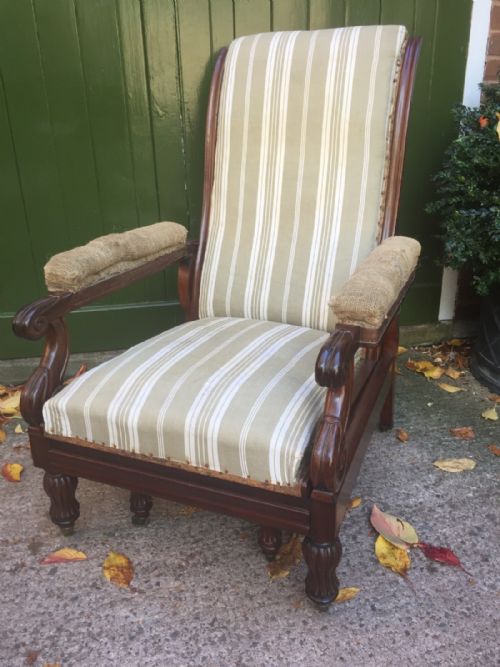

Early Nineteenth Century Chairs
Early nineteenth century chairs are substantial seating pieces from the Regency and Victorian eras that bring period character to any interior.
Early Nineteenth Century Chairs
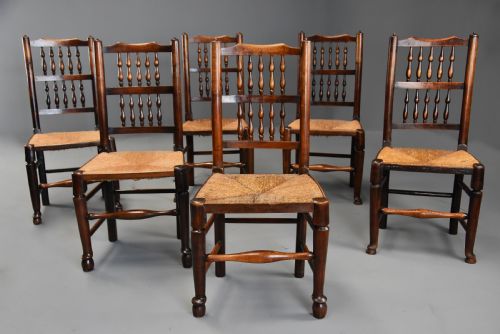
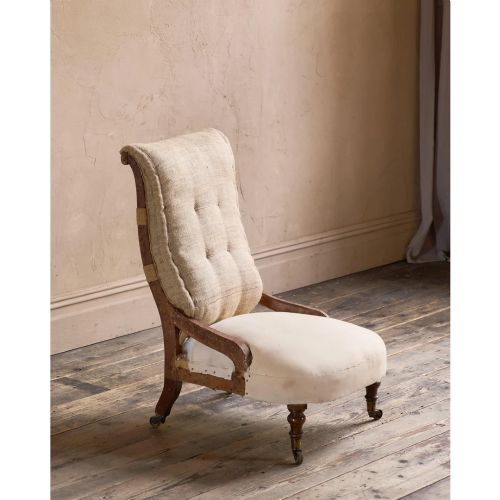
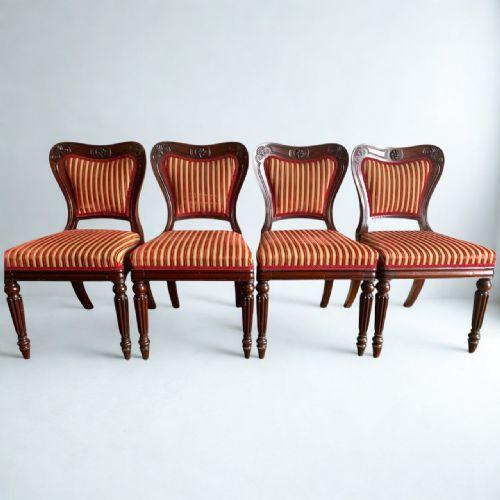
Early nineteenth century chairs encompass a diverse range of seating, from grand dining sets to vernacular country pieces, all originating from the 19th Century, Regency, and Victorian periods. When exploring this selection, buyers frequently encounter dining chairs, armchairs, and side chairs shaped by regional British craftsmanship.
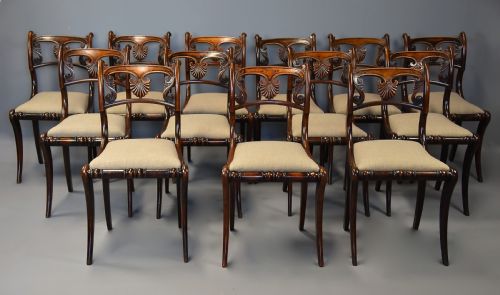
The assortment on this page spans formal urban designs in mahogany and simulated rosewood alongside robust country vernacular pieces in ash and elm. Whether searching for a matched set for a dining table or a solitary library armchair, these items represent the varied domestic seating of the era.
Materials and Construction
Cabinetmakers and country joiners of the period relied on durable hardwoods such as mahogany, walnut, oak, ash, and elm to build these chairs. Timber selection dictated the character of the piece, with dense foreign hardwoods reserved for formal drawing rooms while indigenous timbers served vernacular workshop traditions.
Construction techniques combined traditional joinery with decorative elements like brass inlay, turned spindle backs, and carved mahogany frames. Upholstery materials recorded in these pieces include leather, hessian, wool work, and horsehair over supportive webbing and stuffing.
Early Nineteenth Century Chairs Retail Price Guide 2026
Typical asking prices for early nineteenth century chairs among the pieces listed under this phrase on Sellingantiques today, from the lower quarter to the upper quarter. They describe what is for sale here now, not the wider market.
The furniture styles represented range from vernacular country traditions to formal Regency and early Victorian drawing room designs.
Assessing Quality and Execution
Quality in these chairs rests upon the integrity of the timber selection and the crispness of any carved or turned details. Superior examples exhibit tightly grained woods, well-proportioned frames, and a deep patination accumulated through decades of handling.
The distinction between standard domestic seating and the finest workshop productions lies in the finesse of the joinery and the retention of original decorative schemes, such as simulated rosewood graining. Pieces bearing attributed designs or maker signatures often demonstrate elevated craftsmanship in every structural joint.
Howard and Sons·Gillows of Lancaster·Henry Thomas Peters·Richard Hicks Bridgens·Robert Daws
The Early Nineteenth Century Chairs Glossary
- Bergere
- An enclosed upholstered armchair with exposed wooden framing and woven cane panels to the back and sides. This style gained popularity during the Regency period.
- Balloon-back
- A chair back shaped in a continuous curve resembling the profile of a hot-air balloon. This form is particularly characteristic of William IV and early Victorian dining chairs.
- Spindle back
- A chair back constructed with a series of slender turned vertical wooden rods. These are commonly found in English country vernacular seating made from ash and elm.
- Simulated rosewood
- A painted or grained surface finish applied to a secondary timber to imitate the rich dark figuring of genuine rosewood. Craftsmen utilised this technique during the Regency era.
- Metamorphic
- A piece of furniture engineered to transform into another functional form, such as a library armchair that unfolds into a set of steps. These ingenious designs required precise mechanical planning.
Early Nineteenth Century Chairs: Frequently Asked Questions
How do I spot a Regency dining chair?
Regency dining chairs typically feature classical revival motifs, sabre legs, and darker woods like mahogany or simulated rosewood. Their proportions are refined, drawing inspiration from ancient Greek and Roman furniture.
Look for distinctive details such as brass inlay, reeded framing, and curved top rails. These elements separate them from heavier later Victorian designs.
Were ash and elm chairs made for formal rooms?
Ash and elm were primarily utilised by regional vernacular makers for country workshop seating rather than formal urban drawing rooms. These native timbers provided the necessary strength for spindle backs and Windsor forms.
Such chairs were built for everyday utility in kitchens, farmhouses, and cottages. Their appeal today lies in their honest construction and tactile country patination.
What is a metamorphic library armchair?
A metamorphic library armchair is a dual-purpose piece designed to convert securely into a set of library steps. This ingenious form allowed scholars to reach high bookshelves without fetching separate ladders.
Craftsmen concealed hinges and pivots within the mahogany or oak framework. Operating the mechanism reveals clever engineering hidden beneath the upholstered seat.
How should I care for leather upholstery?
Leather upholstery requires consistent conditioning to prevent the natural hide from drying out and cracking over time. Avoid placing antique seating in direct sunlight or near direct heat sources.
Gentle dusting and occasional applications of appropriate conservation wax will maintain the surface. Preserving the original leather retains the historical integrity of the piece.