



Neoclassical Wooden Urns
Neoclassical wooden urns bring classical proportion and polished timber into a room, offering both decorative presence and period symmetry.
Neoclassical Wooden Urns
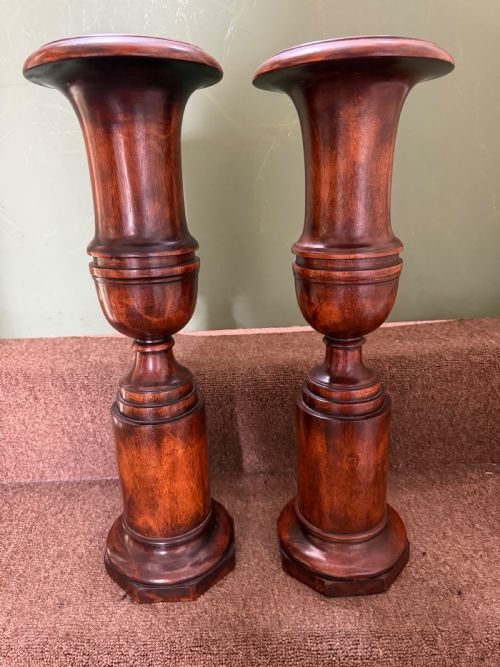
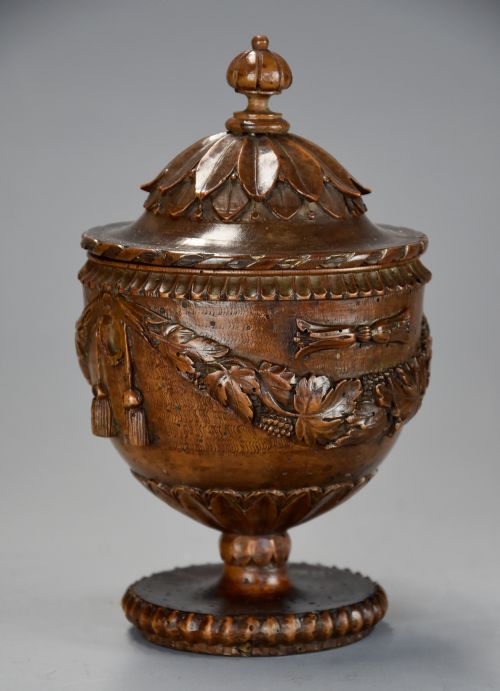
Neoclassical wooden urns take their design cues from classical antiquity, echoing the shapes of ancient vessels found in Mediterranean excavations. The examples you encounter on this page span from the eighteenth century into the nineteenth century, including Georgian and Victorian periods.
Beyond the standard decorative vessels, makers also shaped these forms into lidded cutlery urns designed to stand on dining room sideboards. They appear in carved walnut, mahogany, and satinwood, sometimes paired with pedestals or columns to elevate them in a room.
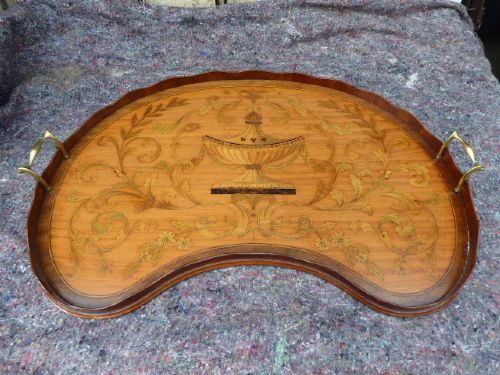
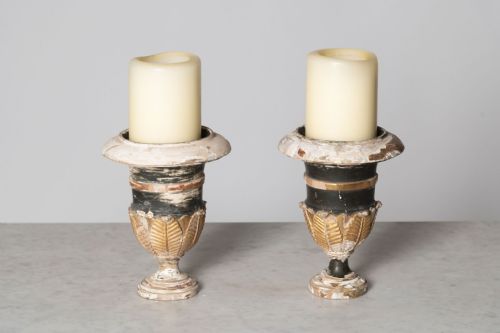
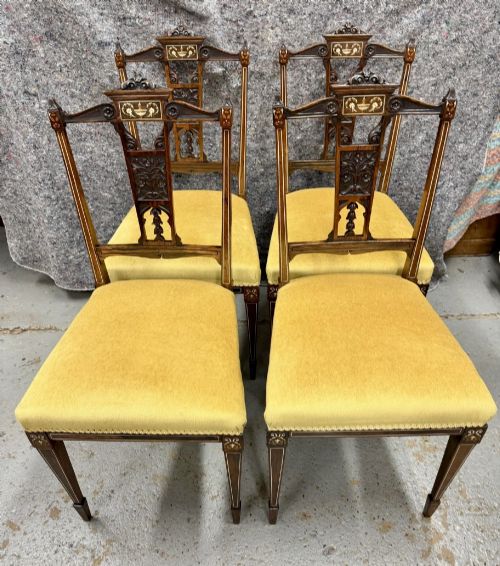
The decorative vocabulary draws on French neoclassical, Sheraton revival, and Georgian design languages. These pieces lean into symmetry, urn profiles, and occasionally marquetry inlay or giltwood highlights to catch the light.
Factors of quality
The standard of a neoclassical wooden urn rests on the crispness of its turned profile and the precision of its hand-carved details. Sharply defined acanthus leaves and clean fluting separate superior examples from softer, more generalized carving.
Choice of timber grain also dictates quality, particularly where mahogany or satinwood figures prominently across the body. The integration of fine marquetry inlay and the retention of an aged surface patina elevate the standing of the piece.
Listings feature mahogany, satinwood, and walnut woods across eighteenth and nineteenth-century periods.
Edwards and Roberts
The Neoclassical Wooden Urns Glossary
- Neoclassical
- A style spanning the eighteenth and nineteenth centuries that revived classical Greek and Roman motifs. It values symmetry, restraint, and architectural proportion.
- Giltwood
- Timber that has been coated with a thin layer of gold leaf or gesso paint. It provides a reflective surface alongside carved wooden elements.
- Pedestal
- An architectural support column used to elevate urns or decorative objects. They appear in carved wood matching the period style of the vessels.
- Cutlery urn
- A lidded vessel designed to store table silver on a sideboard during the Georgian era. These pieces often feature fitted interiors beneath their wooden lids.
Neoclassical Wooden Urns: Frequently Asked Questions
What were wooden urns used for?
These vessels served primarily as decorative ornaments on sideboards, mantelpieces, and pedestals in formal reception rooms. Some specific forms, such as cutlery urns, functioned as storage for dining silver.
Over time, their role shifted toward pure display, embodying the classical taste of their period. They brought architectural balance and proportion to elite interiors.
How do I identify a Georgian urn?
Georgian examples rely on native timber choices like mahogany and walnut, paired with restrained hand-carved classical details. They reflect the strict symmetry of eighteenth-century design.
Later Victorian interpretations often incorporate heavier carving or revival styles like Sheraton or French neoclassical influences. Examining the timber age and construction joints helps confirm the period.
Where should I place an urn?
These pieces suit placement on console tables, pedestals, or overmantles where their classical silhouette commands attention. Pairing them symmetrically on either side of a mirror or doorway reinforces their architectural origins.
Keep them away from direct heat sources and strong sunlight to protect the polished wood surfaces and any underlying gesso.
How do I care for wooden urns?
Dust the turned surfaces regularly with a soft, dry cloth to prevent grime buildup on the carved details. Avoid modern silicone sprays, which can damage historic French polished finishes.
Maintain a stable room humidity to prevent the timber from drying out or splitting over time. Gentle waxing once a year preserves the patina of mahogany and satinwood.