


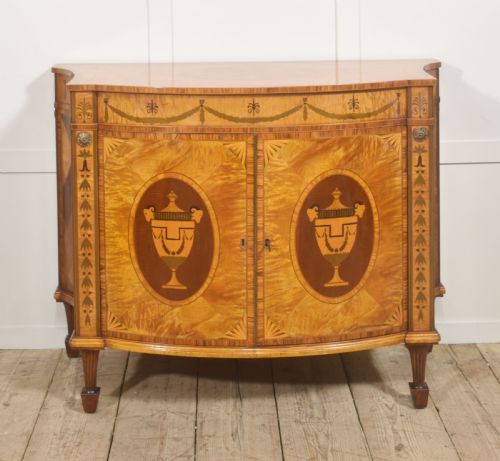


Satinwood Inlaid Urns
These satinwood inlaid urns and related vessels bring neoclassical elegance to a room, prized for their figured grain and crisp contrasting stringing.
Satinwood Inlaid Urns
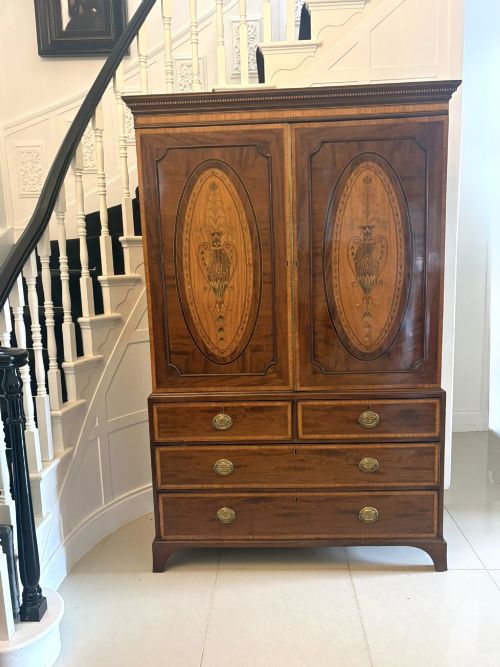
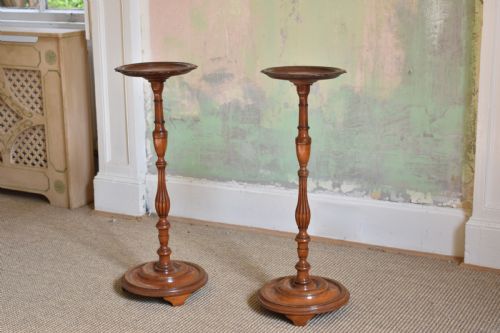
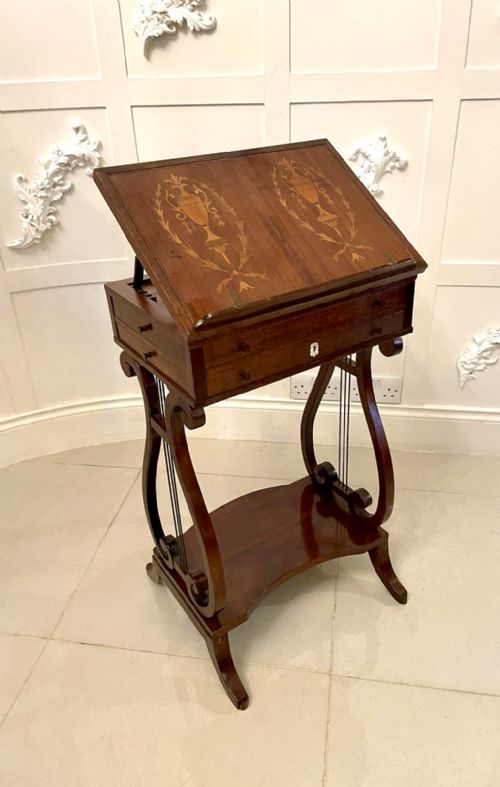
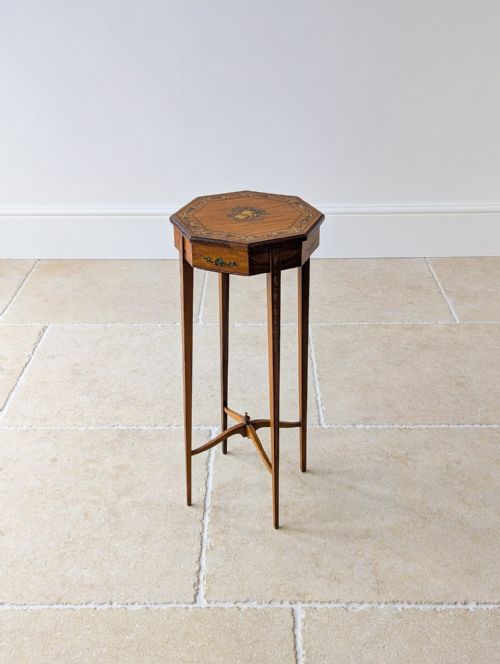
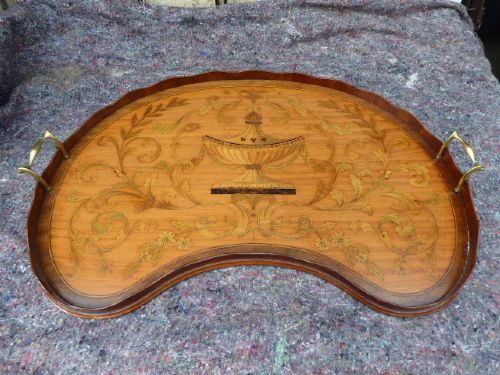
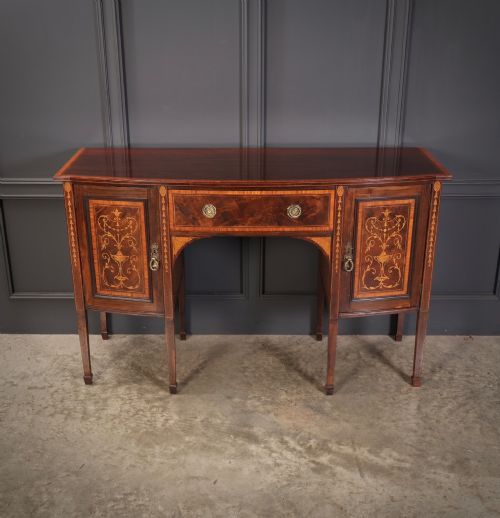
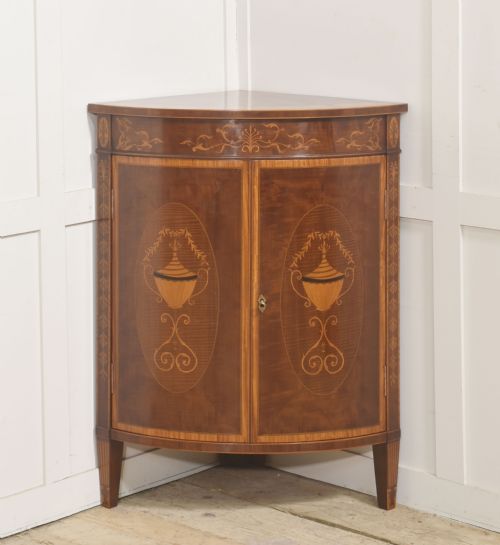
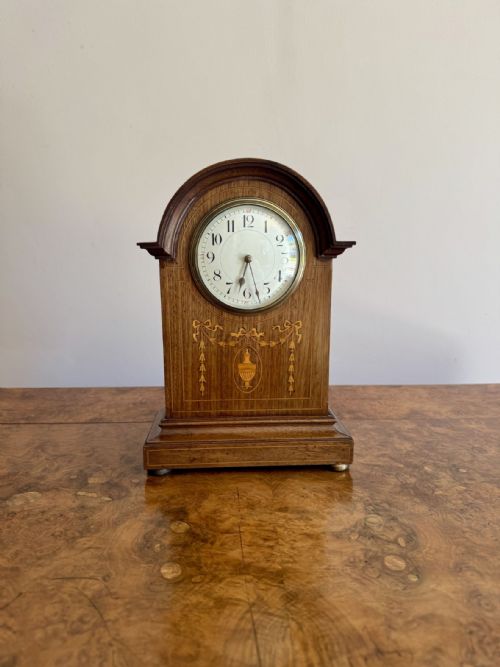
When searching for satinwood inlaid urns, buyers encounter a refined range of decorative vessels and associated stands originating from the Georgian, Victorian, and Edwardian eras. The selection spans classical lidded cutlery urns alongside occasional tables, kettle stands, and side cabinets decorated in the neoclassical taste.
Makers working within the Sheraton and Sheraton Revival styles frequently utilised light timbers for these pieces, employing contrasting veneers to accentuate classical proportions. Surviving examples demonstrate how cabinetmakers adapted urn forms and support furniture for sophisticated domestic interiors across multiple centuries.
The objects listed show a strong representation of Edwardian craftsmanship alongside eighteenth-century prototypes, reflecting a enduring demand for fine marquetry. Whether in the form of dedicated table pedestals or lidded receptacles, these items highlight the disciplined geometry characteristic of revival design.
Materials and construction methods
Cabinetmakers built the carcases using solid mahogany or dense pine before applying thin sheets of figured satinwood to the primary surfaces. Rosewood, boxwood, and ebony were then introduced as contrasting veneers to create delicate crossbanding and geometric stringing.
Marquetry panels incorporated various fruitwoods cut into pictorial or botanical motifs, inserted directly into the primary timber ground. Brass mounts, handles, and hinges provided functional and decorative accents that complemented the warm tones of the polished wood.
Object types include kettle stands, side cabinets, and occasional tables alongside lidded urns and serving trays.
Distinguishing quality across the range
The hierarchy of quality rests primarily on the depth and precision of the marquetry work and the choice of veneer. Superior pieces display tightly figured satinwood with minimal patching, whereas lesser examples rely on painted details or simpler border banding.
Structural integrity and the retention of original brass hardware heavily influence the standing of an item. Workshops known for high output, such as Edwards and Roberts, maintained strict standards in carcase assembly and surface finishing that differentiate their output from anonymous provincial production.
Edwards and Roberts
The Satinwood Inlaid Urns Glossary
- Satinwood
- A lustrous, hard timber native to Ceylon and the West Indies, valued for its golden yellow sheen and smooth grain. It served as the primary veneer for high-status neoclassical furniture from the eighteenth century onward.
- Marquetry
- The art of applying decorative veneer pieces of different woods, metals, or shells to a structural carcase to form elaborate pictures or abstract patterns. Unlike inlay, which sinks pieces into a solid carved recess, marquetry covers the entire surface.
- Stringing
- Thin, narrow strips of contrasting wood let into grooves on furniture surfaces to create linear outlines and frame panels. Boxwood and ebony were standard choices for this sharp visual definition.
- Demi-lune
- A half-moon shape used for the tops and carcases of side tables and cabinets designed to stand flush against a wall. This profile allowed makers to incorporate curved satinwood veneers.
- Sheraton Revival
- A late nineteenth and early twentieth century design movement that reinterpreted the light, classical furniture forms of the eighteenth-century designer Thomas Sheraton. Pieces from this period frequently feature extensive satinwood and marquetry decoration.
Satinwood Inlaid Urns: Frequently Asked Questions
What are satinwood inlaid urns?
These pieces are decorative vessels and associated support furniture constructed with golden satinwood veneers and contrasting wood details. They draw heavily on neoclassical design principles popular during the Georgian period and revived in Edwardian times.
Craftsmen utilised detailed marquetry and fine stringing to accentuate the classical silhouette of each piece. Collectors value them for the warmth of the timber and the precision of the cabinetwork.
How do I identify a Sheraton Revival piece?
Sheraton Revival items typically date from the late nineteenth or early twentieth century and imitate the lighter proportions of eighteenth-century furniture. They often feature bright satinwood veneers, painted or inlaid marquetry, and tapered legs.
Examination of the secondary woods and construction techniques helps distinguish these later interpretations from genuine Georgian originals. The use of machine-cut veneers usually points toward the later revival era.
How were these pieces used historically?
Cutlery urns sat upon sideboards or dedicated pedestals in dining rooms to hold silver flatware during formal meals. Other companion forms, such as kettle stands and occasional tables, provided stable surfaces for tea service and decorative display.
Their placement in formal reception rooms signalled the refinement and hospitality of the household. Over time, many transitioned from active dining service to purely decorative furnishings.
How should I care for satinwood furniture?
Satinwood requires stable indoor humidity levels to prevent the fine veneers from lifting or cracking. Direct sunlight should be avoided to protect the golden tones of the wood from fading.
Occasional dusting with a soft, dry cloth is sufficient for routine maintenance. Traditional wax polishes can be applied sparingly to nourish the timber and preserve the historic finish.