


Pair Knife Urns
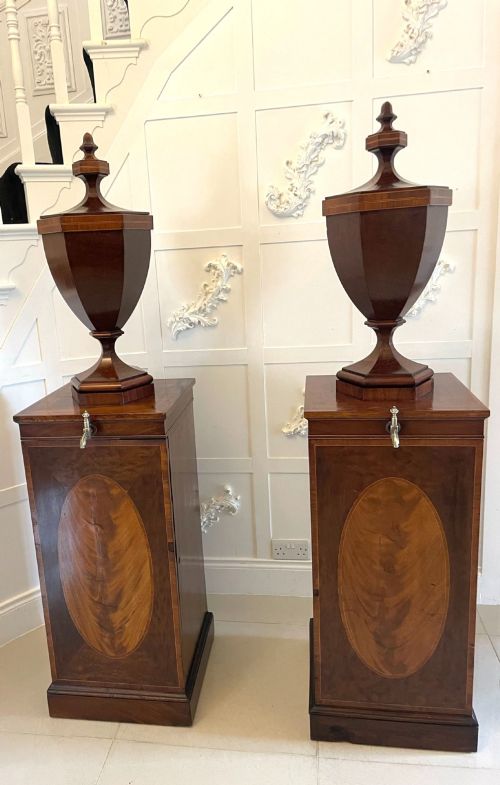
These pair antique knife urns are formal dining room pieces designed to hold cutlery, bringing striking Georgian architectural symmetry to a sideboard.
Pair Knife Urns
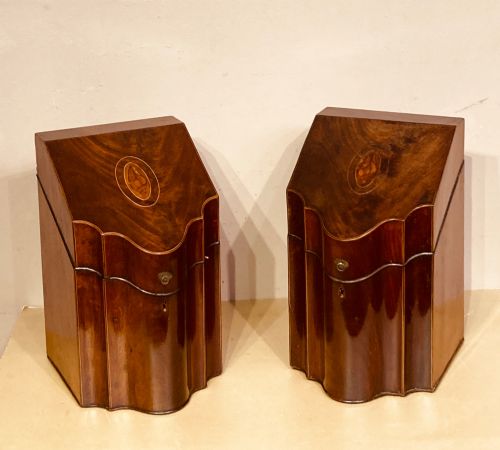
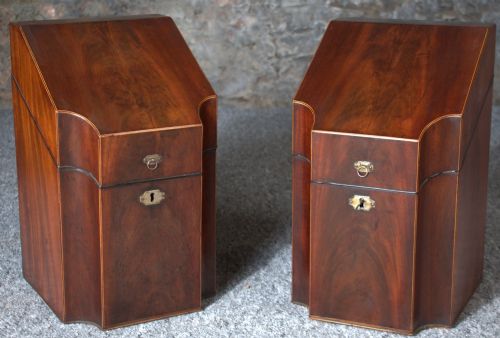
When you search for pair antique knife urns, you encounter formal dining accessories originating primarily from the eighteenth century and the Victorian era. These items take the form of classical urns on pedestals or sloping wooden boxes designed to store table cutlery.
Originating in grand dining rooms to display wealth and organise tableware, these pieces serve as monumental decorative objects today. Their presence defines a traditional interior, combining utility from the past with strong architectural silhouettes.
How they were made
Cabinet makers constructed these pieces primarily from solid mahogany, often enhancing the surfaces with delicate boxwood and wood inlay. The joinery reflects high eighteenth-century standards, utilising curved panels and shaped lids to achieve classical proportions.
Detailing on finer examples includes cast brass mounts and, in exceptional instances, solid silver mounts fitted to the body. Interiors often retain tiered wooden inserts originally carved to hold individual knives upright.
Listings feature pieces spanning the eighteenth and nineteenth centuries, dominated by Georgian mahogany forms and late Victorian inlaid cutlery urns.
What varies in quality
The distinction between standard examples and superior pieces rests upon the crispness of the inlay work and the richness of the timber's patina. Urns featuring original pedestals command greater attention than isolated boxes due to their architectural completeness.
Proportion and wood selection dictate visual success, with narrow bow fronts and contrasting satinwood stringing marking out the most accomplished cabinet work.
The Pair Knife Urns Glossary
- Mahogany
- A dense tropical hardwood prized for its deep reddish-brown colour and durability. It served as the primary timber for high-status eighteenth-century dining furniture.
- Boxwood Inlay
- A contrasting light-coloured wood inserted into recesses in the darker mahogany surface. This technique creates geometric borders and delicate decorative lines.
- Solid Silver Mounts
- Cast metal attachments made from precious silver rather than plated base metal. They adorn the exterior to signal exceptional wealth and status.
- Bow Front
- A convex, outwardly curved front section on a cabinet or box. This shape softens the rigid angles of dining furniture.
- Pedestal Cupboard
- A foundational cabinet designed to support an urn above. These units elevate the cutlery storage to monumental heights.
Pair Knife Urns: Frequently Asked Questions
What were pair antique knife urns used for?
These vessels stood at either end of a sideboard in grand dining rooms during the eighteenth century. Servants used them to store and present handled cutlery before the meal commenced.
After dining, the knives were returned to the fitted interior compartments to keep them secure and tidy. Today, they function purely as decorative focal points in formal dining spaces.
How do I date pair antique knife urns?
Dating relies on examining the timber, construction methods, and stylistic cues such as neoclassical urn shapes or bow fronts. Pieces from the eighteenth century typically display hand-cut dovetails and genuine period timber patination.
Later Victorian interpretations often incorporate machine-cut elements or stylised revival decoration. Comparing the internal fittings and inlay details against documented Georgian examples clarifies the timeline.
How do I live with pair antique knife urns?
Position these substantial pieces on a large sideboard, serving table, or dedicated pedestals where their vertical symmetry can be appreciated. Keep them away from direct sunlight and strong heat sources to protect the polished mahogany surfaces and delicate inlay.
Maintenance requires only gentle dusting with a dry cloth, avoiding modern chemical polishes that can damage the historic finish. Treat the antique wood with respect to preserve its natural patina over decades.
Are these urns sold as pairs?
The listings here consist of matched pairs or original matched sets combining urns and pedestal cupboards. This reflects the historical manner of displaying dining room furnishings in strict symmetry.
Collectors prize matched pairs because surviving examples from the eighteenth century are exceptionally scarce. Each item complements the other in timber grain, height, and decorative detail.