


Neoclassical Wall Table
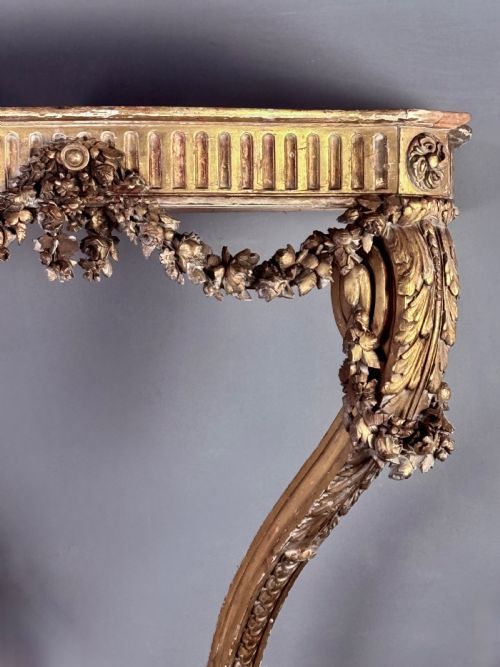
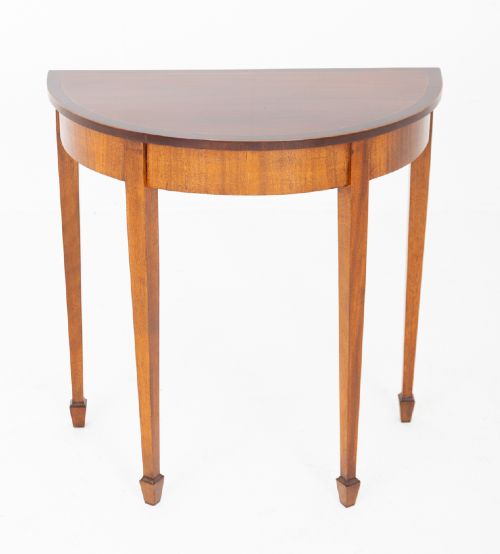
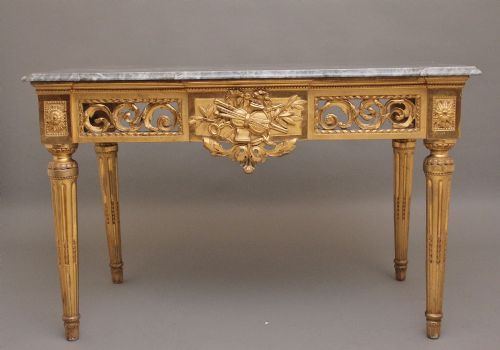
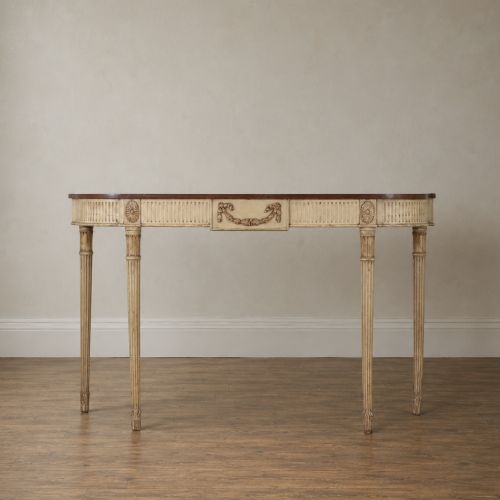
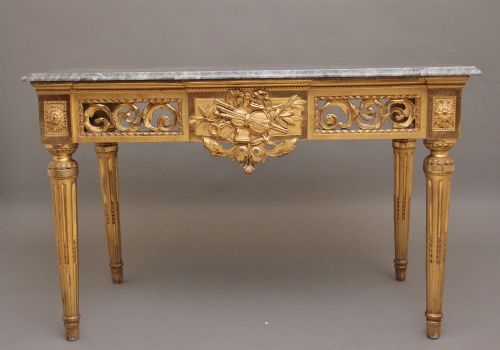
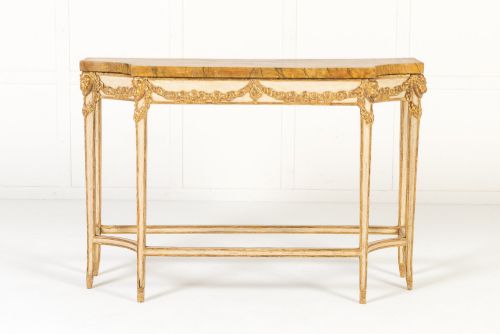
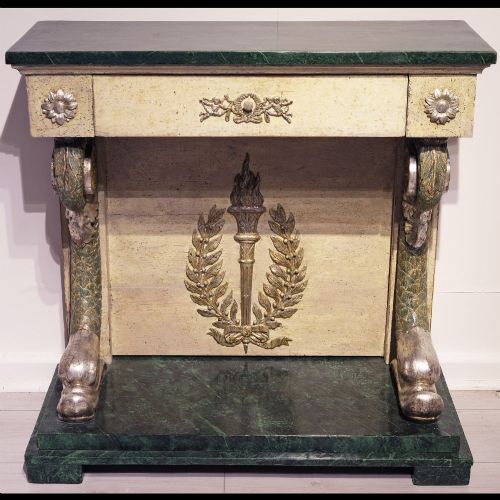
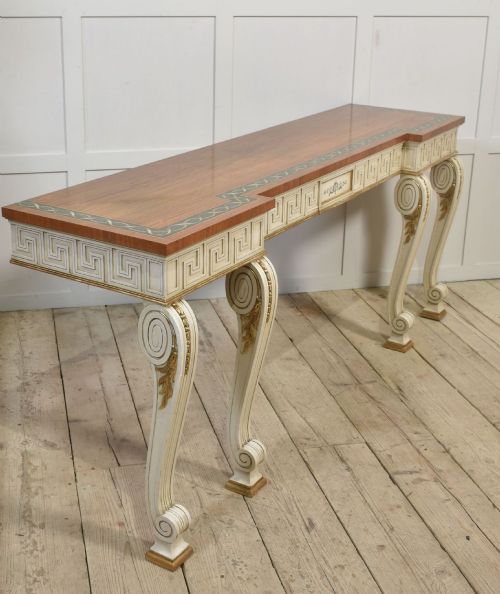
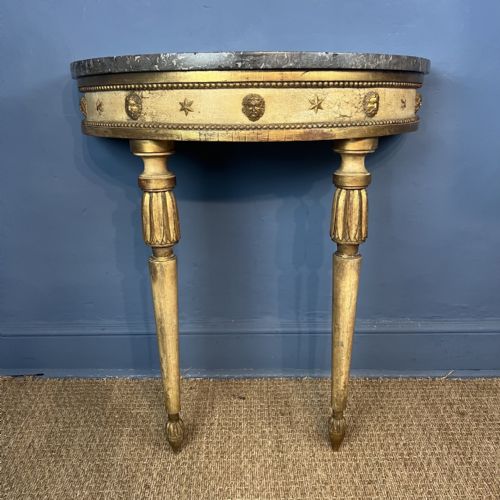
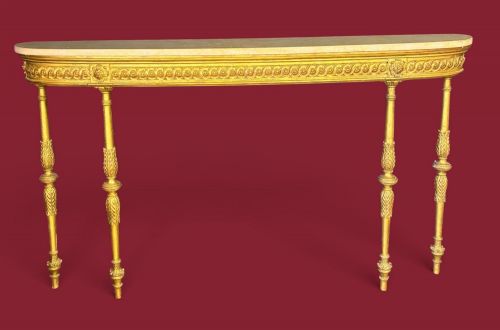
These neoclassical wall table examples combine marble and giltwood to anchor a hallway with period proportion.
Neoclassical Wall Table
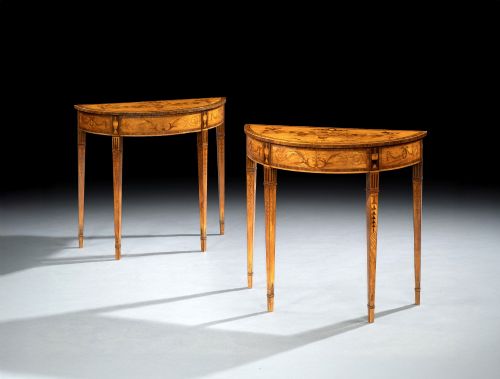
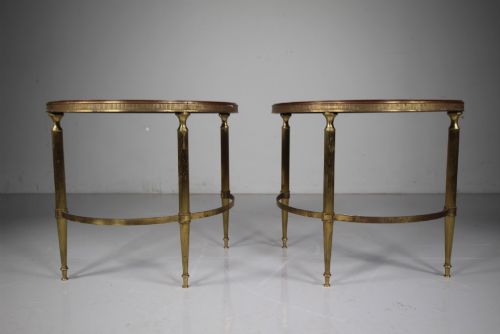
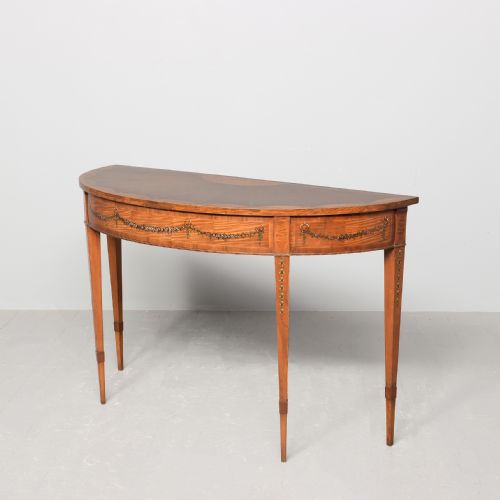
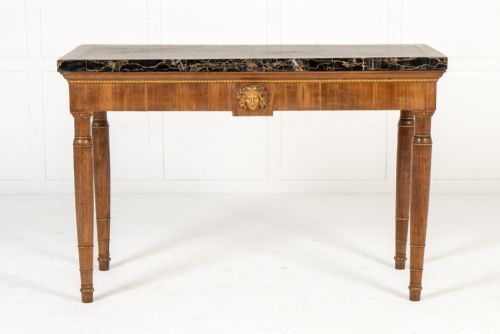
A neoclassical wall table serves primarily as a console, pier, or side table designed to sit flat against a vertical surface, frequently paired with a matching mirror. The selection encompasses diverse forms ranging from demi-lune serving tables to narrow console bases and serpentine side tables.
Originating across various European centres, the pieces span the 18th century, the Regency and Victorian eras, through to the early 20th century. Italian, French, Swedish, and English workshops each contributed distinct regional interpretations to the style.
The most common formats met on this page include Italian and French giltwood consoles alongside Georgian mahogany and satinwood demi-lune pieces. Many examples incorporate painted wood finishes, parcel gilt details, or inlaid marquetry.
Materials and construction
Cabinetmakers utilised primary timbers such as mahogany, satinwood, walnut, and kingwood for structural frames and semi-circular tabletops, frequently applying paint and gesso over carved wooden surfaces.
Heavy stone surfaces including marble, faux porphyry, and granite form the tops of many console tables, supported by elaborate giltwood or carved wooden bases.
Neoclassical Wall Table Retail Price Guide 2026
Typical asking prices for neoclassical wall table among the pieces listed under this phrase on Sellingantiques today, from the lower quarter to the upper quarter. They describe what is for sale here now, not the wider market.
Listings combine 18th-century Italian giltwood with 19th-century French painted wood and early 20th-century mahogany.
Judging quality in execution
The distinction between tiers rests upon the crispness of hand carving on giltwood frames and the precision of marquetry or inlay on satinwood and mahogany surfaces. Finer examples display fluid lines in structural timber and balanced proportions in painted or parcel gilt ornamentation.
Material selection dictates the upper range, where genuine marble and specimen stone slabs meet custom giltwood and hand-painted decorative schemes rather than plain painted wood.
Felix Alfred Ternisien·Jean Joseph Chapuis
The Neoclassical Wall Table Glossary
- Demi-lune
- Half-moon shape. This term describes tables with a semicircular top designed to stand flat against a wall.
- Giltwood
- Wood coated with gold leaf or gold paint. Artisans applied this finish extensively to carved frames during the eighteenth and nineteenth centuries.
- Pier table
- A table designed to stand against the wall between two windows, frequently positioned beneath a matching pier mirror.
- Marquetry
- Inlaid patterns of wood veneer. Craftsmen used contrasting timbers to create decorative motifs on tabletops.
Neoclassical Wall Table: Frequently Asked Questions
Where should a neoclassical wall table go?
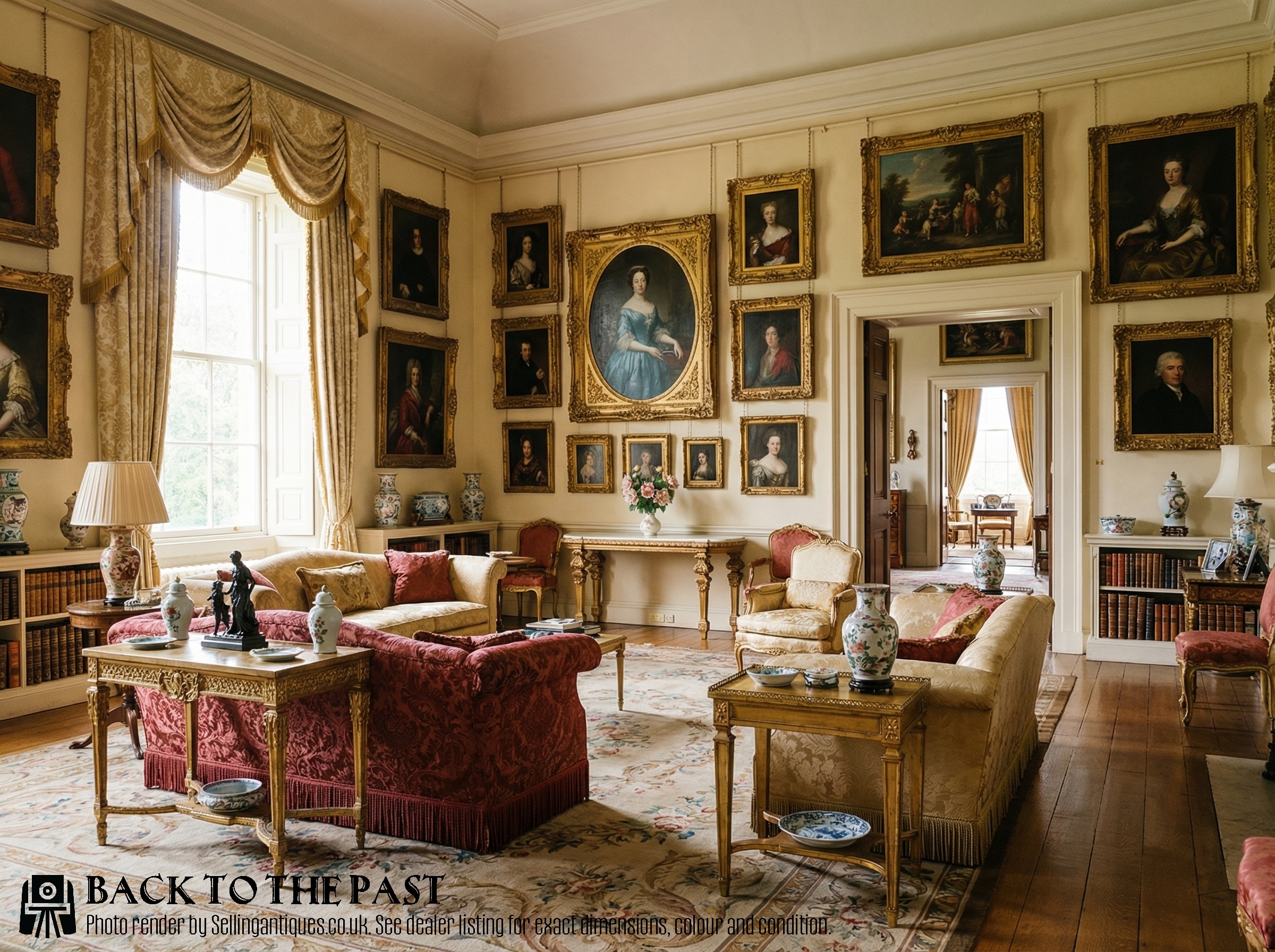
These tables fit best in entrance halls, formal living rooms, or narrow corridors where floor space is limited. Because their backs sit flat against the wall, they provide a surface for lamps and decorative objects without blocking movement.
Piers and consoles often align beneath a wall mirror or painting to create a balanced focal point in a reception space.
How do I identify a Georgian piece?
Georgian tables typically utilise mahogany, satinwood, or walnut timber, often taking a demi-lune form with inlaid marquetry or painted details. The proportions reflect 18th-century English design principles.
Later revival pieces from the Victorian era or the early twentieth century replicate these forms using similar hardwoods and painted finishes.
Are marble tops original to these tables?
Many console and pier tables incorporate heavy marble, granite, or faux porphyry tops that were paired with the wooden base during manufacture. Italian and French pieces frequently feature stone surfaces designed to bear decorative objects.
When assessing a piece, check how the stone rests within the wooden or giltwood frame to understand its period context.
What is the difference between a console and a side table?
Console tables traditionally rely upon the wall for physical support or attach directly to the vertical surface alongside floor legs. Side tables stand independently on four or more legs.
In historical listings, the terms frequently overlap, particularly regarding demi-lune and pier formats.