
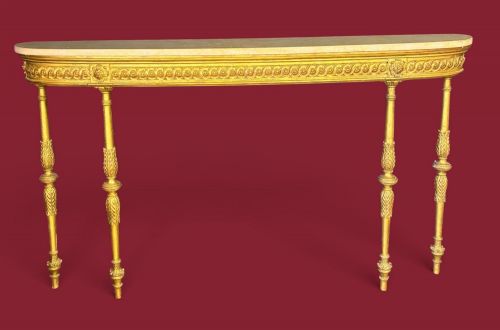


Gilded Hallway Table
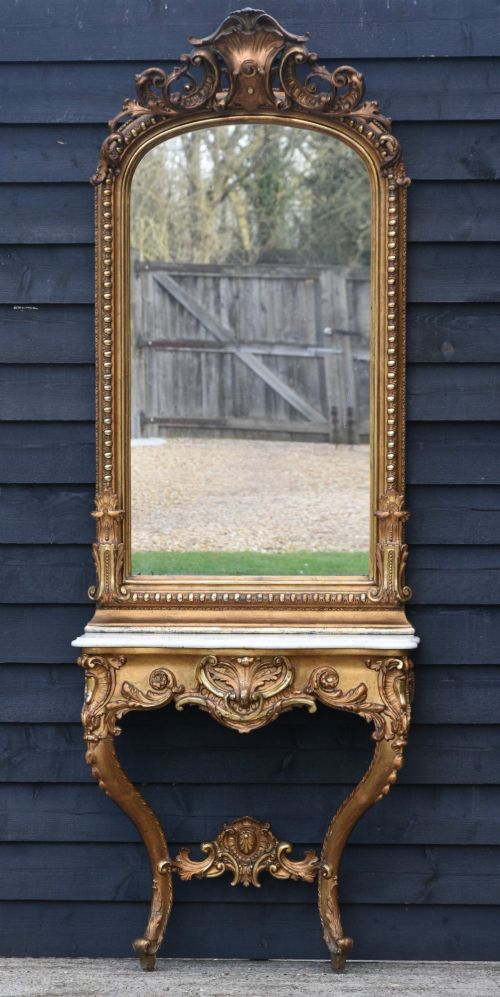
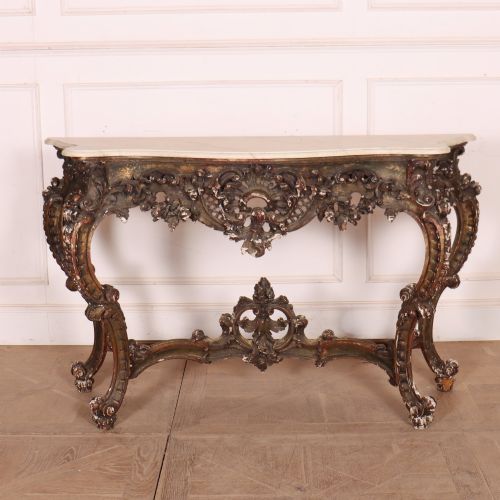
A gilded hallway table brings instant architectural presence and a reflective gleam to an entrance, making these decorative console tables and console and mirror sets highly sought after.
Gilded Hallway Table
A gilded hallway table is fundamentally a console table designed to sit flat against a wall, frequently accompanied by a matching pier mirror or trumeau mirror. These pieces serve as a striking focal point in entrance halls and reception spaces, combining surface utility with grand decorative ambition.
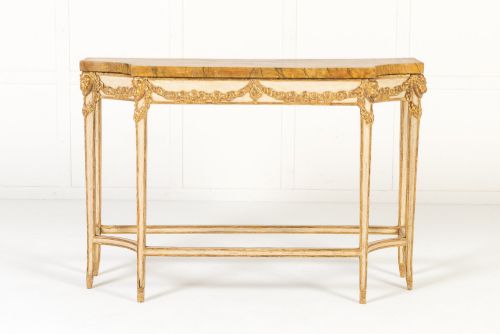
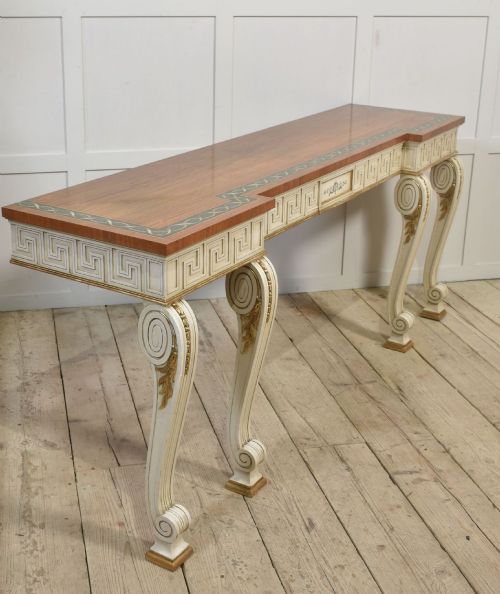
The versions met most often on this page hail from the nineteenth century, reflecting French Rococo, Louis XVI, and Neoclassical design vocabularies. They typically present rectilinear or serpentine outlines supported by carved and gilded framework, often topped with fitted marble.
Makers and workshops across Britain, France, and Italy produced these tables to anchor formal interiors, utilising monumental mirrors to amplify light and space. Surviving examples range from simple painted and parcel-gilt side furniture to elaborate carved giltwood suites.
Materials and Construction
Construction relies upon carved wood, gesso, and gold leaf applied to create rich giltwood surfaces, alongside painted wood finishes and simulated woods. Artisans carved intricate decorative motifs into wooden frames before applying layers of gesso to smooth the ground for gilding.
Heavy marble slabs form the characteristic tabletops, resting directly upon the wooden consoles to provide a cool, durable surface. Glass forms the primary element of the associated pier mirrors and trumeau frames, held within matching carved surrounds.
Listings feature nineteen distinct dealers offering nineteenth-century console tables alongside pieces from the Edwardian era.
Distinctions in Quality
Quality reveals itself primarily in the depth, crispness, and hand-carved detail of the wooden ornamentation, where fluid organic forms or precise neoclassical motifs separate masterwork carving from mechanical execution. The application of gold leaf and the subtlety of parcel-gilt detailing also dictate the visual richness of the surface.
The weight, figuring, and thickness of the fitted marble top contribute significantly to the structural integrity and prestige of the piece. Furthermore, completeness determines distinction, particularly when a console table survives with its original matching wall mirror or trumeau.
Gillows
The Gilded Hallway Table Glossary
- Console Table
- A table designed to be fixed against a wall, traditionally supported by two front legs or brackets with the rear secured to the wall.
- Giltwood
- Timber that has been coated with thin sheets of gold leaf over a prepared gesso ground.
- Gesso
- A plaster-like mixture applied to wood to provide a smooth surface for gilding or painting.
- Trumeau
- A decorative wall mirror or panel featuring painted or carved artwork within the upper section.
- Serpentine Front
- A table front characterised by a curving line that sweeps outward at the centre and inward at the sides.
Gilded Hallway Table: Frequently Asked Questions
What is a gilded hallway table used for?
These tables provide a compact yet ornate surface in narrow spaces such as hallways and entrance vestibules. They hold decorative objects like lamps or vases while enhancing the room's light through paired mirrors.
Historically, they established an immediate impression of status and refinement upon entering a formal residence. Today, they continue to serve as functional accent furniture in grand and modest interiors alike.
Are marble tops original to these tables?
Most nineteenth-century console tables designed in the neoclassical and French taste were manufactured with fitted marble tops. These heavy stone slabs rested securely within the wooden framework of the console.
Variations in marble colour and thickness reflect the specific regional workshop and period of production.
How do I style a console table in a modern hallway?
Pair the table with a matching giltwood or trumeau mirror hung directly above to anchor the composition visually. Keep surface styling minimal to allow the carved wood and gilding to remain the primary focus.
A single statement object or a pair of slender candlesticks complements the historical character of the piece without cluttering the marble surface.