

French Style Console
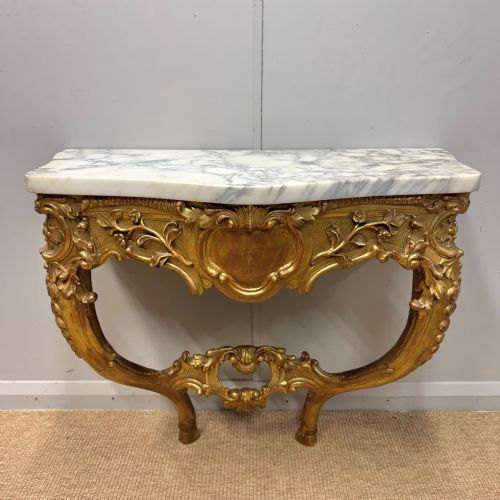
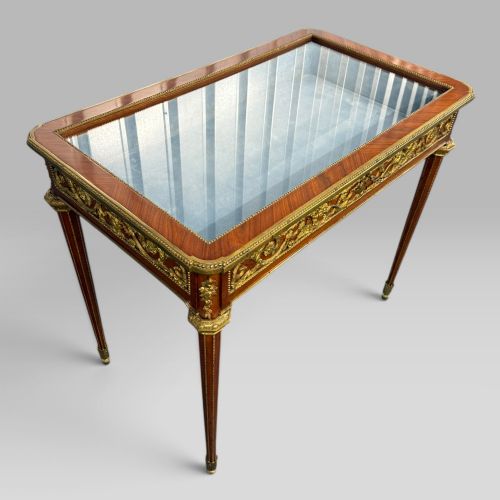
A french style console brings classical Continental elegance into an interior, offering a surface of marble or polished timber set against carved giltwood or mounted bronze.
French Style Console
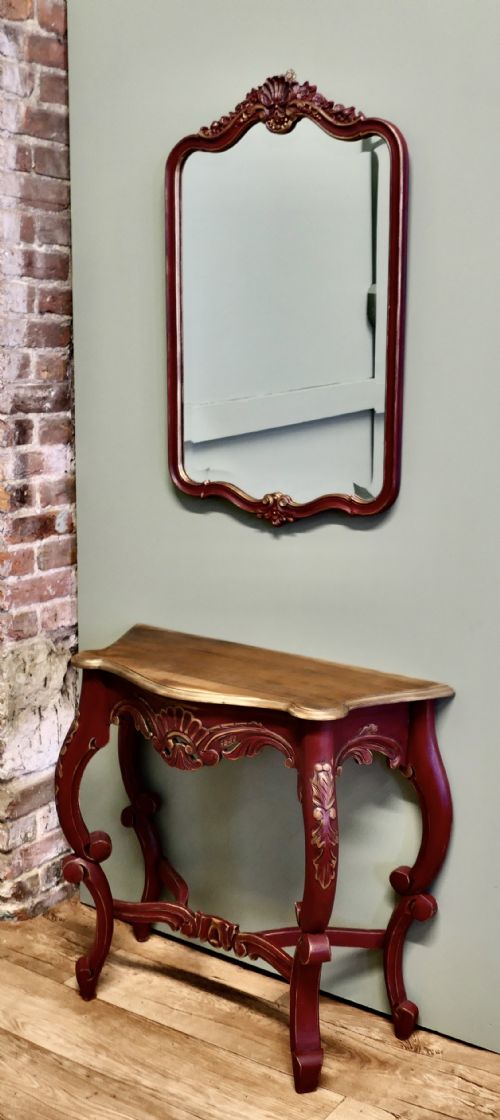
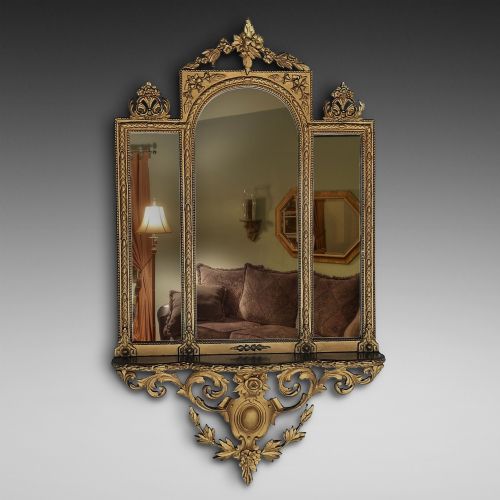
A french style console encompasses wall tables, demi-lune forms and pier tables designed to anchor a room, frequently paired with matching mirrors or brackets. These pieces draw heavily on historical vocabularies, notably Louis XV and Louis XVI revivals, alongside Empire and Rococo expressions.
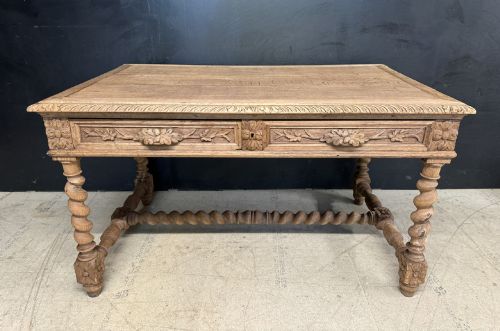
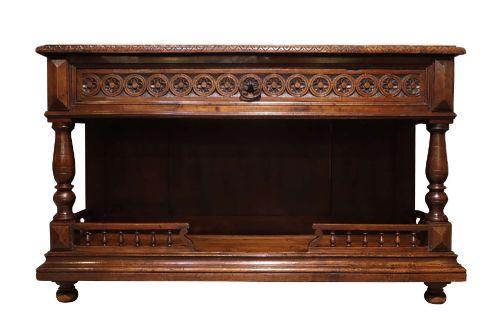
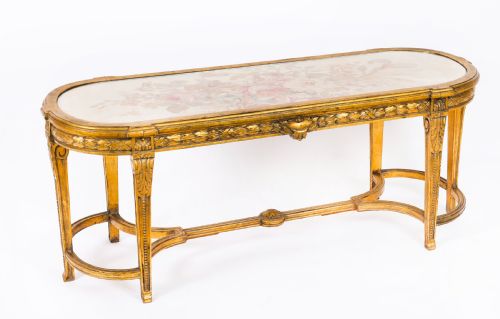
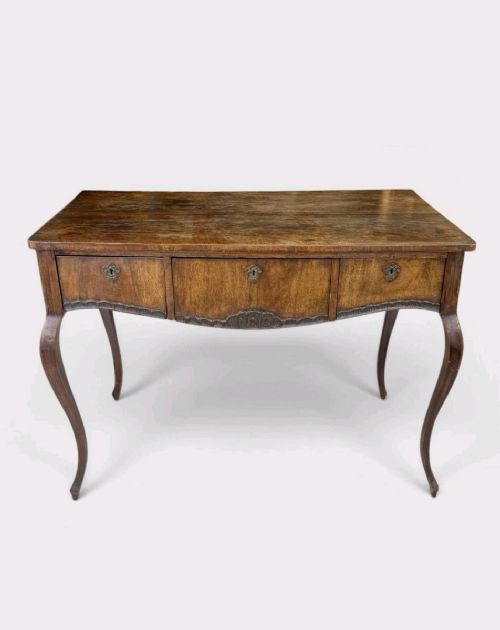
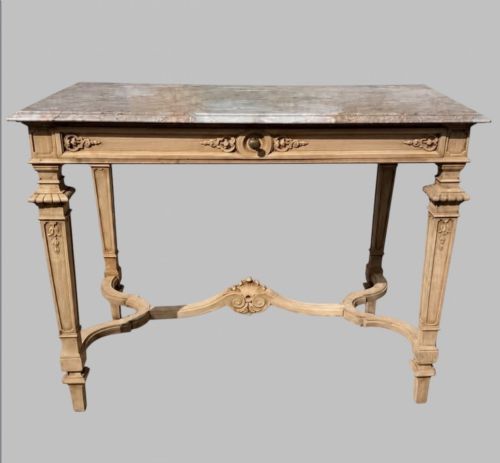
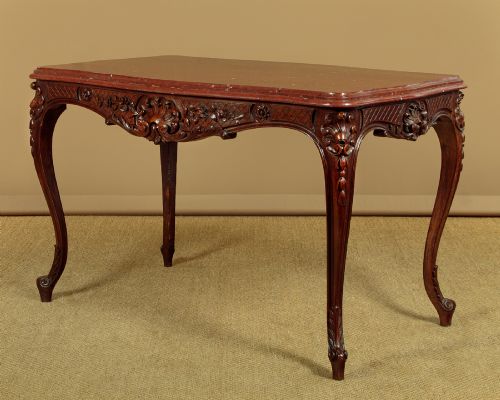
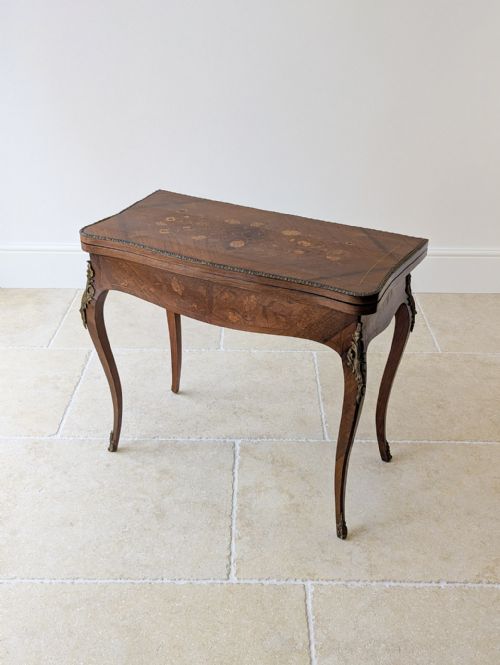
The selection ranges from compact nineteenth-century side tables with marble slabs to substantial giltwood bases and marquetry card tables that convert for gaming. Buyers encounter both provincial oak interpretations and elaborately carved, gilded specimens intended for formal reception rooms.
Originating largely from nineteenth-century revivals of earlier court aesthetics, these tables reflect an enduring British and European appetite for continental ornamentation. They serve practical functions as hall furniture or display surfaces while maintaining a sculptural presence.
Materials and construction
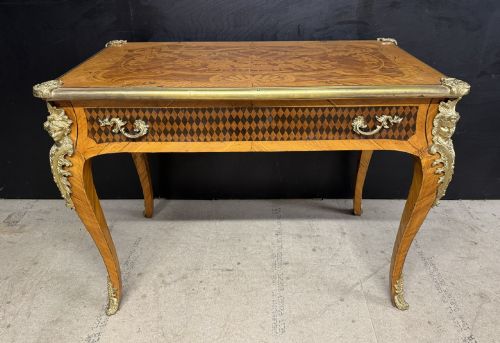
Makers utilised dense cabinet timbers such as mahogany, walnut, kingwood and tulipwood, often laying down intricate marquetry or floral veneers across the top and apron. Structural carcasses frequently relied on oak or pine to support heavy stone components.
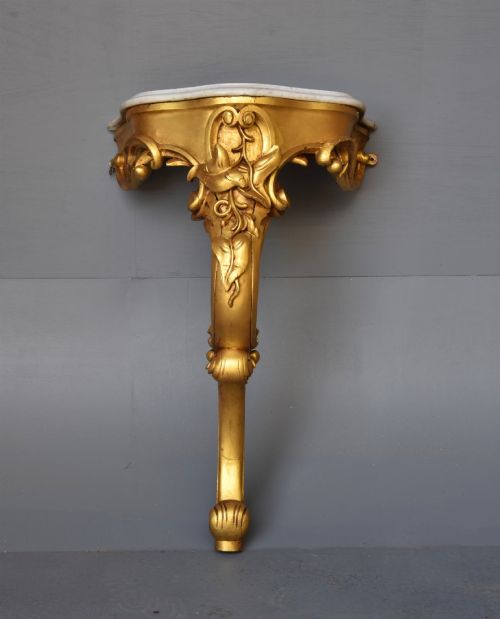
Slabs of white, rouge or grey marble form the characteristic top of many examples, cut to follow rectangular, serpentine or demi-lune shapes. Ormolu, brass and gilded bronze mounts provide crisp neoclassical or rococo accents around drawers, aprons and legs.
Giltwood and gesso surfaces received layers of gold leaf applied over bole, sometimes combined with hand-carved walnut or painted antique white finishes. Cabinetmakers employed traditional joinery, including dovetailed drawers and pegged framing, to ensure longevity.
The inventory spans the eighteenth, nineteenth and early twentieth centuries, encompassing Victorian and Edwardian revivals.
Distinctions in craftsmanship
Quality rests significantly on the depth and precision of the hand-carving in the wood or gesso, where sharper undercut foliage and crisper moulding separate superior workshops from mass production. The weight and chasing of ormolu mounts further indicate the level of investment in a piece.
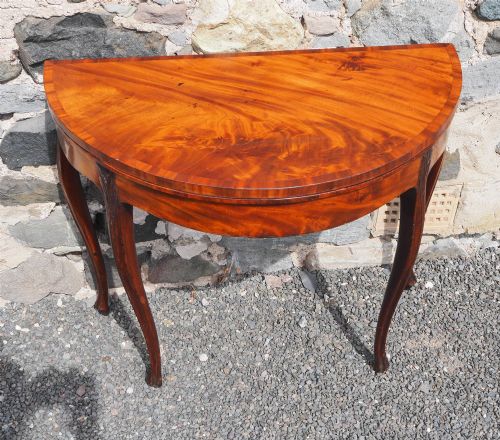
The choice of timber veneers and the intricacy of marquetry patterns reveal the maker's skill, particularly in balanced grain matching across demi-lune surfaces. Heavier, thicker marble tops with bevelled edges and secure sub-frames denote higher-tier production.
Signed stamps from notable cabinetmakers or documented workshop attributions elevate certain pieces beyond standard decorative output, reflecting exceptional standards maintained during the nineteenth-century revival periods.
François Linke·Felix-Alfred Ternisien·Krieger Paris·G T Morant·JACOB
The French Style Console Glossary
- Ormolu
- Gilded bronze mounts cast and chased with ornamental details, commonly applied to the corners and aprons of furniture.
- Demi-lune
- Half-moon shape used for console tables designed to stand flush against a wall.
- Giltwood
- Timber coated with gold leaf over a prepared ground, typical of formal nineteenth-century frames and console bases.
- Marquetry
- Inlaid patterns of contrasting veneers assembled to create pictorial or geometric designs across tabletops.
- Pier table
- A low table designed specifically to sit against the wall between two windows, often beneath a matching mirror.
French Style Console: Frequently Asked Questions
How do I style a console table?
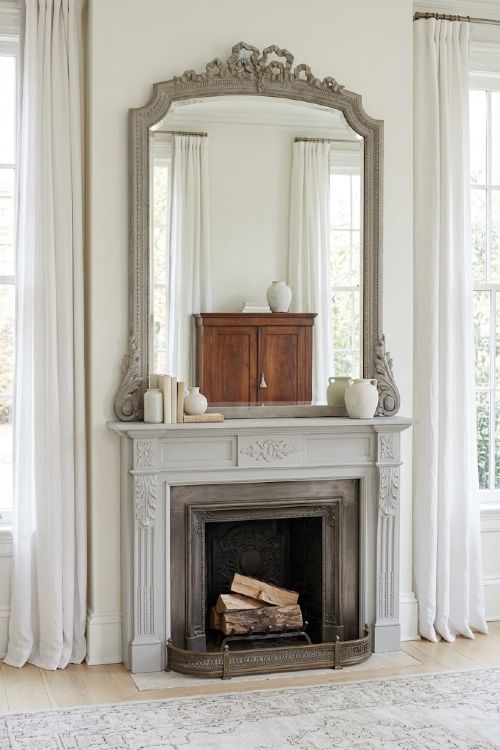
Place the table against a primary wall in a hallway or reception room, anchoring it beneath a tall mirror or artwork. Keep the surface uncluttered with a single lamp, a small ceramic dish, or a pair of decorative objects.
Ensure the scale of the table matches the surrounding wall space, allowing clearance for foot traffic if placed in a narrow corridor.
Are marble tops original to these tables?
Many nineteenth-century console and side tables were specifically designed to carry heavy marble slabs, which provided a durable and cool surface for drinks or floral arrangements. These stones are usually fitted directly into a rebated wooden frame designed to distribute the weight evenly.
Replacement marble is occasionally found on older bases, so inspecting the underside for matching brackets or historical seating marks helps confirm originality.
Can these tables be used for writing?
Certain variations incorporate drawers or fold-over tops designed specifically for correspondence, games or administrative tasks. Bureau plat and card table variants offer functional writing surfaces while retaining decorative appeal.
Check the interior height and knee clearance before designating a console for daily desk work, as many historical examples were built primarily for display.