

Neoclassical Marble Top Table
A neoclassical marble top table brings architectural restraint and polished stone into a room, offering a surface of classical dignity.
What They Are
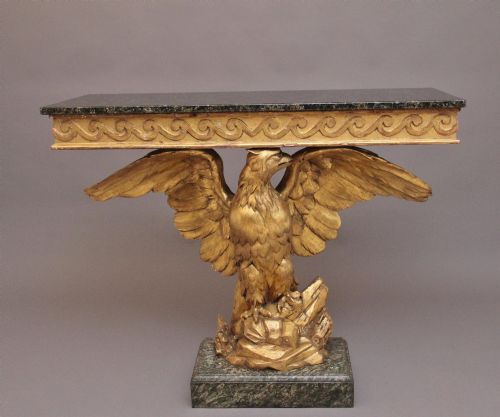
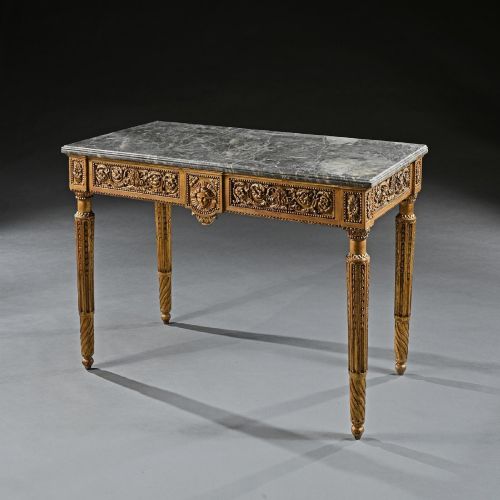
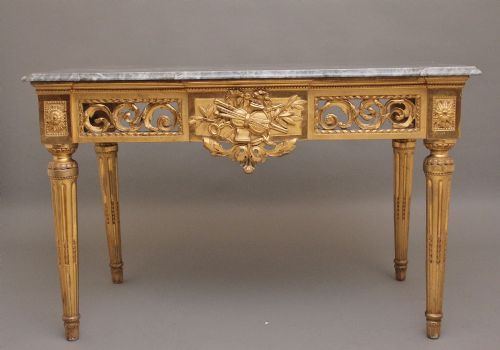
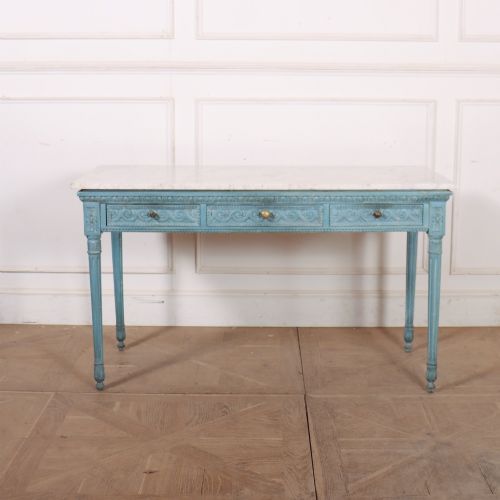
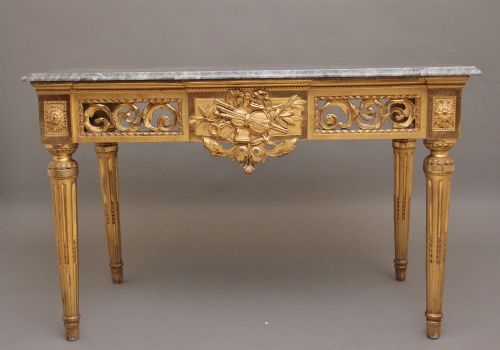
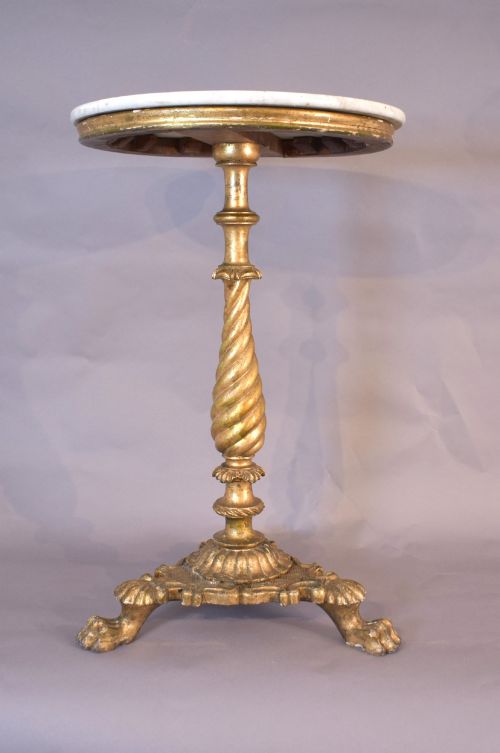
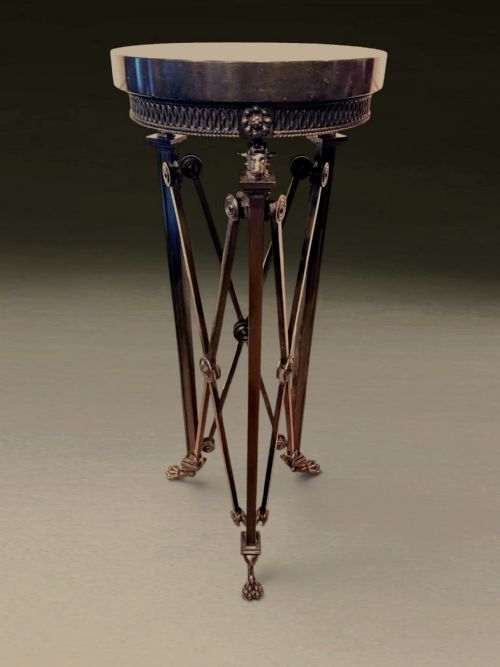
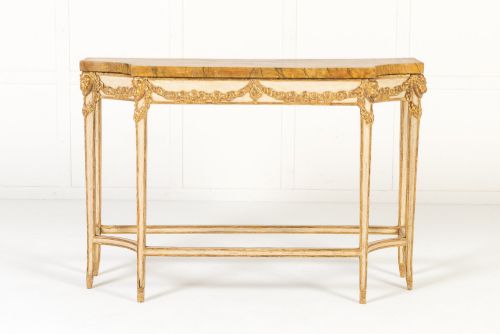
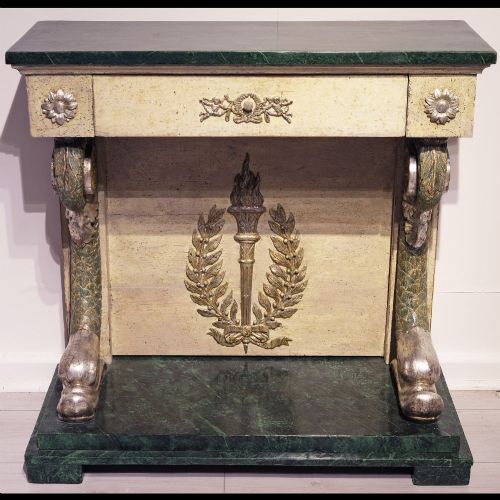
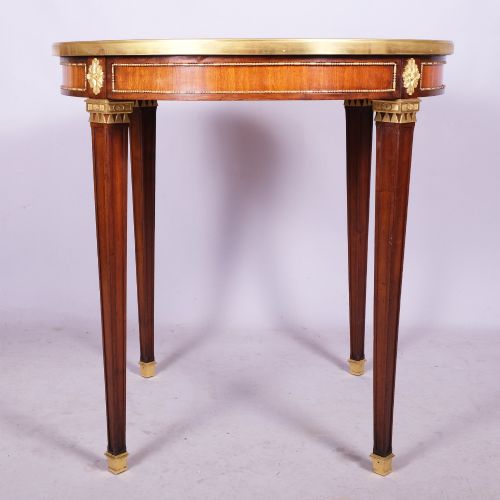
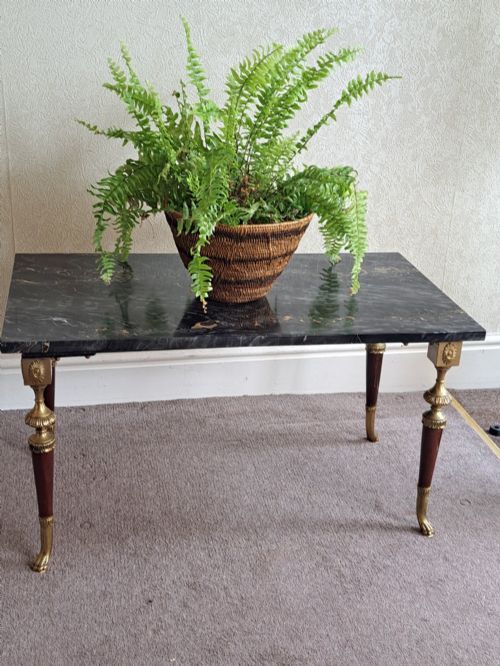
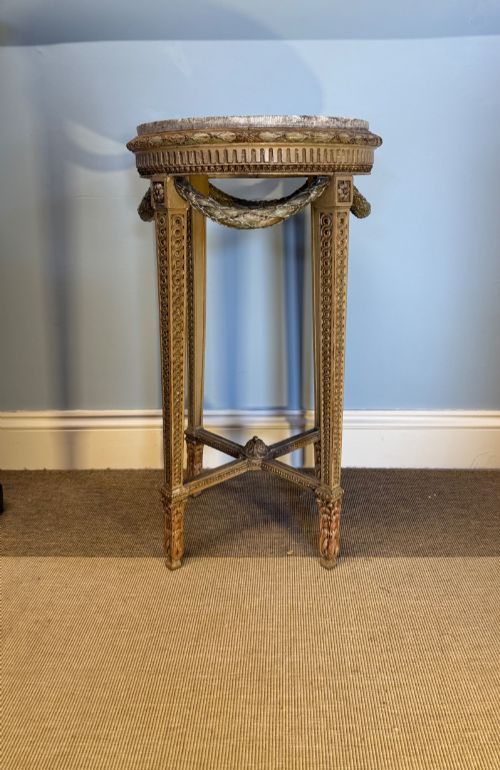
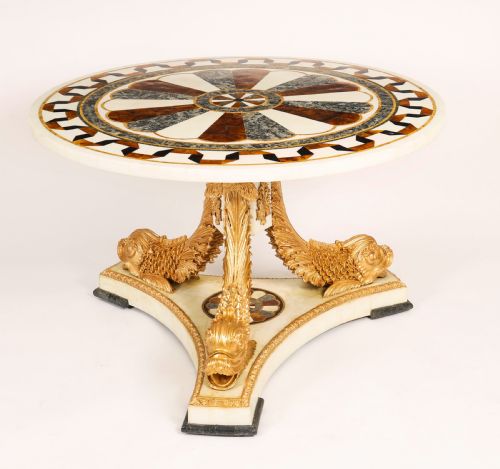
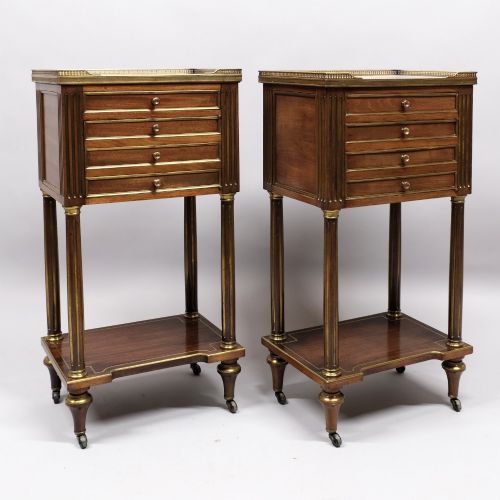
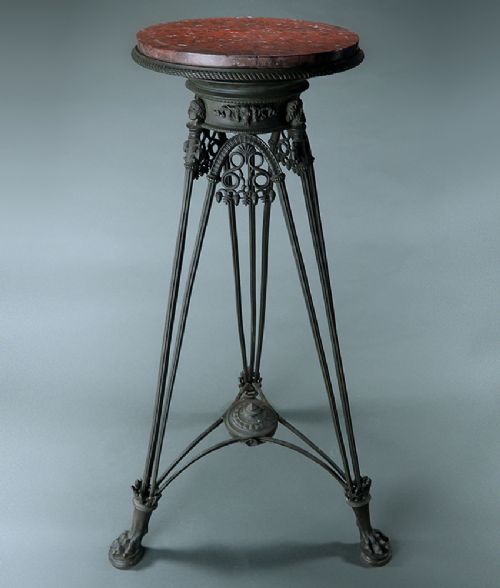
When you search for a neoclassical marble top table, you are looking at console tables and pedestal tables shaped by classical ideals of symmetry and proportion. These pieces combine heavy stone surfaces with ornate wooden frames designed to anchor a hallway or principal reception room.
The versions you are most likely to meet on this page span the nineteenth century and around nineteen hundred, featuring rectilinear or shaped marble slabs supported by carved giltwood frameworks. They reflect an enduring fascination with antiquity, channelled through nineteenth-century British interpretations of classical design.
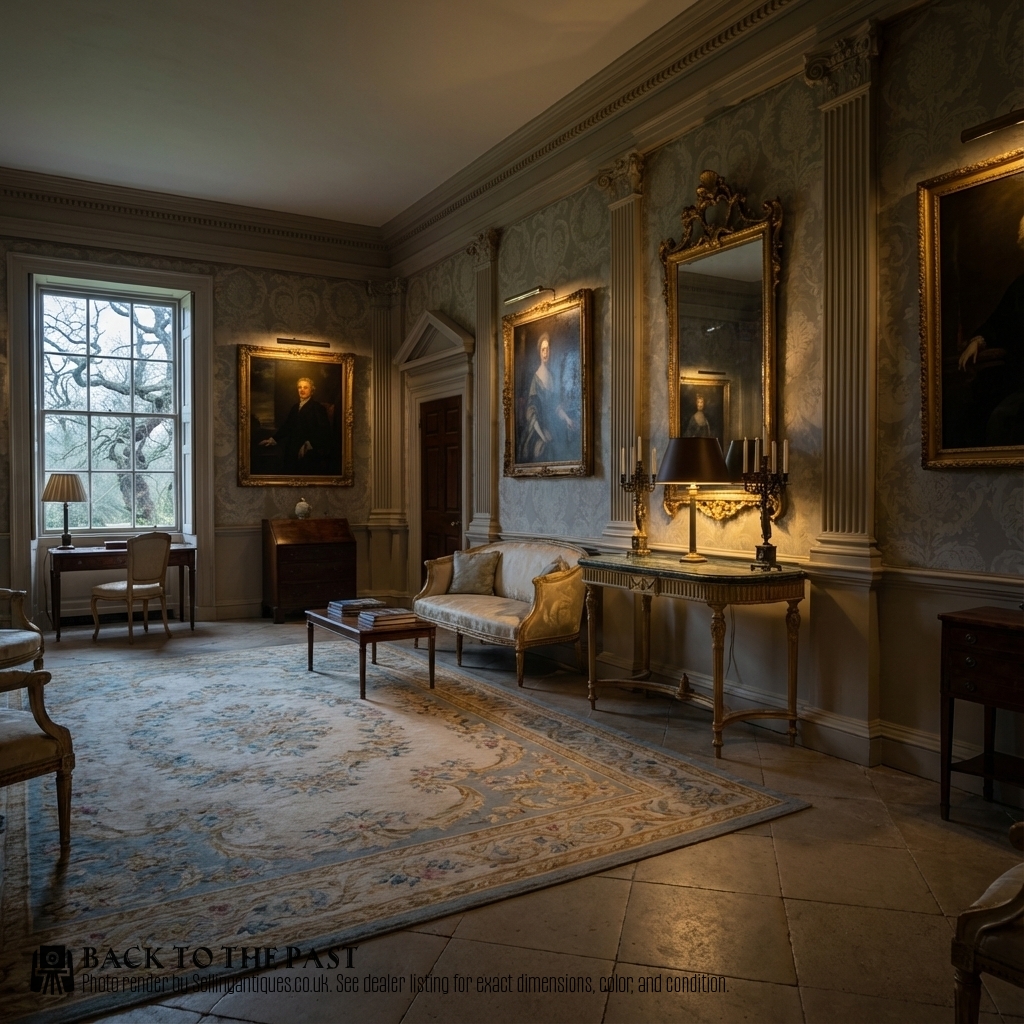
Console tables dominate the selection, designed to stand flush against a wall beneath a mirror or painting. Their proportions remain generous, relying on the contrast between the cold, smooth stone top and the gilded warmth of the timber below.
How They Were Made
These tables rely on a combination of dense hardwood frames finished in giltwood and thick slabs of polished marble. Carvers shaped the timber bases with classical motifs before applying gold leaf to create a luminous surface that catches the light.
The marble tops were quarried, cut, and polished to a smooth finish, resting directly upon the wooden structures beneath. In certain grander examples, the assembly incorporates intricate marquetry and cast ormolu mounts that accent the classical silhouette.
What Varies in Quality
Quality reveals itself in the crispness of the wood carving and the depth of the gilding on the frame. Finer tables exhibit hand-carved detailing that retains sharp edges and smooth curves, whereas lesser pieces rely on simpler moulded decoration.
The selection of the marble top also dictates the tier of the piece, with thicker, more finely figured stone marking out the superior examples. The integration between the heavy stone slab and the supporting giltwood base demonstrates the ambition of the original maker.
The Neoclassical Marble Top Table Glossary
- Giltwood
- Timber that has been coated with a thin layer of gold leaf. This finish provides a bright, reflective surface characteristic of formal antique furniture.
- Console Table
- A table designed to be fixed against a wall, often supported by ornate brackets or legs rather than standing independently on four corners.
- Neoclassical
- A style spanning the eighteenth and nineteenth centuries that draws inspiration from the classical art and architecture of ancient Greece and Rome.
- Ormolu
- Gilded bronze mounts applied to furniture as decorative accents. This technique adds metallic contrast to wood and stone surfaces.
Frequently Asked Questions
Where should I place a console table?
These tables traditionally stand against a flat wall in an entrance hall, drawing room, or dining room. Their shallow depth allows them to sit comfortably in walkways without obstructing movement.
They often sit beneath a matching wall mirror or artwork, creating a balanced focal point upon entering a space.
How do I care for a marble top?
Marble is a softer, porous stone that requires gentle cleaning with a damp cloth and mild soap. Avoid acidic liquids and harsh chemical cleaners which can etch the polished surface.
Using coasters and mats helps protect the stone from everyday wear while maintaining its smooth finish.
What defines the neoclassical style?
The style relies on order, symmetry, and direct references to classical antiquity. It strips away excessive ornamentation in favour of architectural columns, swags, and geometric balance.
Furniture from this period looks to ancient temples and ruins for its vocabulary of forms.
How can I date these tables?
Dating relies on examining the construction methods of the wooden frame and the style of the carving. Pieces from the nineteenth century often show specific interpretations of earlier classical models.
Material choices, such as the type of gilding and the preparation of the marble, also offer clues to the era of manufacture.