

Gold Carved Wall Table
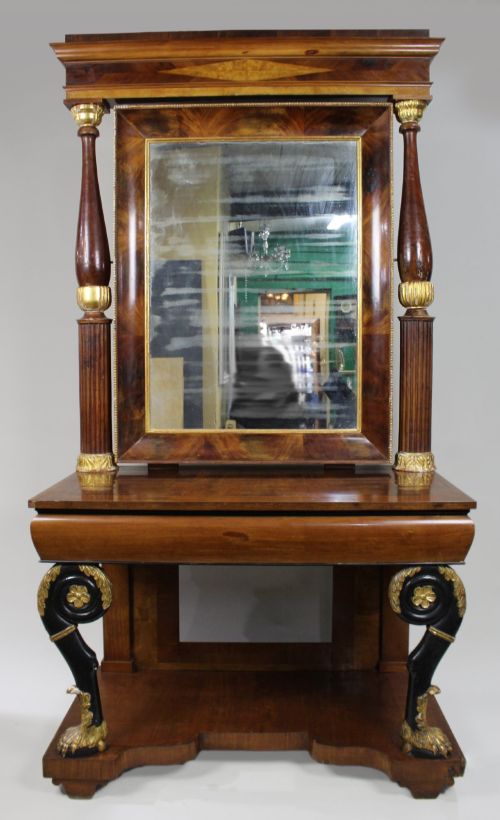
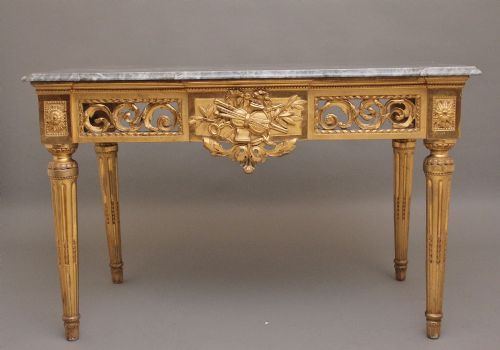
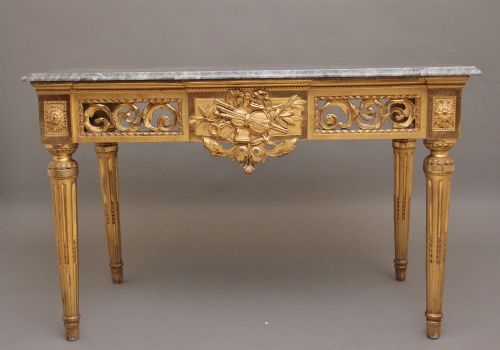
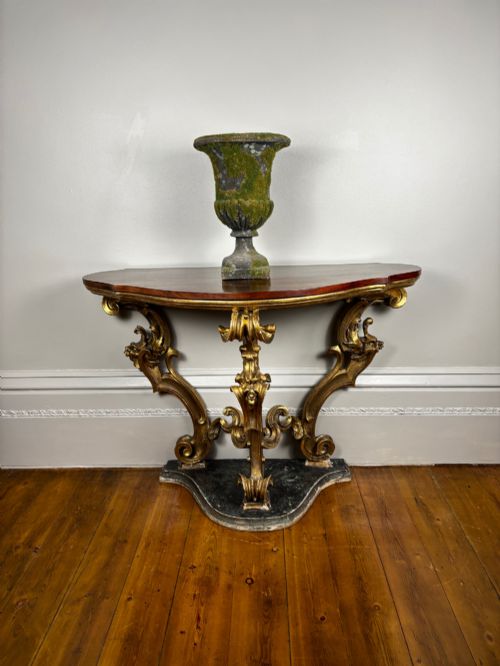
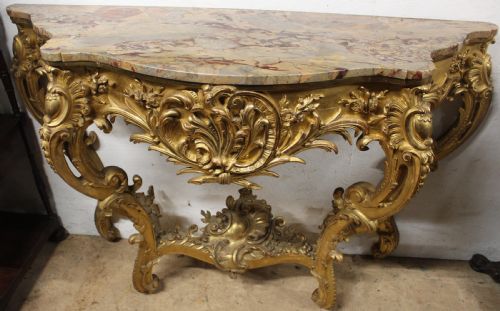
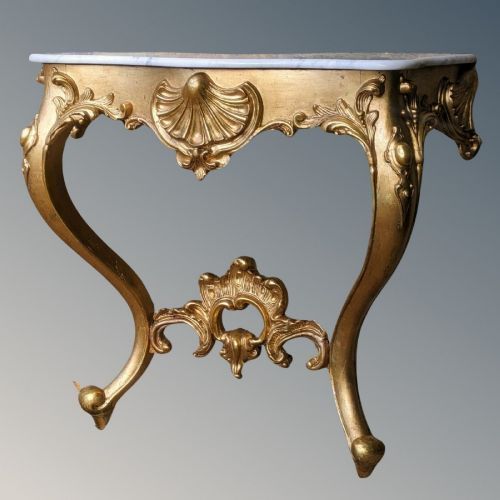
These gold carved wall table pieces bring opulent French and Italian styling into a room, offering surface space fixed directly to the wall beneath a mirror.
Gold Carved Wall Table
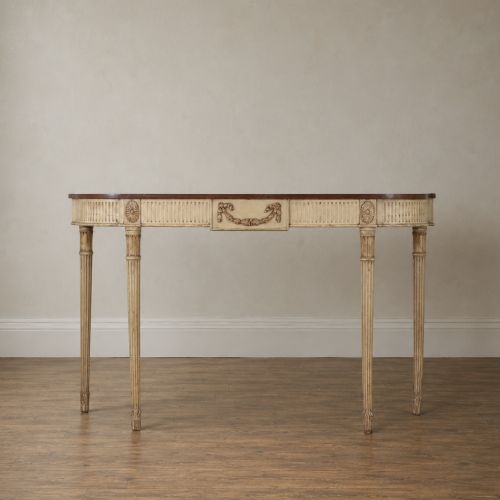
When searching for a gold carved wall table, a buyer encounters console tables and console table and mirror sets designed to mount against a wall, frequently accompanied by marble tops. The selection spans the eighteenth and nineteenth centuries, taking forms defined by Italian, French, and Swedish regional aesthetics.
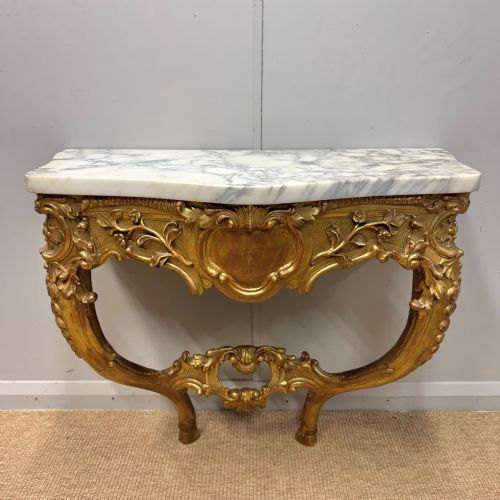
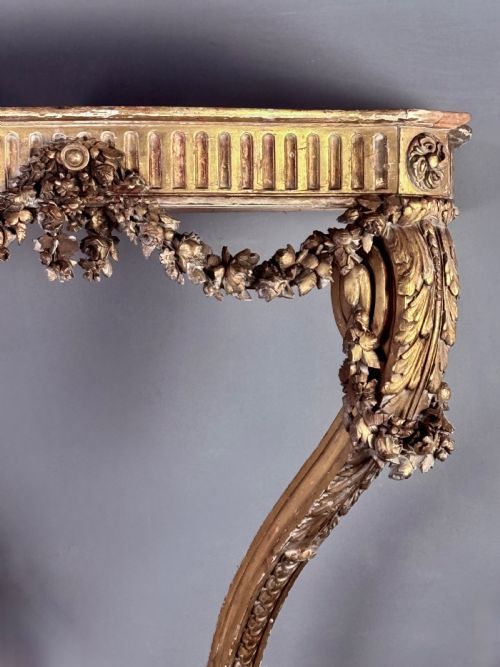
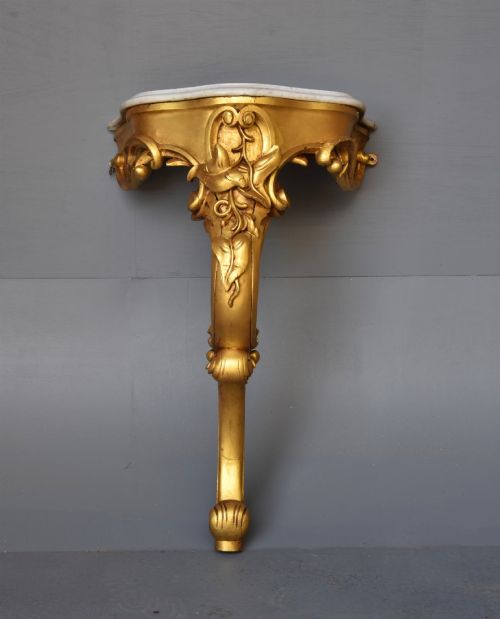
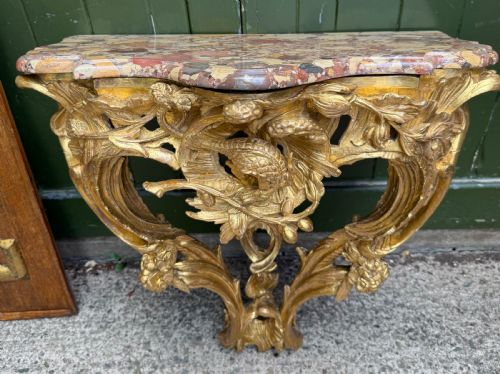
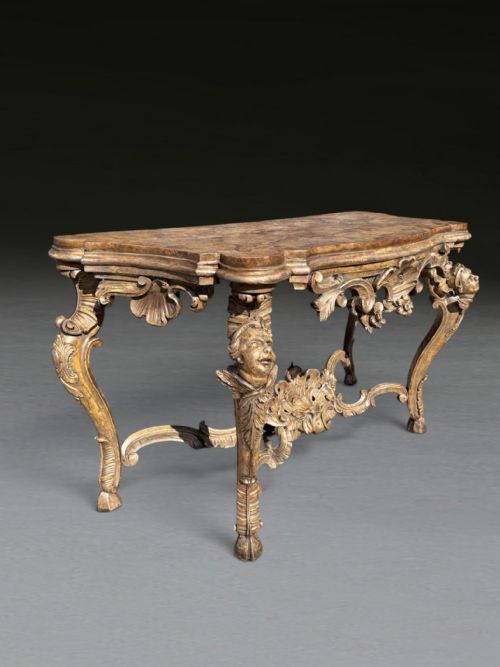
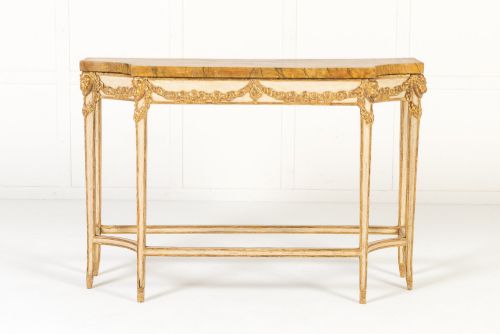
The most common examples on this page are nineteenth-century giltwood console tables displaying Rococo and Neoclassical revival influences. These furnishings often feature serpentine outlines and carved wooden bases designed to support heavy stone surfaces without traditional rear legs.
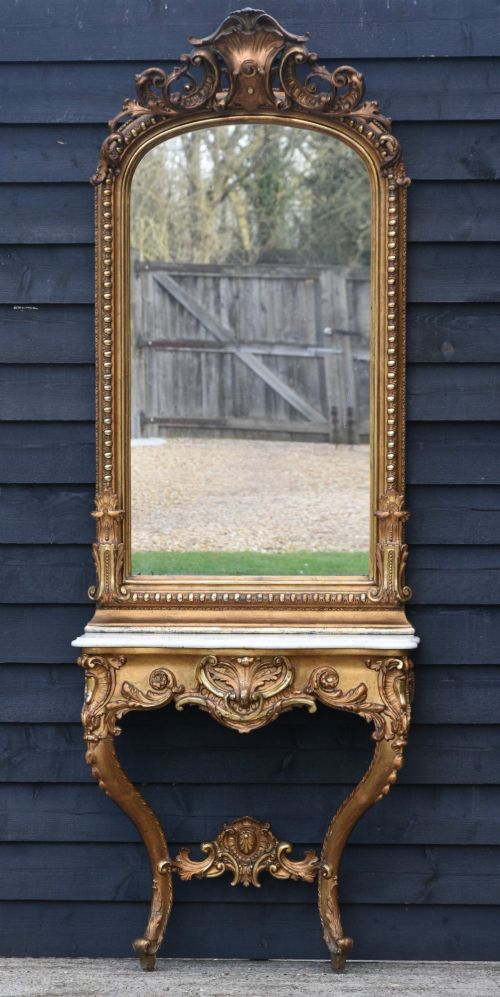
Originating as grand architectural fittings for European drawing rooms and halls, these tables combine decorative wood carving with functional display surfaces. They appear both individually and paired with matching pier mirrors designed to hang directly above them.
How they were made
Maker workshops shaped these bases from timber, applying gesso layers to smooth the surface before carving intricate decorative motifs by hand. Gold leaf or paint finishes were then applied over the prepared wood to achieve the characteristic metallic lustre.
Heavier stone slabs, including Carrara and figured marble varieties such as breche d'alep, were cut and polished to form the fitted tabletops. These heavy tops rested directly upon the carved wooden or giltwood framework without requiring complex mechanical fixings.
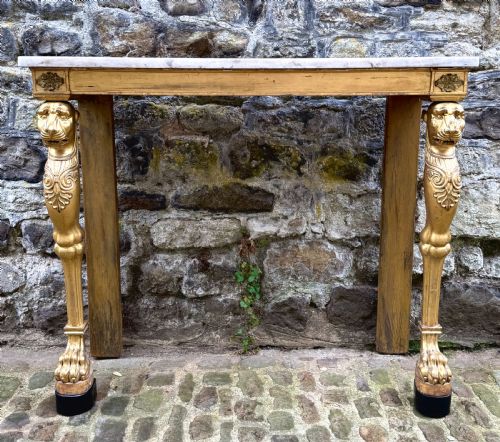
Lion's paw supports occasionally anchor these grand wall tables, adding a fierce sculptural foot to otherwise delicate gilded scrolls.
What varies in quality
The crispness and depth of the wood carving distinguish finer examples from simpler production, particularly in the rendering of scrolls, foliage, and figurative supports. Deeply undercut carving demonstrates greater artisan skill than shallow surface work.
The choice and thickness of the marble top also dictate the grade of the piece, with figured and breccia stones commanding higher regard than plain variants. Preservation of the original gold leaf and gesso ground layer heavily influences the integrity of the finished surface.
Felix-Alfred Ternisien·Sir Godfrey Kneller
The Gold Carved Wall Table Glossary
- Giltwood
- Wood that has been coated with gold leaf over a prepared gesso ground. This finish provides the characteristic metallic appearance seen on period frames and furniture bases.
- Console table
- A table designed to be fixed against a wall, frequently supported by ornamental brackets or front legs rather than a full four-legged freestanding frame.
- Pier mirror
- A large tall mirror designed to hang on the wall space between windows, often paired directly above a console table.
- Gesso
- A plaster mixture applied to wood surfaces to create a smooth base layer for gilding or painting. It allows craftsmen to carve fine decorative details into the prepared coating.
- Serpentine
- A furniture outline characterised by a wavy, undulating edge curving outward and inward. This shape frequently defines the front and sides of eighteenth and nineteenth-century console tables.
Gold Carved Wall Table: Frequently Asked Questions
What is a gold carved wall table used for?
These tables served historically as decorative display surfaces in grand halls and reception rooms, often positioned beneath matching wall mirrors.
Today, they function as striking accent pieces in entrance halls or living spaces, providing a narrow surface for decorative objects without taking up floor space.
How do I identify a Rococo style console?
Rococo style pieces display asymmetrical scrolls, shell motifs, and naturalistic plant forms carved into the wooden base. The overall silhouette tends to feature flowing, organic curves rather than strict geometric symmetry.
Later revival pieces from the nineteenth century replicate these exuberant eighteenth-century motifs with similar carved wooden structures and gilt finishes.
Why do these tables have marble tops?
Marble slabs provided a durable, cool surface that contrasted visually with the warm metallic sheen of the gilded wooden bases below. The heavy stone also added necessary weight to anchor the wall-mounted framework securely in place.
Craftsmen selected various stone types, including white Carrara and figured breccia marble, to match the interior decorative scheme of the room.
Are these tables freestanding?
Console tables of this type are designed to attach directly to the wall for structural stability. They typically rely on wall fixings or front legs, lacking the rear supports found on standard tables.
This wall-mounted construction allows the furniture to sit flush against architectural mouldings in formal rooms and hallways.