



Georgian Style Gilt Table
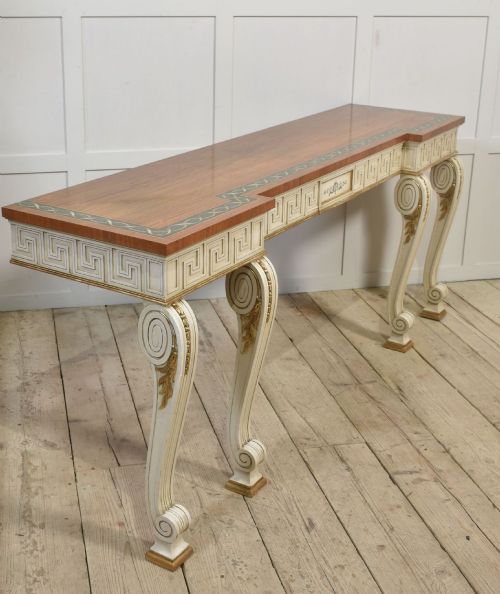
A georgian style gilt table brings classical symmetry and reflective warmth into a room, usually taking the form of a console or pier table.
Georgian Style Gilt Table
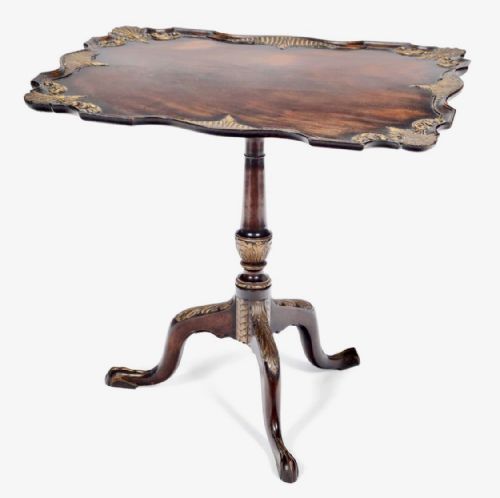
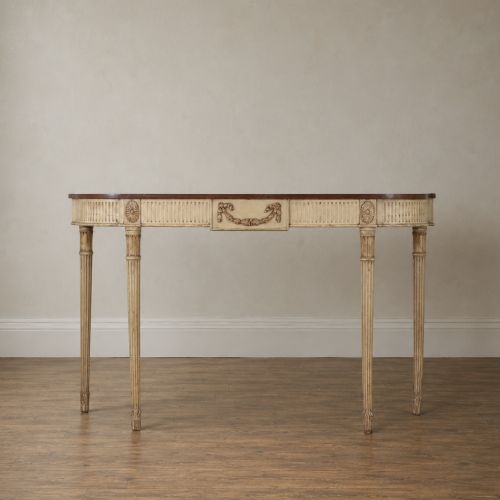
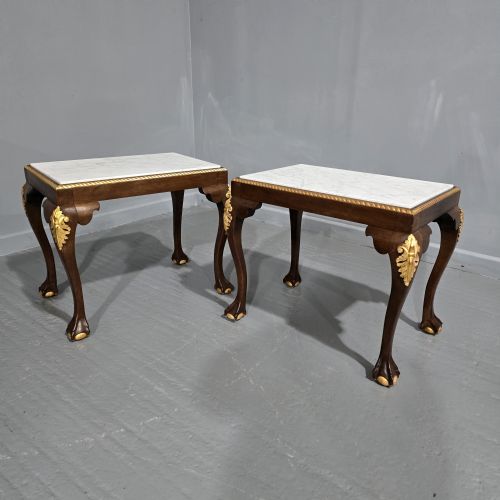
A georgian style gilt table encompasses decorative surfaces designed to sit against a wall or anchor a reception room, frequently adopting the neoclassical vocabulary of the eighteenth century. Buyers encounter console tables, pier tables, and occasional tables shaped by later revivals from the nineteenth and early twentieth centuries.
The selection ranges from carved giltwood examples to painted and parcel gilt pieces, often topped with marble or integrated into broader stylistic revivals. These tables reflect historical proportions while serving contemporary interiors as functional focal points.
How they were made
Wood serves as the foundational carcase for these pieces, frequently utilising mahogany, walnut, or pine prepared to receive carved ornamentation. Artisans applied gold leaf, giltwood, or ormolu finishes to highlight the relief work.
Marble tops, particularly rouge variants, appear inset within wooden or gilt frames. Construction relies on traditional joinery techniques appropriate to console and occasional table forms.
Listings feature periods spanning from the eighteenth century through the 1960s, encompassing Regency, Edwardian, and Victorian iterations alongside revival pieces.
What varies in quality
The refinement of the carving determines visual success, separating mechanical execution from fluid hand-chiselled detail in the acanthus leaves and fluting. Crisp definition in the gilt application retains light effectively across the moulded surfaces.
Structural integrity rests on the stability of the joints and the precise fit of any stone top within its wooden rebate. Superior examples maintain balanced proportions and uncompromised surface patination.
John Davenport of Longport·James Deakin and Sons·George Fox·FB Adams London·Bently and Beck London
The Georgian Style Gilt Table Glossary
- Giltwood
- Timber coated with gold leaf or powder applied over a prepared gesso ground. This technique provides a luminous surface that catches ambient room light.
- Console table
- A wall-mounted or freestanding table designed to stand against a vertical surface. Such tables frequently feature ornamental legs and decorative aprons.
- Ormolu
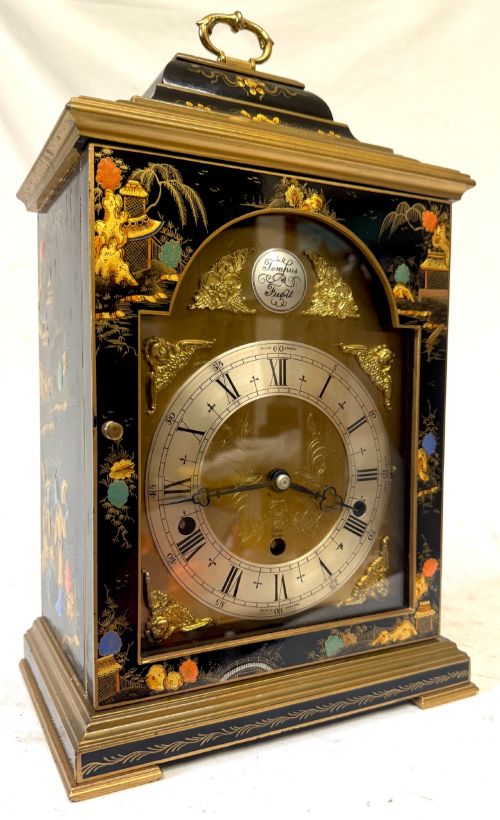
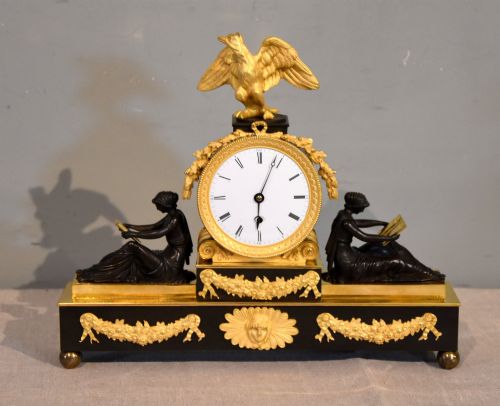
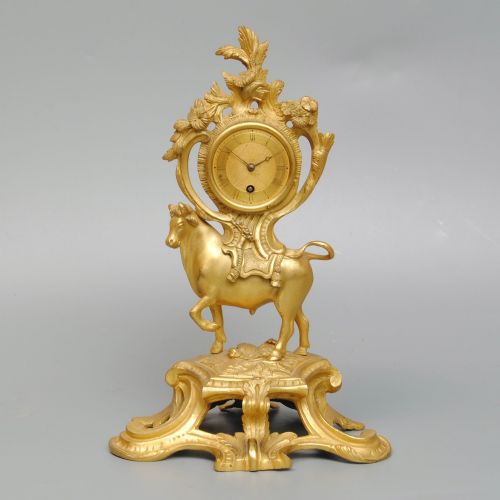
- Gilded bronze mounts applied to furniture or clock cases. The material adds metallic contrast and crisp decorative detail to the wooden or gilt structure.
- Demi-lune
- A half-moon shape characteristic of tables designed to sit flush against a wall. This format saves floor space while offering a display surface.
Georgian Style Gilt Table: Frequently Asked Questions
Where should I place a console table?
These tables suit entrance halls, drawing rooms, or dining spaces where they fit flat against a wall beneath a mirror or painting.
Their shallow depth ensures they occupy minimal floor space while providing a stable surface for lamps or decorative objects.
How do I care for giltwood?
Dust the surface gently with a soft, dry brush to prevent accumulation without disturbing the delicate gold leaf layer.
Avoid liquid cleaners or abrasive cloths, as moisture and friction can permanently damage the historic finish.
What is a marble top table used for?
Marble provides a durable, heat-resistant surface that traditionally accommodated heavy decorative items or served refreshments.
In period interiors, the stone top adds visual weight and a smooth textural contrast to carved wooden frames.
How do I distinguish revival styles?
Revival pieces combine historical design motifs like neoclassical swags with construction methods and timber treatments typical of their actual date of manufacture.
Examining the underside, joinery marks, and secondary woods helps clarify whether a table dates to the eighteenth century or a later period.