



Neoclassical Porcelain Urns
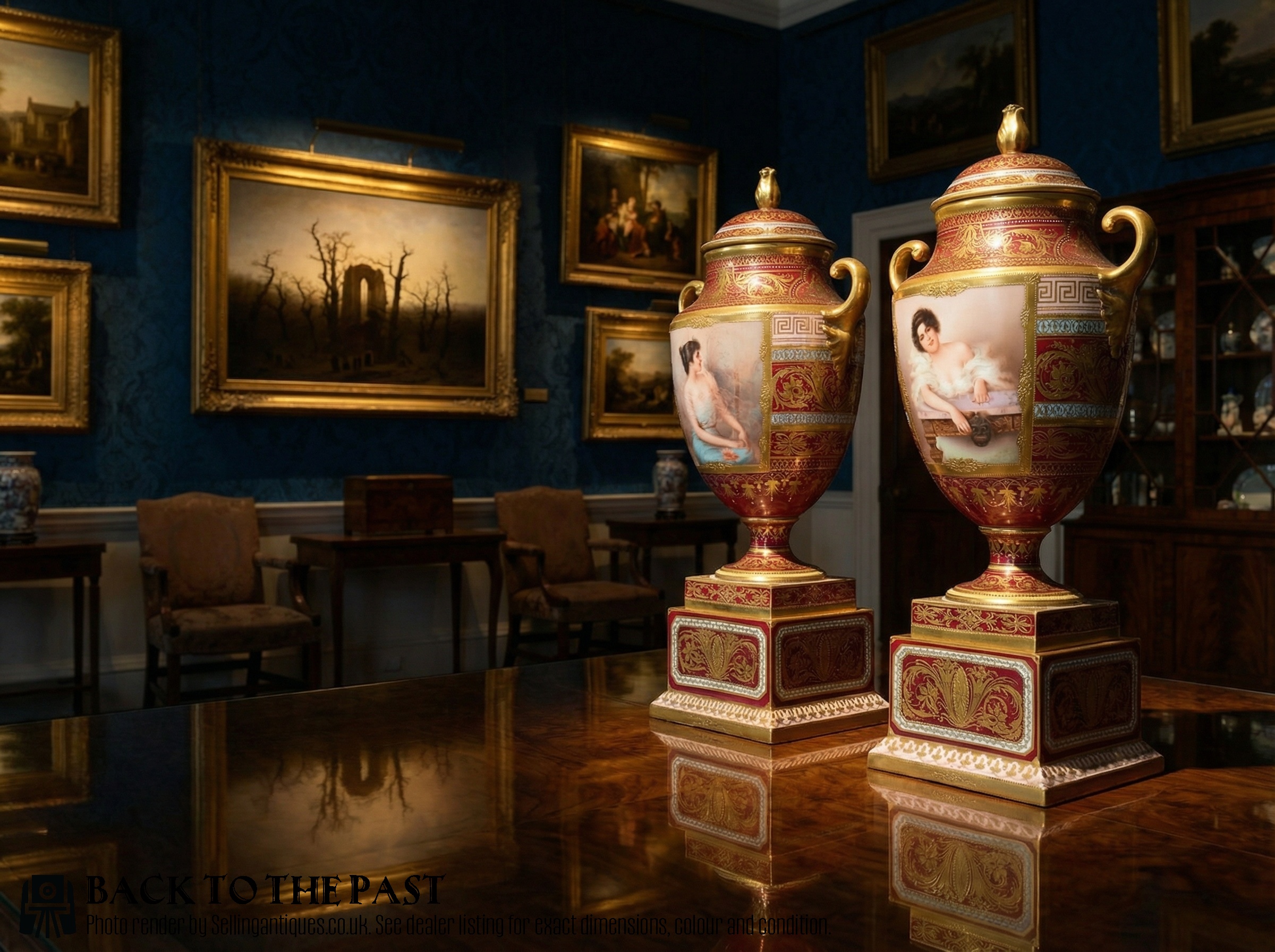
Neoclassical porcelain urns bring the formal symmetry of antiquity straight into a nineteenth-century interior.
Neoclassical Porcelain Urns
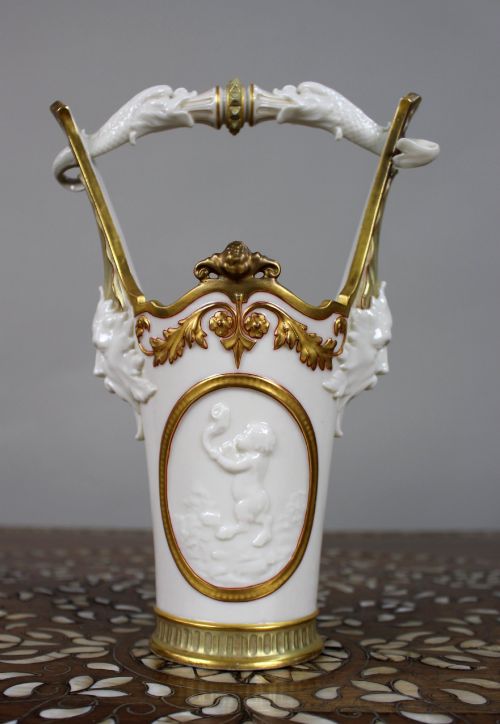
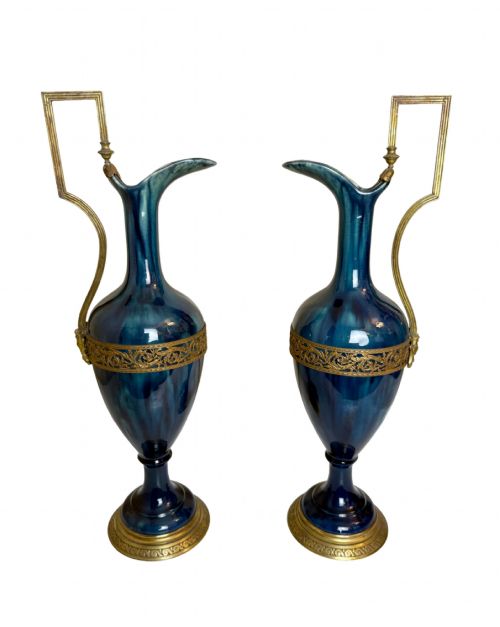
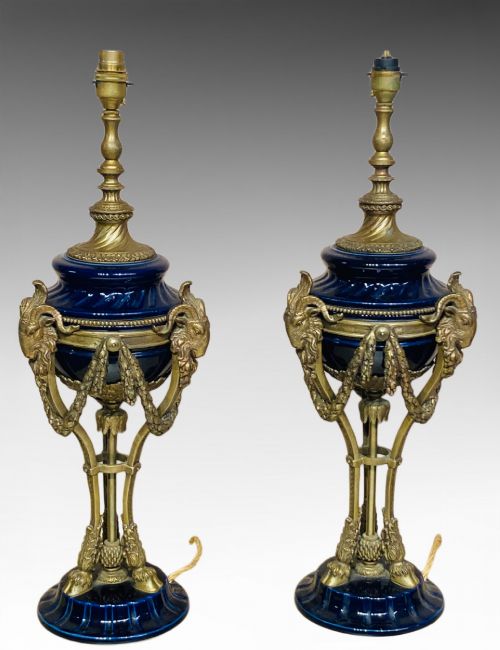
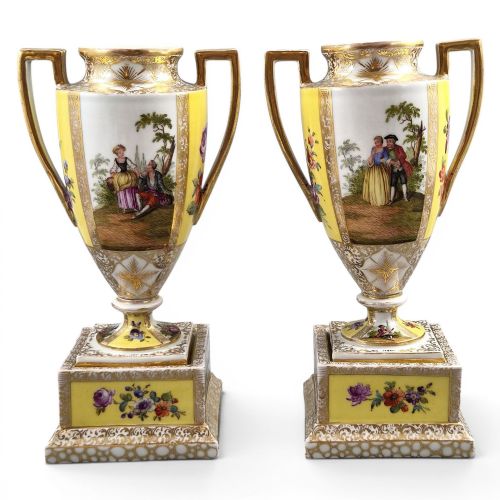
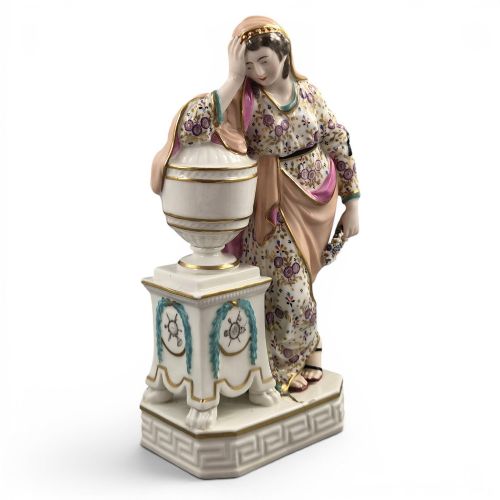
These decorative vessels draw directly upon classical forms, taking shape as lidded vases, garnitures and campana urns. When searching for neoclassical porcelain urns, buyers encounter pieces primarily originating from the nineteenth century, including specific works dated to eighteen seventy and eighteen seventy-one.
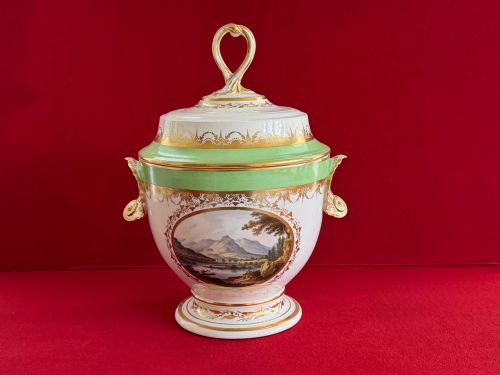
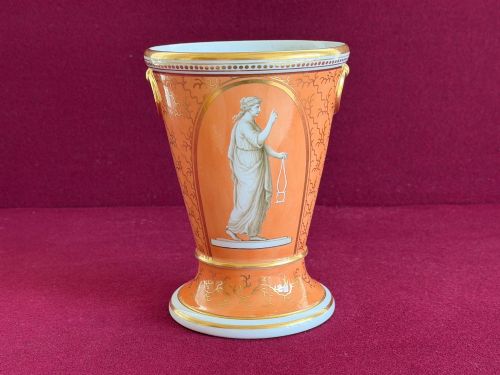
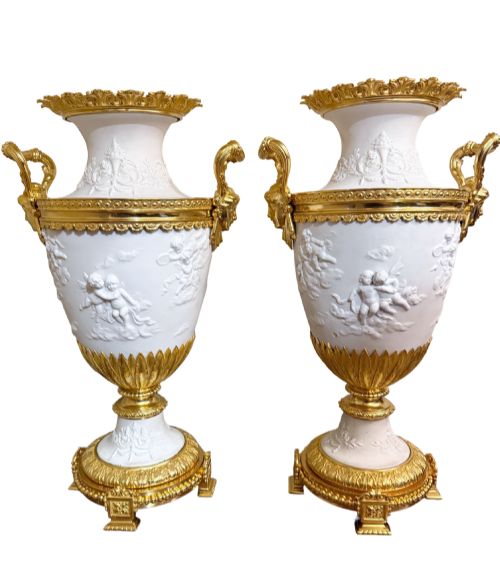
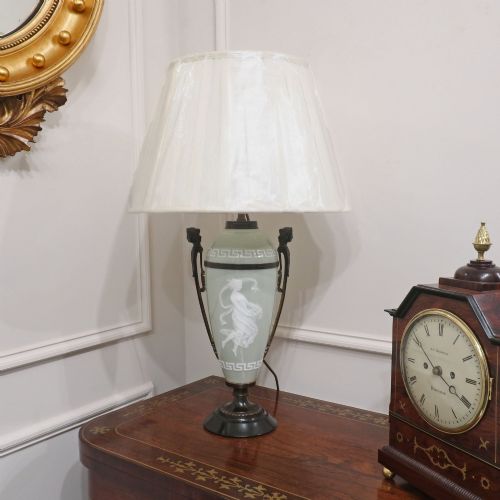
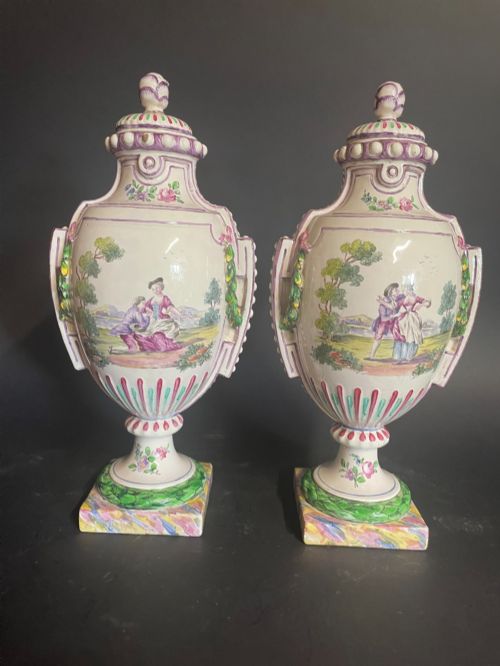
The objects listed on this page span several variations of form and composition, ranging from monumental pairs to matched sets of three. Vienna porcelain manufactories and English potteries such as Wedgwood dominate the selection, offering distinct interpretations of classical design through either white bas-reliefs on blue jasperware or hand-painted enamel scenes.
Manufacturing and Materials
Potters shaped these decorative urns using fine porcelain, dense stoneware and specialised jasperware bodies. The resulting forms utilise intricate moulding techniques, particularly evident in the applied white bas-reliefs found on blue jasperware campana urns.
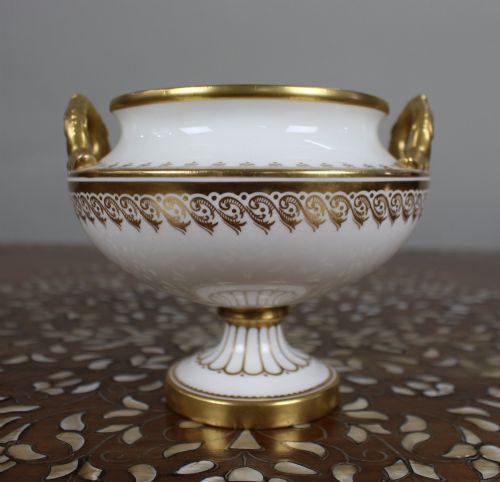
Surface decoration relies on meticulous gilding, gold leaf application and rich enamel painting. Craftsmen combined these luminous metallic accents with fired ceramic bodies to achieve the contrasting textures characteristic of nineteenth-century neoclassical design.
Neoclassical Porcelain Urns Retail Price Guide 2026
Typical asking prices for neoclassical porcelain urns among the pieces listed under this phrase on Sellingantiques today, from the lower quarter to the upper quarter. They describe what is for sale here now, not the wider market.
A towering garniture of three lidded vases demands an entire mantelpiece, leaving precisely zero room for family photographs.
Assessing Quality
Quality rests upon the crispness of modelling and the precision of the applied decoration, where sharply defined bas-reliefs distinguish superior pieces from softer mouldings. The application of gold leaf and enamel work further separates standard production from exceptional studio output.
Proportion and scale dictate the visual impact of each pair or garniture, with larger matched sets demanding greater technical control during the high-temperature firing process. The integrity of the glaze and the clean execution of classical motifs govern the overall refinement of the object.
WEDGWOOD·Vienna
The Neoclassical Porcelain Urns Glossary
- Campana urn
- A bell-shaped vessel with a flared rim and foot, commonly associated with classical garden and decorative arts. These forms were frequently rendered in porcelain and jasperware during the nineteenth century.
- Jasperware
- A type of fine stoneware developed by Josiah Wedgwood, characterised by its unglazed matte surface and contrasting applied white reliefs. It remains a defining material for neoclassical ceramics.
- Garniture
- A set of three or more matching decorative vases designed to be displayed together on a mantelpiece or sideboard. These sets typically feature a larger centrepiece flanked by smaller matching vessels.
- Bas-relief
- A sculptural technique where figures and motifs project slightly from a flat background. In these pieces, white ceramic reliefs stand out sharply against coloured body clays.
- Gilt
- Covered with a thin layer of gold or gold leaf to highlight handles, rims and decorative borders. This technique adds warmth and contrast to the glazed porcelain surface.
Neoclassical Porcelain Urns: Frequently Asked Questions
What are neoclassical porcelain urns?
These decorative objects are ceramic vessels modelled after ancient Greek and Roman forms. They were produced extensively in the nineteenth century for interior display.
Makers utilised fine porcelain, stoneware and jasperware to recreate classical motifs. The results include campana urns and lidded vases featuring painted scenes or white bas-reliefs.
How were these urns used?
Nineteenth-century households displayed these vessels as ornamental centrepieces on mantelpieces, pedestals and sideboards. They functioned purely as decorative art rather than utilitarian containers.
Large pairs and garnitures of three were arranged symmetrically to enhance formal reception rooms. Their classical themes reflected the scholarly tastes of the period.
How do I display them at home?
Place pairs of urns on sturdy surfaces where their classical proportions can be appreciated from a distance. Matching pedestals work particularly well for larger campana forms.
Keep them away from direct sunlight to protect enamel painting and gilt accents. Ensure they sit securely on stable furniture away from heavy foot traffic.