


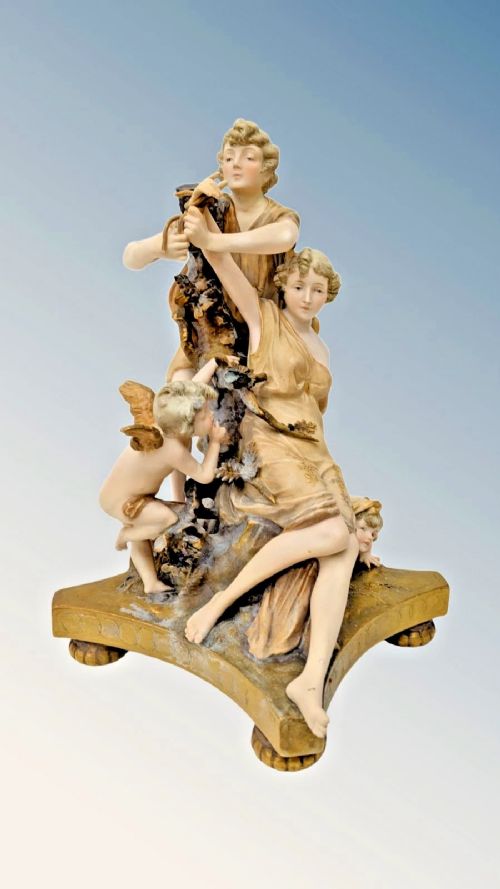


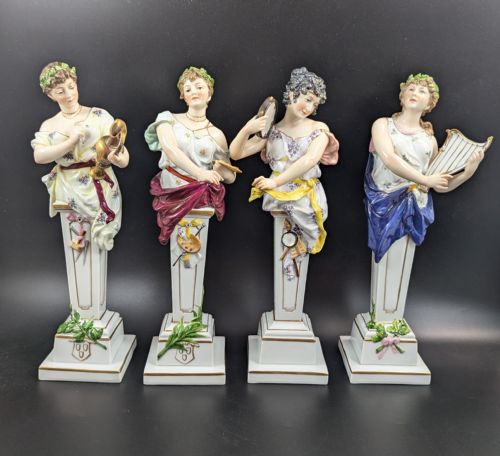


Neoclassical Porcelain Statue
These neoclassical porcelain statues bring classical mythology and historical figures into domestic spaces with refined grace.
Neoclassical Porcelain Statue
When you search for a neoclassical porcelain statue, you encounter figures, busts, and sculptural groups depicting classical maidens, historical figures, and mythological subjects. These pieces span the eighteenth and nineteenth centuries, reflecting enduring tastes for antiquity across European manufactories.
The most common examples on this page are nineteenth-century parian or bisque porcelain figures produced in England and on the Continent. They range from small cabinet pieces to larger scale portrait busts and allegorical groups.
Makers drew heavily on classical sculpture, rendering subjects like Ariadne, Zeus, and allegories of the arts in crisp detail. Whether finished in unglazed biscuit or highlighted with parcel-gilt and enamel, these works capture the solemn elegance of the neoclassical revival.
What Varies in Quality
The sharpness of the modelling defines the upper tier of these sculptures, where facial expressions, hair, and the folds of drapery remain crisp and deep. Softer details often indicate worn moulds or later secondary production.
Quality also rests in the finish of the ceramic body and the precision of any hand-applied gilding or enamel. Superior examples show careful attention to finishing seams and smoothing surfaces before firing.
Subjects range from mythological figures like Zeus and Ariadne to historical busts of Marie Antoinette and Napoleon.
Royal Worcester·Copeland·Meissen·Sevres·Derby
The Neoclassical Porcelain Statue Glossary
- Parian porcelain
- A fine-grained unglazed ceramic developed in the nineteenth century to imitate white marble. It fires to a dense, matte finish suited to classical figures.
- Biscuit porcelain
- Porcelain fired without a glaze, leaving a porous, matte surface with a texture akin to marble. It is also known as bisque.
- Parcel-gilt
- Partial application of gold leaf or gilt highlights to specific areas of a ceramic figure. This technique draws attention to garments, jewellery, or bases.
- Allegorical figure
- A statue representing an abstract idea, such as the arts or the seasons, through human form and symbolic attributes. These subjects were popular in both eighteenth and nineteenth-century production.
Neoclassical Porcelain Statue: Frequently Asked Questions
How do I clean a parian statue?
Use a soft, dry brush to remove dust from unglazed surfaces without moisture. Avoid abrasive cleaners that can damage porous ceramic bodies.
For stubborn grime, consult a professional restorer rather than attempting liquid cleaning on antique biscuit or parian ware.
What is the difference between parian and bisque?
Parian porcelain is a specific nineteenth-century vitrified body formulated to mimic marble with a heavier, denser feel. Bisque porcelain is standard porcelain left unglazed after the initial firing.
Both offer a matte white finish, but parian generally exhibits a warmer tone and slightly greater translucency.
Are these pieces marked?
Many factory-produced figures carry impressed marks, numbers, or painted symbols on the base corresponding to specific manufactories. Unmarked examples remain common, particularly among nineteenth-century parian productions.
Examining the modelling quality and paste helps attribute unmarked pieces when factory stamps are absent.
How were these statues displayed originally?
Victorian and eighteenth-century homes placed these sculptures on mantelpieces, pedestals, and console tables. They served as focal points in drawing rooms to signal classical learning and taste.
Pairing them with cabinet furnishings protected them from damage while showcasing their sculptural qualities.