




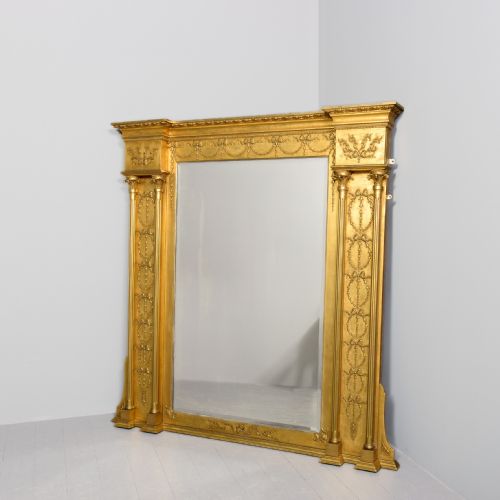


Neoclassical Mantel Mirror
A neoclassical mantel mirror brings classical symmetry and reflected light to a room, drawing the eye with gilt ornamentation and architectural proportion.
Neoclassical Mantel Mirror
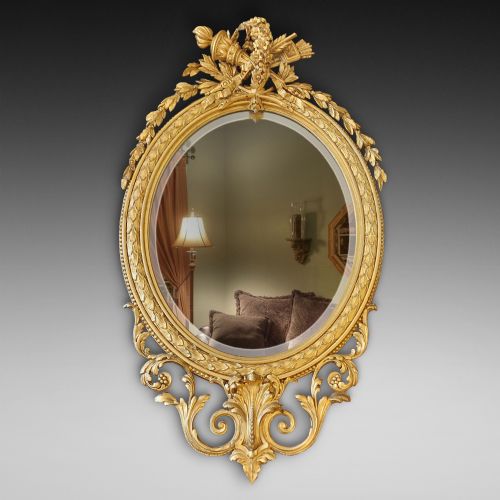
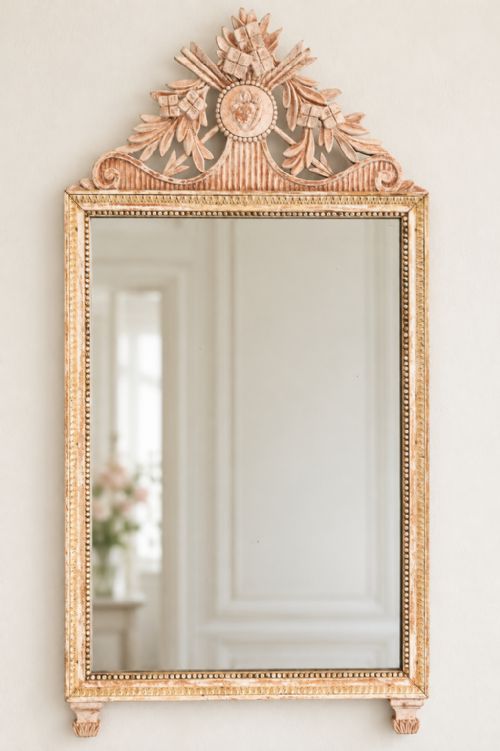
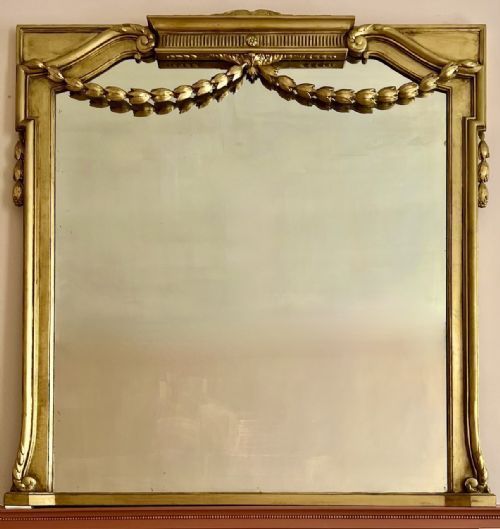
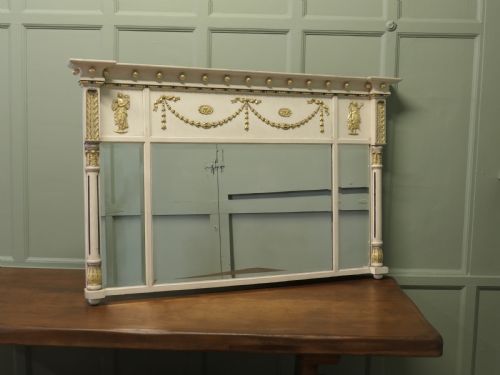
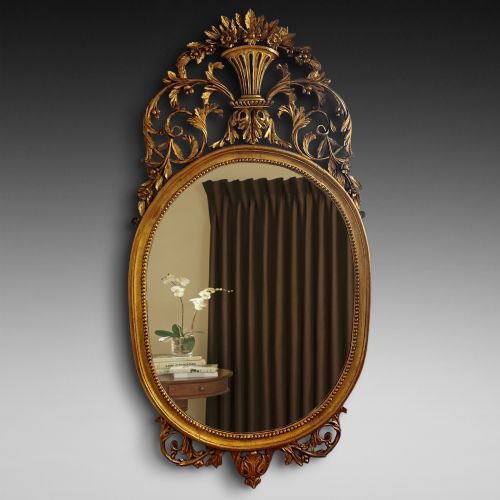
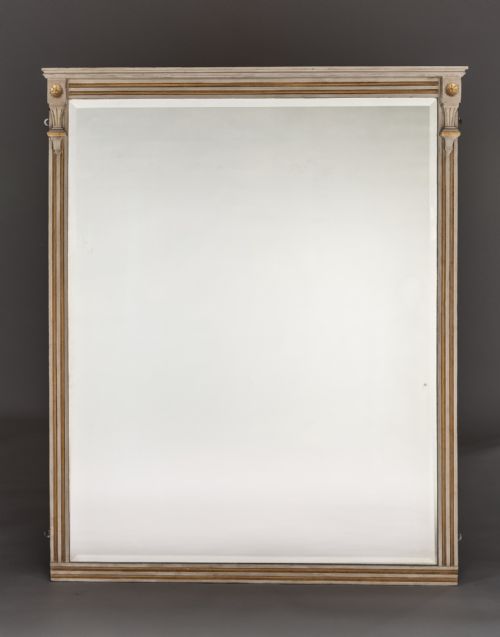
A neoclassical mantel mirror is a large rectangular or oval glass plate set within a decorative frame designed to sit above a fireplace hearth. These pieces appear in periods spanning the Georgian era, the Regency period, and the nineteenth century, including Victorian adaptations of earlier Adam styles.
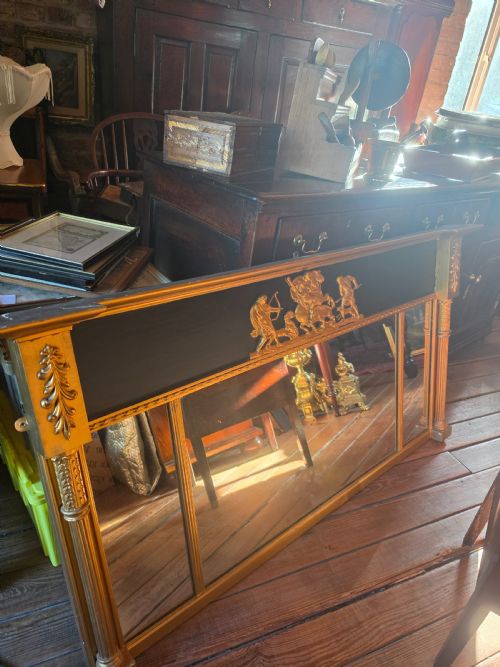
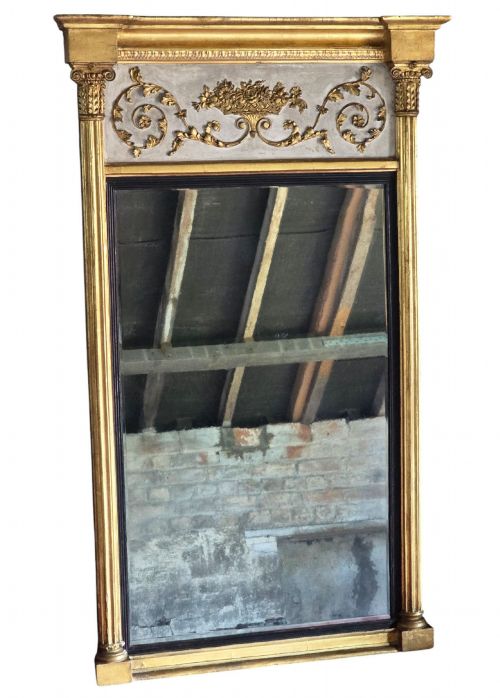
The version most commonly met on this page is the overmantel mirror, often fashioned with tripartite glass plates or architectural columns. French examples from the nineteenth century alongside English Regency pieces dominate the selection, frequently displaying classical motifs and relief panels.
Makers and craftsmen of these periods drew upon ancient Greek and Roman design vocabularies, incorporating urns, husks, and classical figures into the mouldings. The scale ranges from neat domestic pier mirrors to vast salon statements designed to dominate a chimney breast.
How they were made
Makers constructed the primary framework from timber, typically pine or hardwood, before applying coats of gesso to build up intricate surface relief. Carved wooden elements united with moulded composition paste to create crisp classical detailing along the friezes and cornices.
Gilding was achieved by laying thin sheets of gold leaf over a prepared bole base, which imparted a warm metallic lustre to the giltwood frames. Alternatively, some pieces received coats of paint or ebonising, while mercury glass provided the reflective surface on earlier nineteenth-century plates.
Neoclassical Mantel Mirror Retail Price Guide 2026
Typical asking prices for neoclassical mantel mirror among the pieces listed under this phrase on Sellingantiques today, from the lower quarter to the upper quarter. They describe what is for sale here now, not the wider market.
Occasional frames capture classical mythology in relief, depicting chariots and ancient deities right above the fireplace.
What varies in quality
The sharpness of the gesso moulding and the depth of the hand-carved woodwork distinguish finer examples from standard production pieces. Crisp relief work on classical motifs indicates skilled craftsmanship during the fabrication process.
The retention of original gilding and the preservation of early mirror glass plates elevate the standing of a piece within the range. Frames that maintain their structural integrity without heavy restoration retain the authentic character expected by collectors.
The Neoclassical Mantel Mirror Glossary
- Giltwood
- Wood that has been coated with gold leaf over a prepared ground. This finish provides the characteristic metallic sheen seen on period frames.
- Gesso
- A plaster mixture applied to wooden frame foundations to create a smooth surface for carving or moulding. It allows intricate decorative details to be formed before gilding.
- Overmantel mirror
- A large looking glass specifically proportioned to hang on the wall directly above a fireplace mantelpiece. These forms often feature elongated horizontal formats or tripartite plates.
- Pier mirror
- A tall vertical looking glass designed to hang on the wall space between two windows. They share similar classical decorative vocabularies with mantel mirrors.
- Composition
- A moulded mixture of whiting, resin, glue, and oil pressed into ornamental shapes. It was widely utilised as a cost-effective alternative to hand-carved wood for repeating motifs.
Neoclassical Mantel Mirror: Frequently Asked Questions
How do I hang a heavy overmantel mirror safely?
These substantial frames require secure fixing directly into wall studs or masonry using heavy-duty brackets suited to the weight of wood and glass. Professional installation ensures the load is distributed evenly across the structure.
Because the mirrors often span significant widths, checking the stability of the hanging wire or integrated fixing rings is essential before mounting above a heat source.
What is the difference between Georgian and Regency styles here?
Georgian pieces, including those following Adam designs, frequently exhibit refined symmetry, delicate carved urns, and restrained neoclassical ornamentation. They date from the eighteenth into the early nineteenth century.
Regency versions tend to be bolder in scale, incorporating architectural elements like columns, ebonised details, and stronger classical relief panels influenced by French Empire taste.
Can I clean the original mercury glass?
Original mirror glass requires gentle dusting with a dry microfibre cloth, avoiding commercial glass cleaners that might seep behind the plate and damage the backing. Moisture can accelerate the degradation of the silvering.
Age spots and foxing on early glass are characteristic traits of nineteenth-century plates and should be preserved rather than scrubbed away.
Where should I place a mantel mirror in a modern room?
While traditionally positioned above a fireplace hearth, these mirrors work effectively mounted on plain drawing room walls to bounce light across the space. Their architectural frames serve as focal points in hallways or dining rooms.
Ensuring the scale of the mirror matches the furniture placed below it maintains the balanced proportions intended by the original makers.