

Neoclassical Gilt Bronze Clock
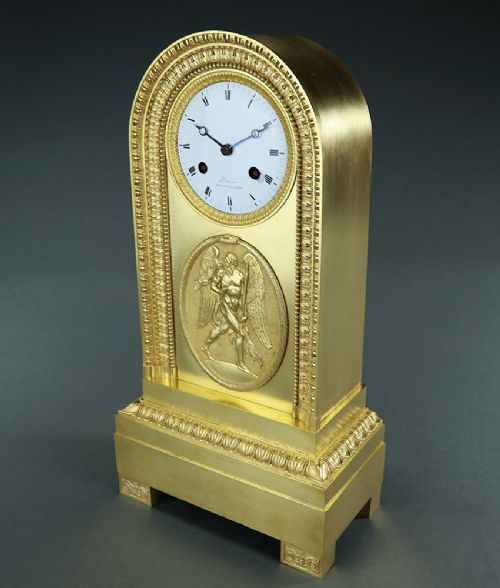
A neoclassical gilt bronze clock brings formal architectural order and classical bronze casting into a room, shaped by eighteenth and nineteenth century French designs.
Neoclassical Gilt Bronze Clock
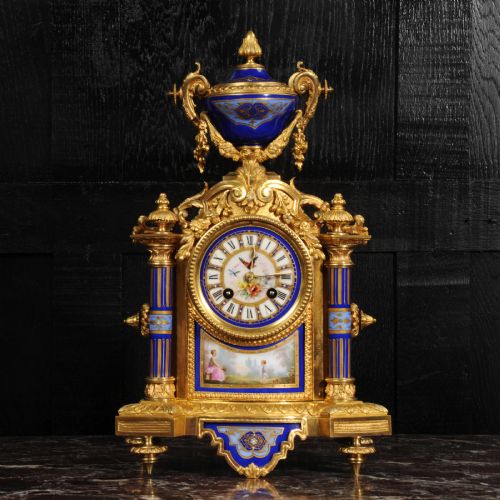
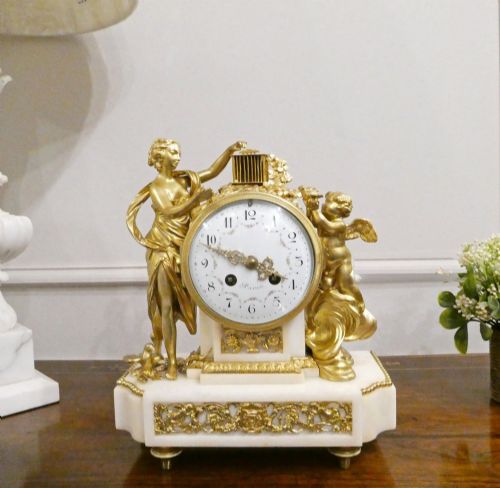
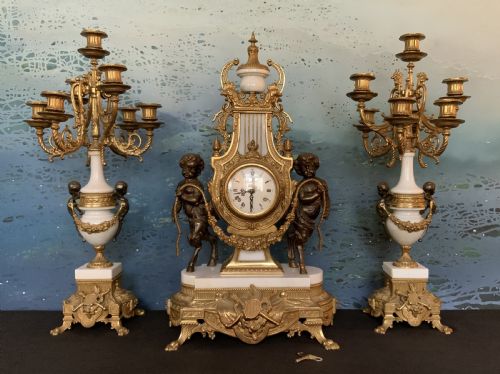
A neoclassical gilt bronze clock is a timekeeper rooted in classical revival design, appearing frequently as a mantel clock or clock garniture set alongside candelabra. The selection spans the eighteenth century through the nineteenth century, encompassing Regency and Victorian interpretations alongside French Empire and Louis XVI styles.
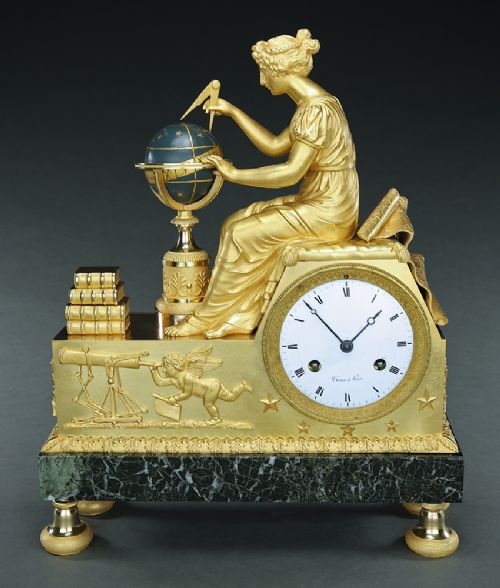
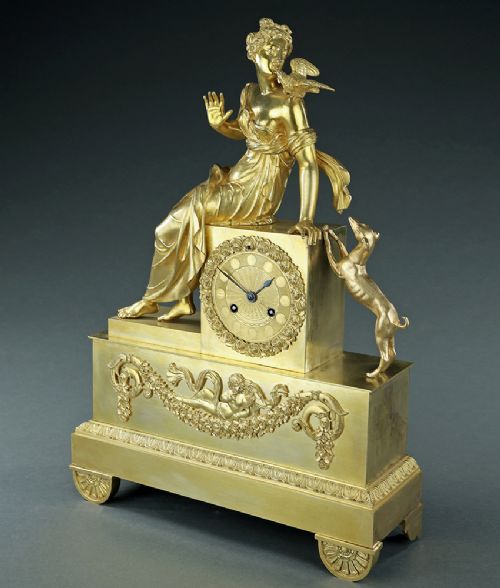
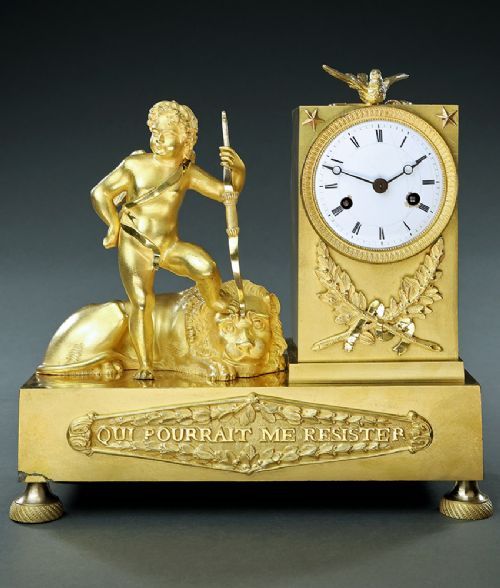
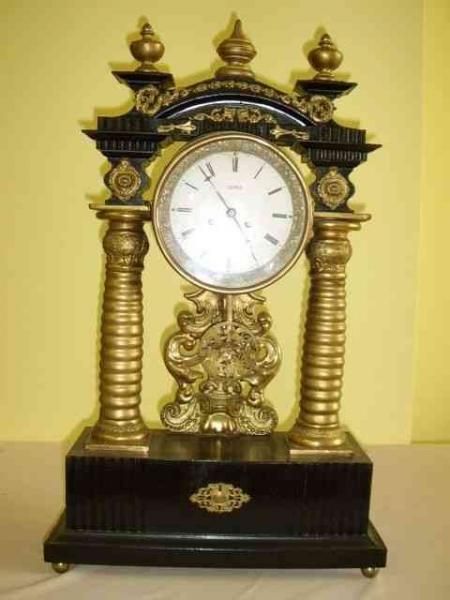
Most pieces met on this page originate from French workshops, taking the form of portico clocks, cartel wall clocks, and architectural mantel timepieces. Makers working in Paris produced these items in styles such as Louis XVI Revival, French Neoclassical, and French Restoration.
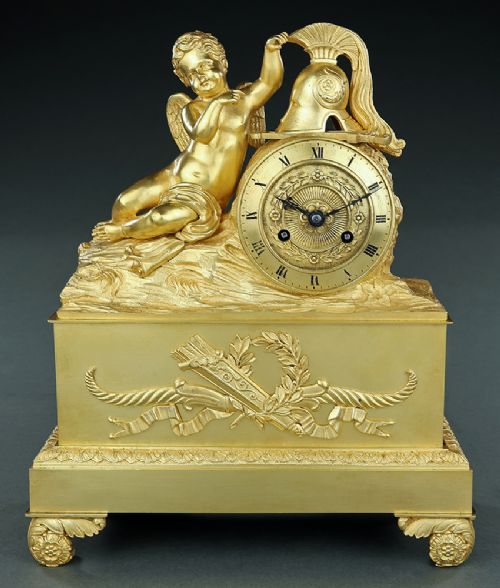
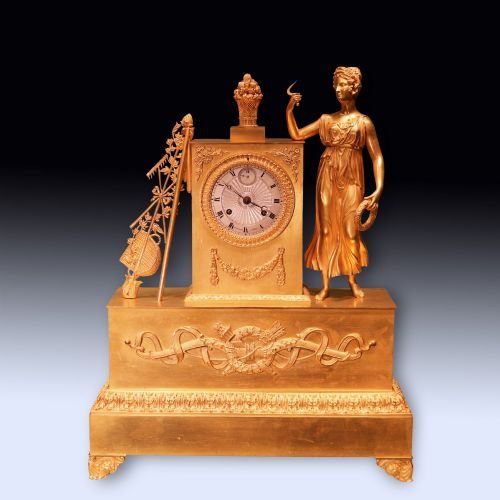
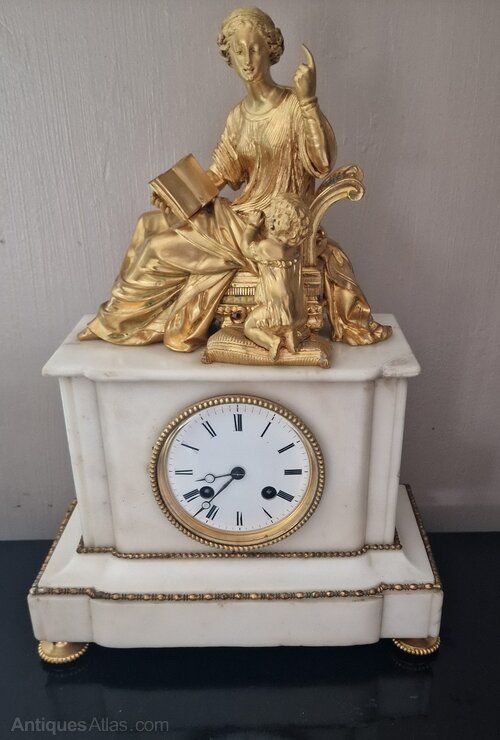
Buyers encounter subjects ranging from simple marble and ormolu column cases to elaborate figural compositions depicting themes like love, fidelity, and triumph. These objects combine timekeeping mechanisms with decorative bronze casting and stone plinths.
Materials and Technique
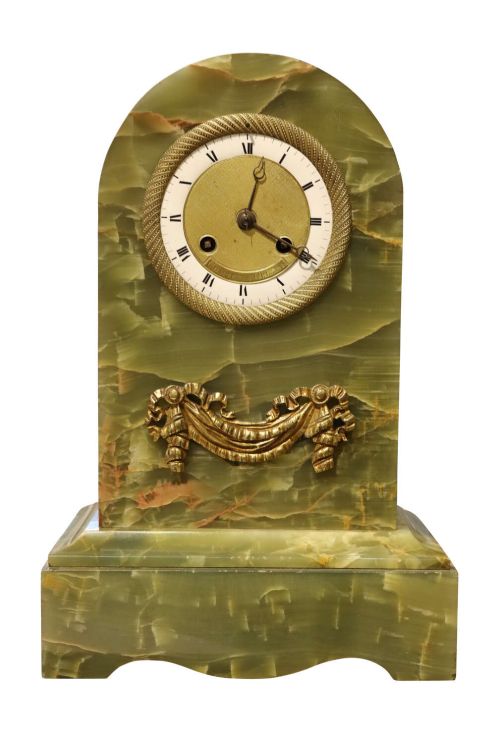
Makers constructed these clocks using gilt bronze, ormolu, and brass, often combining the metalwork with white marble, green onyx, rouge marble, or slate. The metal components received fire gilding or chemical finishing to achieve the characteristic gold-coloured lustre.
Dials frequently utilise enamel for the chapter rings and numerals, protected behind glass panels within four-glass cases or heavy bronze bezels. Movement construction involved brass gear trains, sometimes featuring anchor escapements or single chain fusee mechanisms.
The archive and active inventory feature specialised movement types including single chain fusee mechanisms, calendar functions, and musical portico movements.
Quality Variations
Quality separates in the crispness of the bronze chasing and the depth of the fire gilding across the case. Superior examples display sharply defined acanthus leaves, classical figures, and architectural details rather than soft, cast-over surfaces.
The integration of materials dictates distinction, visible where white marble or rouge marble bases are proportioned precisely to the gilt bronze mounts and enamel dials. Movement provenance and maker signatures inscribed on the brass plates elevate an example above anonymous workshop production.
Japy Freres·Charles a Orleans·Canaillor of Paris·Le Roy Paris·Berger Paris·Louis Goret
The Neoclassical Gilt Bronze Clock Glossary
- Ormolu
- Gilt bronze produced by applying a mercury and gold amalgam to a bronze base and heating it until the mercury vaporised. This technique creates a durable golden finish seen on classical mounts.
- Garniture
- A set comprising a central clock flanked by matching decorative objects such as candelabra or vases. These matched suites decorated nineteenth century mantelpieces.
- Portico clock
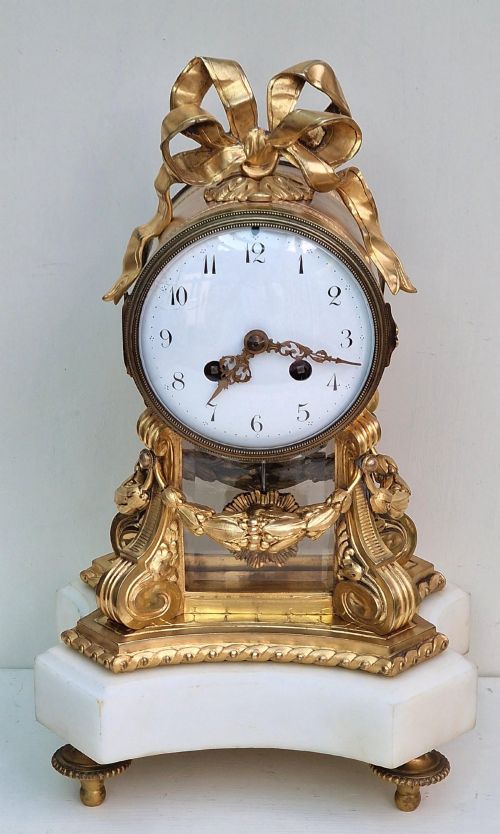
- A clock case constructed in the architectural form of a classical portico with supporting columns. The pendulum typically swings visibly within the open central space.
- Cartel clock
- A wall-mounted clock featuring an ornate frame of gilt bronze, brass, or carved wood. These pieces were designed to hang directly on wood-panelled or plastered walls.
- Pendule d'Officier
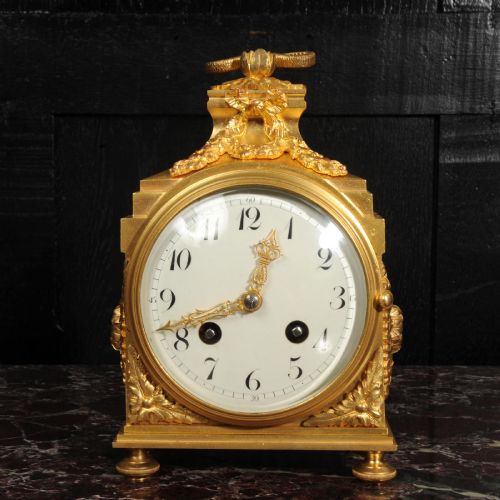
- A portable campaign-style carriage clock with a striking movement and a handle on top. Napoleon utilised these robust timekeepers during military campaigns.
Neoclassical Gilt Bronze Clock: Frequently Asked Questions
How do I wind my clock?
Use the matching key on the winding arbors located on the enamel dial, turning gently until resistance stops the movement. Avoid over-winding to protect the internal springs.
Ensure you do not force the hands backward past the hour, as this can damage the striking mechanism associated with the gear train.
What is an ormolu clock?
An ormolu clock is a timepiece housed in fire-gilt bronze, a technique where gold amalgam was bonded to metal through heat. This method produced a rich golden finish that resists tarnishing.
These cases were cast and chased by skilled metalworkers before being paired with mechanical movements and enamel dials.
How do I tell Louis XVI from Empire style?
Louis XVI style clocks lean towards restrained classical symmetry, featuring straight architectural lines, urns, ribbons, and delicate acanthus leaf mounts. The marble is frequently white and the proportions are lighter.
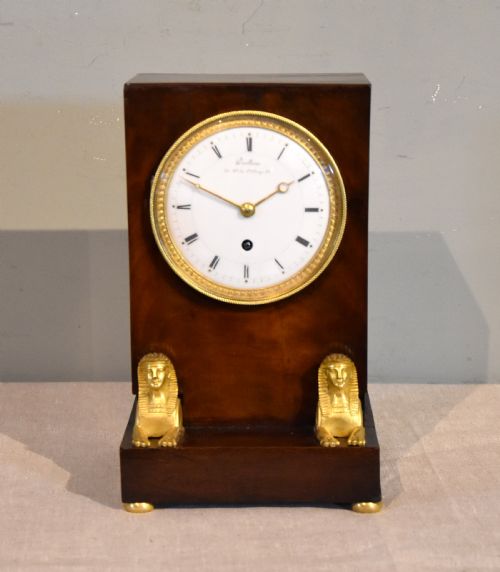
Empire style clocks display heavier military, astrological, or mythological themes with bold bronze figures, mahogany veneers, and robust architectural forms reflecting nineteenth century taste.