



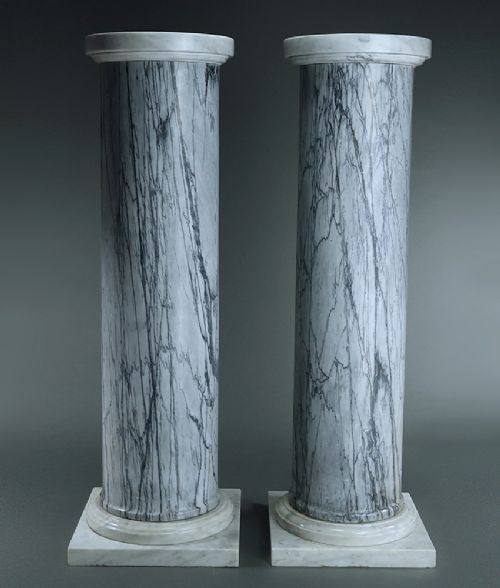


Neoclassical Display Plinths
Neoclassical display plinths provide architectural height for sculpture and urns, bringing formal balance to a room.
Neoclassical Display Plinths
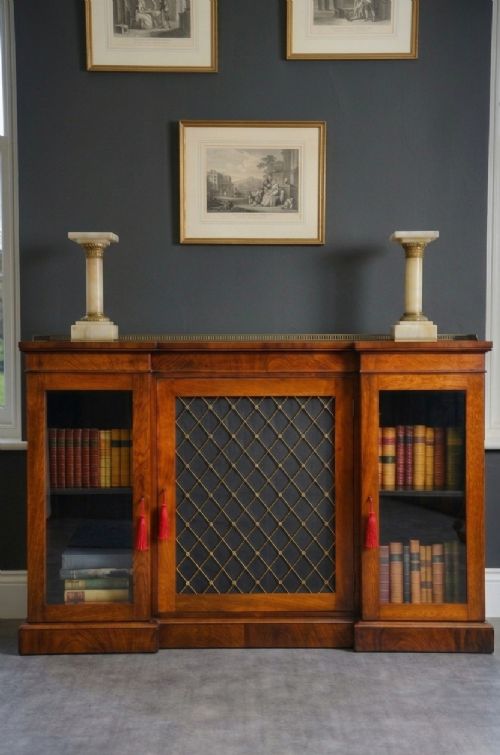
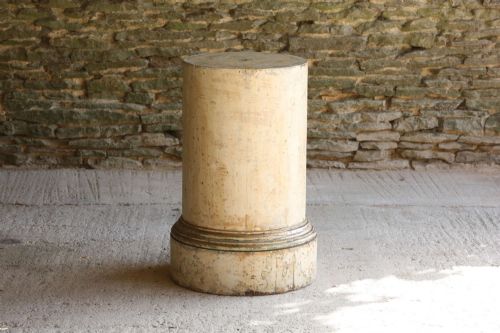
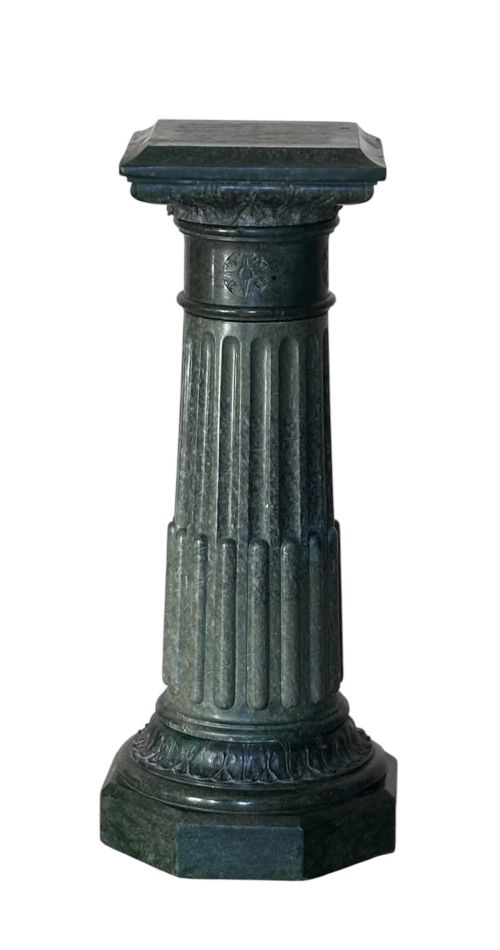
Neoclassical display plinths take the form of columns, pedestals, and plant stands designed to elevate objects of art. They draw on classical orders and historical revival styles to structure interior spaces.
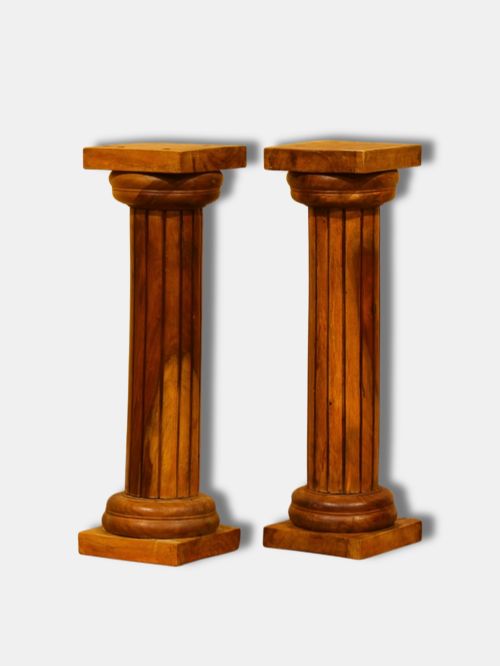
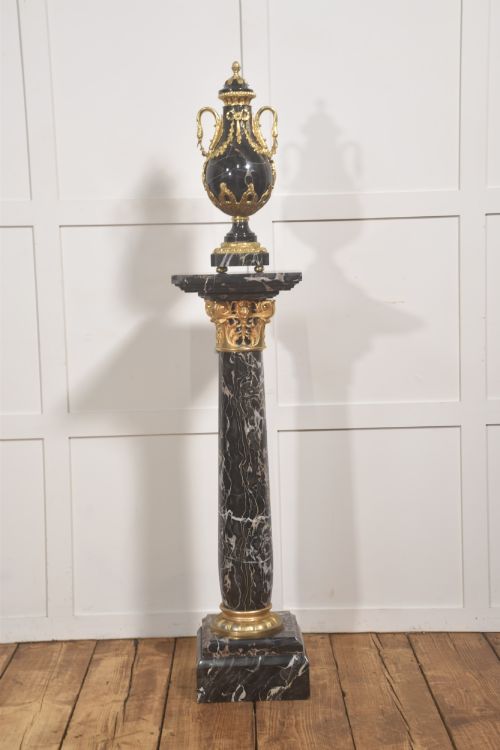
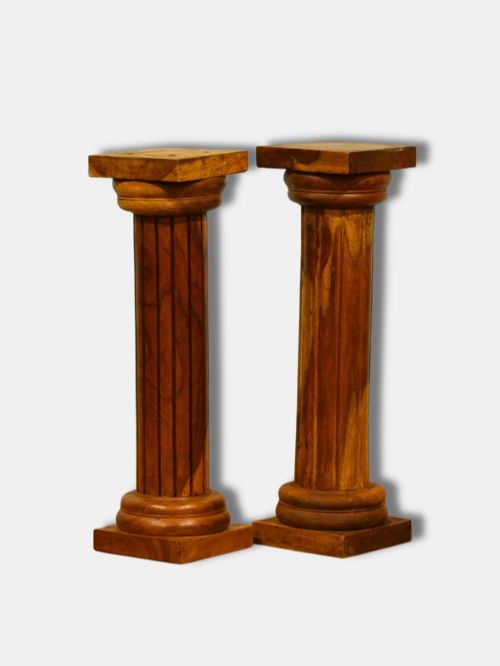
The pieces appearing here span the nineteenth and early twentieth centuries, encompassing Victorian, Louis XVI, and Empire revivals. Columnar shapes dominate, often appearing in balanced pairs.
Origin points lean towards French, Italian, and Scandinavian workshops, reflecting a broad European taste for classical interior decoration.
Materials and construction
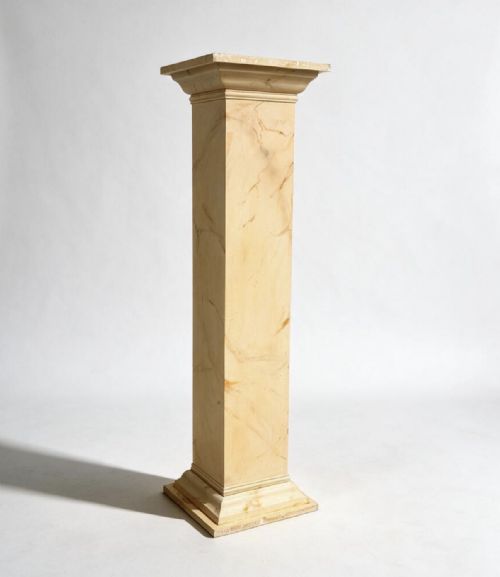
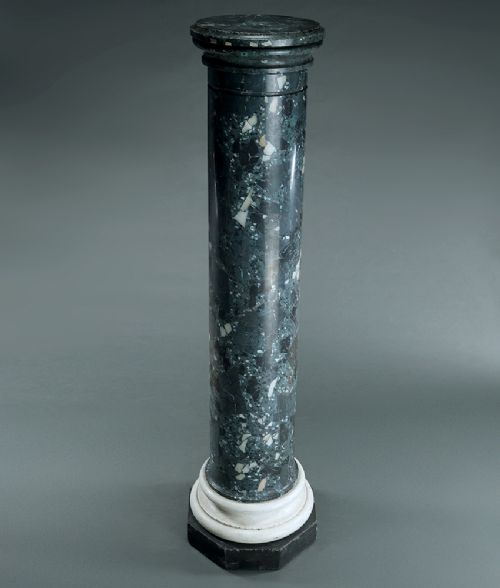
Natural stones form the core of the heavy pieces, utilising solid or veneered marbles such as Carrara, Bardiglio, Verde Antico, and serpentine alongside onyx and alabaster. Scagliola offers a polished composite alternative that mimics natural stone veining.
Woodworking traditions contribute turned and carved examples in mahogany, satinwood, birch, and hardwood, frequently finished with paint, faux marble effects, or parcel gilding. Plaster and cast iron provide further sculptural and structural variety.
Mounts in gilt bronze, ormolu, and gilt-metal accent stone and wood columns, uniting structural weight with decorative detail.
Neoclassical Display Plinths Retail Price Guide 2026
Typical asking prices for neoclassical display plinths among the pieces listed under this phrase on Sellingantiques today, from the lower quarter to the upper quarter. They describe what is for sale here now, not the wider market.
Distinctions in execution
Material selection dictates the initial tier of quality, separating solid figural marbles and finely cast bronzes from painted wood and plaster alternatives. The depth of hand-carving in stone or timber alters the tactile presence of the column.
Precision in turning and stability in multi-part assemblies determine structural integrity, particularly on tall slender shafts and rotating tops. Surface finishes, whether patinated scagliola or layered faux marble paintwork, govern the visual depth of the piece.
The Neoclassical Display Plinths Glossary
- Scagliola
- A composite material made from selenite, glue, and pigments, pressed and polished to imitate natural marble. It allows for intricate coloured inlay work.
- Ormolu
- Gilt bronze mounts applied to furniture and decorative objects. The technique involves mercury amalgamation on a bronze base.
- Socle
- A short plain plinth or pedestal serving as a foundation for a column, statue, or vase. It provides a stable base for taller elements.
- Torchere
- A tall stand designed to support a candelabrum or lamp. In furniture terms, it often functions purely as a display pedestal.
Neoclassical Display Plinths: Frequently Asked Questions
What were neoclassical display plinths used for?
These columns and pedestals served to elevate statuary, urns, and tazze within grand rooms. They created focal points by raising art objects to eye level.
Domestic interiors used them as plant stands or torchere supports. Their architectural form brought classical order to nineteenth-century display spaces.
How do I identify the period of a column?
Material choices and revival styles offer primary clues to date a piece. Nineteenth-century examples often employ solid Italian marbles or heavy cast bronze mounts.
Early twentieth-century works frequently feature Swedish birch, Scandinavian gilt, or painted plaster. Construction methods inside hidden compartments or bases also assist in dating.
Are these pedestals strong enough for heavy stone?
Solid marble and scagliola columns possess substantial weight and inherent strength designed to bear heavy loads. Their wide bases ensure stability under dense statuary.
Wood and plaster variants suit lighter items like ceramic urns or plants. Checking the internal construction helps determine appropriate weight limits for daily display.
Can I use them as plant stands?
Many historical examples function directly as plant stands or torchere supports. Their waterproof stone tops easily accommodate potted flora.
Wooden or painted columns require caution with moisture leakage from pots. Protective saucers prevent water damage to vintage painted surfaces.