





Timber Column Plinth
These timber column plinth pieces elevate sculpture and art objects with classical presence and architectural form.
Timber Column Plinth
A timber column plinth serves as a structural display stand for sculpture, urns, and decorative objects within a room. These architectural supports lift artwork to eye level, creating a distinct focal point in an interior space.
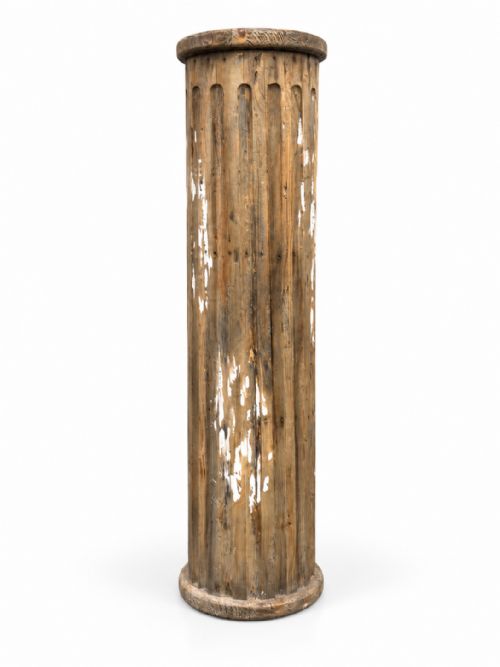
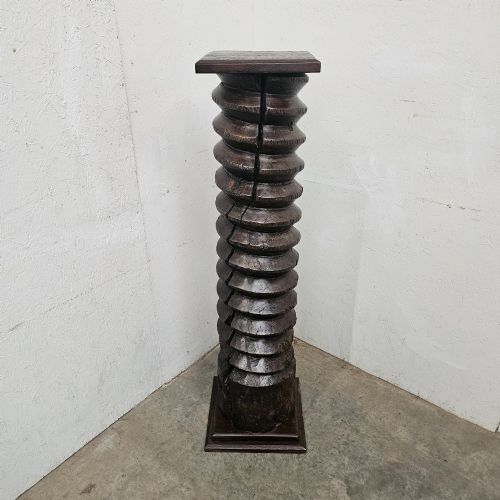
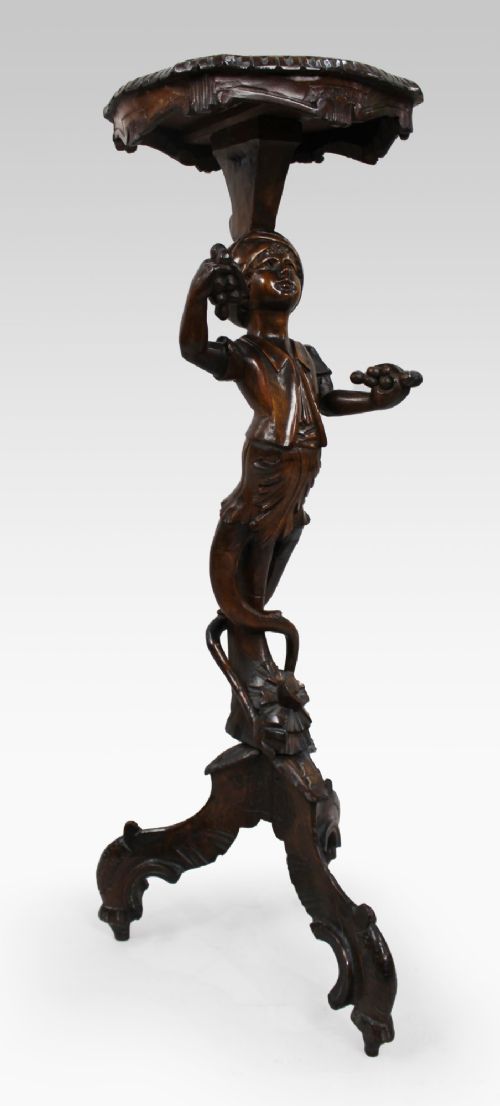
Buyers browsing this selection encounter pedestals shaped like columns and display stands spanning the Georgian, Victorian, and early twentieth-century periods. Forms range from simple fluted wooden shafts to elaborate carved figural designs and display stands with secret compartments.
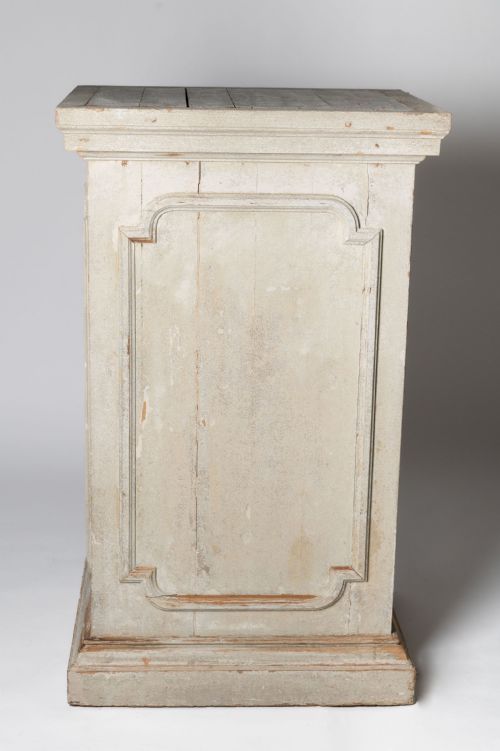
French and English workshops produced these pieces in various timber forms, including mahogany, rosewood, dark oak, beech, and hardwood. Painted finishes such as faux marble also appear alongside inlaid surfaces and hand-carved details.
How timber column plinth pieces were made
Cabinetmakers and carvers utilised dense hardwoods like mahogany, rosewood, and oak to construct stable bases capable of supporting heavy marble or bronze sculptures. Turning lathes shaped cylindrical columns, while hand chisels carved fluting, capitals, and figural motifs into the timber.
Surface decoration involved careful wood staining, French polishing, and intricate marquetry inlay. Some makers applied specialist paint techniques to simulate marble surfaces upon wooden columns.
Joinery techniques united heavy columns to sturdy upper and lower square plinth blocks, ensuring vertical balance and load-bearing strength.
Timber Column Plinth Retail Price Guide 2026
Typical asking prices for timber column plinth among the pieces listed under this phrase on Sellingantiques today, from the lower quarter to the upper quarter. They describe what is for sale here now, not the wider market.
Listings feature timber column plinth options spanning the Georgian, Victorian, and early twentieth-century periods in mahogany, rosewood, and painted finishes.
What varies in quality
The sophistication of the carving and turning dictates the character of each piece, distinguishing simple architectural supports from highly ornamental works of art. Finely detailed acanthus leaves, fluted shafts, and figural carvings require skilled hand labour rather than basic machine production.
The choice of material alters the visual weight and richness of the object, with figured mahogany and rosewood offering deeper grain patterns than plain secondary woods. Original painted faux marble surfaces and delicate wood inlay demand superior craftsmanship compared to plain stained finishes.
Structural proportion and stability determine how well a pedestal performs its function as a sculpture stand. Pieces maintaining balanced dimensions across base, column, and top platform provide superior display capability.
The Timber Column Plinth Glossary
- Plinth
- The flat base or block at the bottom of a column or pedestal. It provides a stable foundation on the floor for the vertical shaft above.
- Capital
- The topmost decorative member of a column or pedestal. This architectural element sits directly beneath the display platform.
- Fluting
- Vertical parallel grooves carved into the shaft of a column. This decorative technique originates in classical architecture.
- Marquetry
- Decorative patterns formed by the insertion of different coloured wood veneers into a solid timber surface. It creates complex geometric or pictorial designs.
- Pedestal
- An upright architectural support used to elevate a sculpture, vase, or urn. It typically consists of a base, shaft, and capital.
Timber Column Plinth: Frequently Asked Questions
How do I choose the right height?
Consider the height of the sculpture or object you plan to display on the column plinth. Taller pedestals suit smaller bronze figures, while shorter stands accommodate larger urns and heavy marble busts.
Ensure the top platform matches the footprint of your artwork to maintain visual balance within the room.
Can these support heavy marble sculptures?
Solid hardwood and mahogany construction provides substantial weight capacity for heavy display items. The sturdy base blocks distribute downward pressure evenly across the floor.
Check the width of the base and the integrity of the internal joints before placing exceptionally heavy stone or bronze art upon the stand.
How do I clean antique timber?
Dust the column regularly with a soft, dry cloth to prevent dirt accumulation within carved recesses and fluting. Avoid modern silicone polishes that build up sticky residue over time.
Apply a traditional beeswax formulation sparingly to nourish antique wood finishes and maintain a natural lustre.