
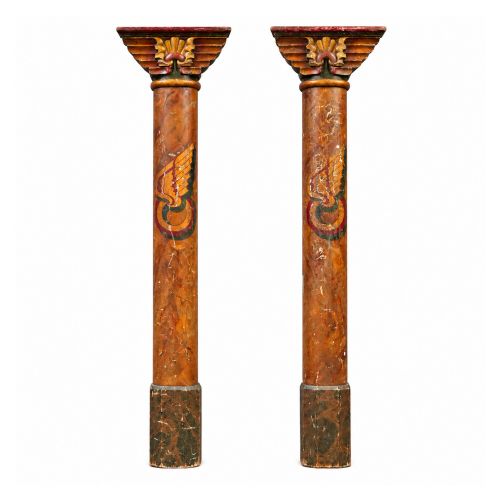
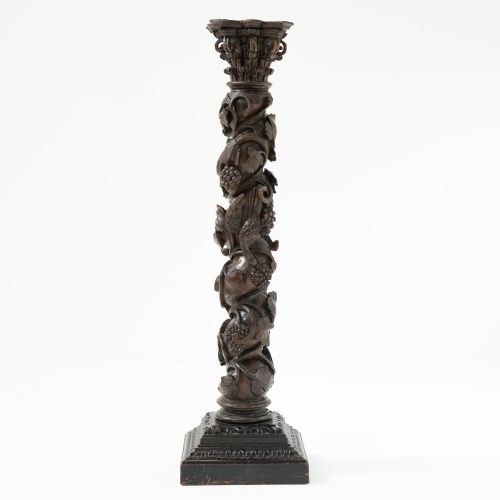
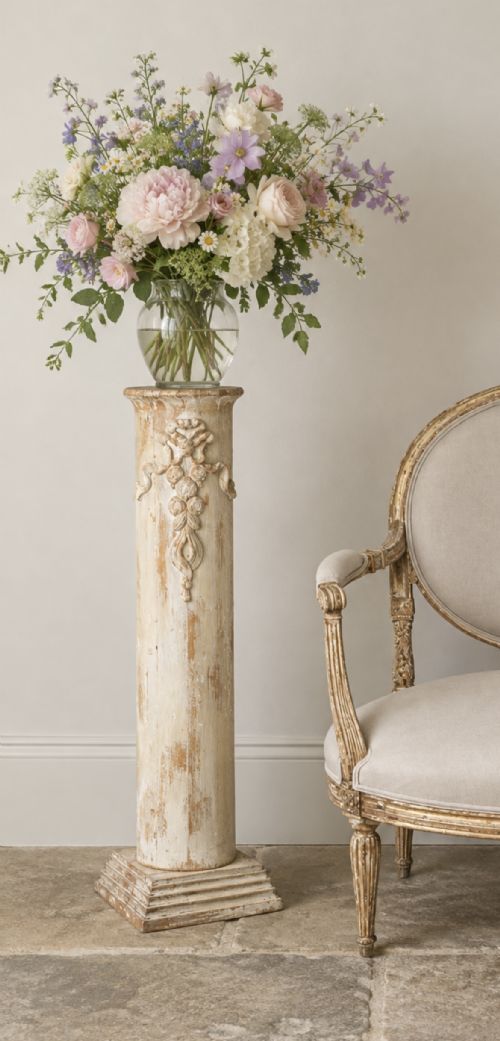
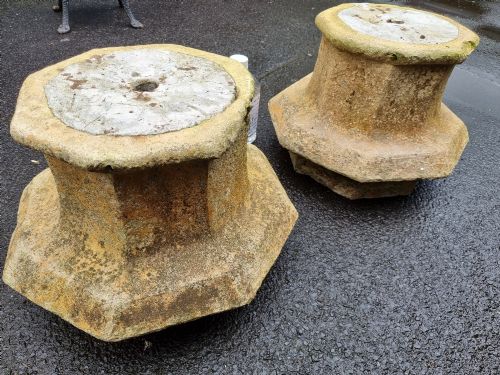


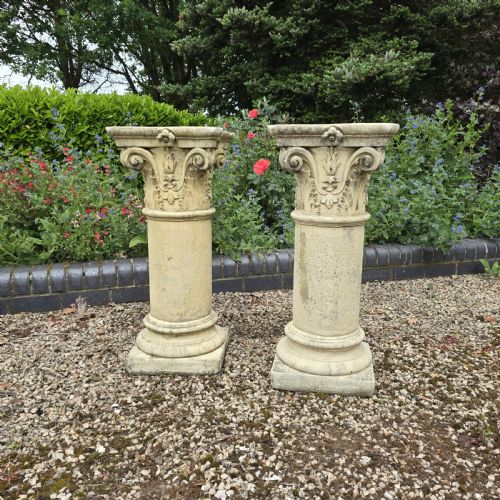


Architectural Column Pedestals
Architectural column pedestals raise objects and punctuate rooms with classical weight, drawing the eye upwards through carved wood, marble, and stone.
Architectural Column Pedestals
Architectural column pedestals serve to elevate sculpture, lamps, and decorative objects, functioning both as standalone furnishings and structural salvage. When searching for architectural column pedestals, buyers encounter items ranging from monumental timber pillars to garden plinths and indoor display stands.
The selections span numerous periods, with nineteenth-century examples appearing frequently alongside eighteenth-century items and early twentieth-century interpretations. Forms vary from simple turned wooden shafts to elaborate Neoclassical and Gothic revival designs intended to anchor a room's interior or garden landscape.
Origins are diverse, encompassing English, French, Scandinavian, and Italian workshops, often created in matched pairs or monumental single pillars. Buyers find both indoor decorative display columns and heavy stone or cast iron outdoor garden pieces represented across the inventory.
Materials and construction methods
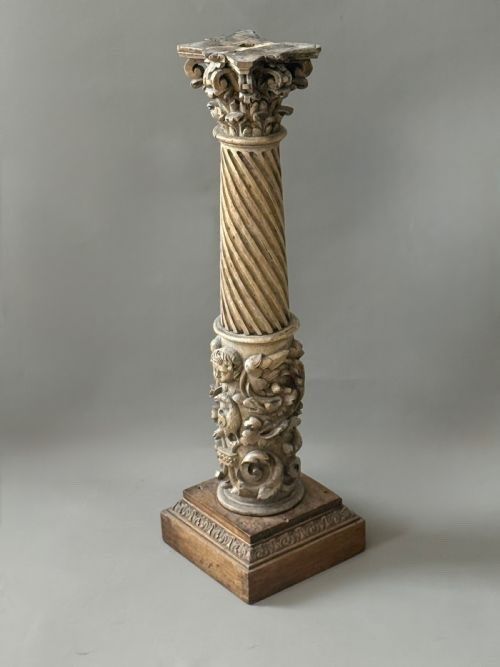
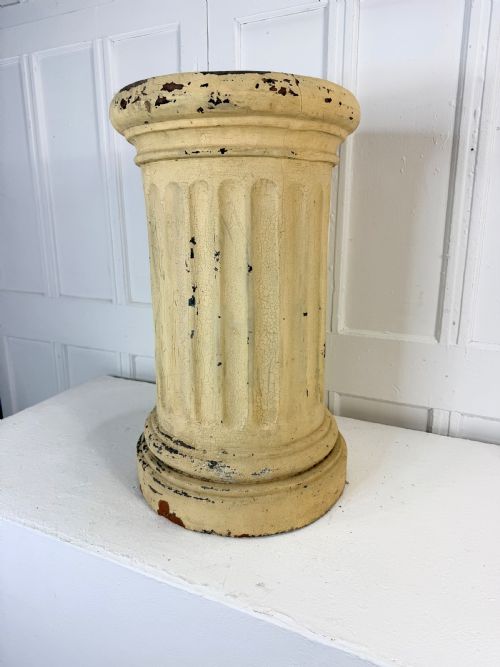
Carvers shaped solid timber such as oak, mahogany, and beech using hand tools, frequently adding gesso, paint, or parcel gilt finishes to imitate costlier materials. Artisans also turned wood on lathes to produce symmetrical shafts and classical column profiles.
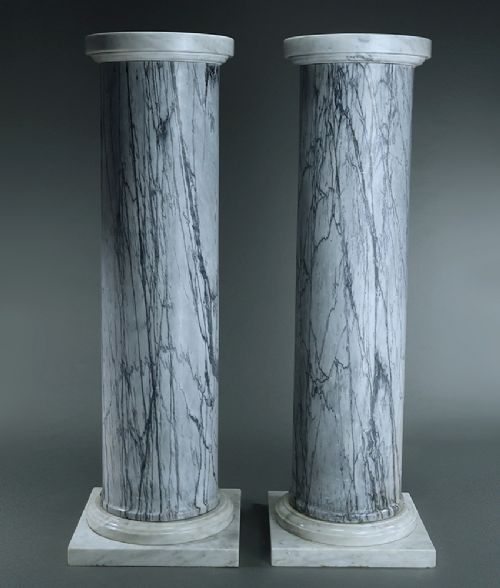
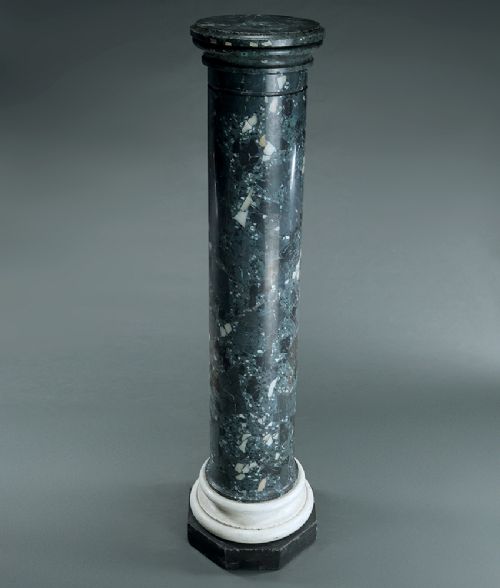
Masons and plasterers cast or carved stone, marble, terracotta, and plaster, utilising composite stone and scagliola to replicate luxury marbles like verde antico, bardiglio, and carrara. Cast iron served for heavy garden planters and architectural supports.
Listings feature architectural column pedestals spanning the eighteenth, nineteenth, and twentieth centuries, incorporating neoclassical, baroque, gothic revival, and industrial styles.
Distinctions in quality
The fidelity of the classical detailing separates ordinary utility columns from exceptional decorative works, seen in the crispness of acanthus leaves on a Corinthian capital or the depth of hand-carved fluting. Faux finishes also vary widely, where skilled artisans layered pigments to simulate translucent marble strata, while lesser examples rely on flat, uniform paint.
Material choice dictates longevity and presence, with solid marbles, alabaster, and dense hardwoods holding an inherent gravitas that lightweight plaster or softwood versions achieve only through exceptional surface artistry. The integrity of the structural core and the balance of the base determine how securely heavy objects rest on top.
Marguerite
The Architectural Column Pedestals Glossary
- Scagliola
- A composite material made from selenite, glue, and pigments, applied to mimic genuine marble columns and architectural details. It allows for seamless coloured veining across curved pillar surfaces.
- Verde Antico
- A dark green serpentine breccia marble prized for its mottled appearance and historical association with classical antiquity. Grand Tour souvenirs and display columns frequently utilised this decorative stone.
- Solomonic
- A column type characterised by a spiralling twist along the shaft, creating dynamic vertical movement. This Baroque form adds visual energy to furniture and architectural supports.
- Socle
- A short plain plinth or pedestal acting as a foundational support beneath a column base. It elevates the primary shaft above floor level.
- Plinth
- A heavy flat slab or rectangular block forming the lowest base of a column or pedestal. It provides stability and visual grounding to taller vertical structures.
Architectural Column Pedestals: Frequently Asked Questions
How do I style an architectural column pedestal at home?
Place a single monumental column in an empty corner as a sculptural focal point, or top a matched pair with urns, busts, or large lamps. They suit both traditional libraries and minimalist modern rooms by introducing historical texture.
Ensure the weight of the display object matches the load-bearing capacity of the material, keeping heavy stone pieces grounded on solid flooring and lighter wooden pedestals away from damp areas.
Can these columns be used outdoors?
Weather-resistant materials like cast iron, composite stone, terracotta, and granite are designed for garden lawns, terraces, and porticos. Over time, natural weathering enhances the stone and iron surfaces.
Wooden, plaster, and scagliola columns must remain indoors, as moisture and frost will quickly damage painted finishes, gesso, and soft timber.
What is the difference between a column and a pedestal?
A column strictly follows classical architectural orders with a base, a distinct fluted or plain shaft, and a capital such as Corinthian or Doric. A pedestal is generally a broader standalone box, plinth, or pillar specifically built to elevate a statue or vase.
In practice, antique dealers often use the terms interchangeably when describing decorative display furniture adapted from architectural elements.
How do I identify faux marble paintwork?
Faux marble, including simulated verde antico and scagliola, relies on layered translucent oil paints or pigmented plasters to replicate the crystalline depth of real stone. Examining the surface closely reveals brushwork or feathering techniques used by historical painters.
Heavier weight and coldness to the touch usually indicate genuine stone or plaster beneath, whereas wood feels lighter and warmer.