



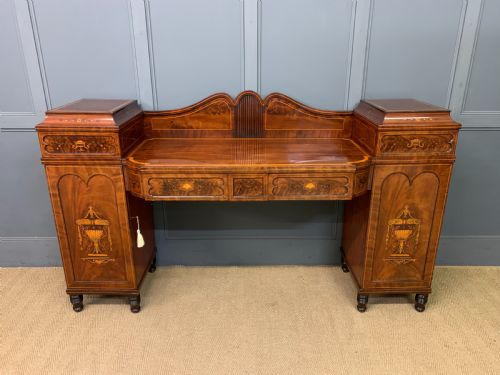


Neoclassical Dining Table
These neoclassical dining table forms and related serving pieces bring architectural dignity and classical proportion to a room.
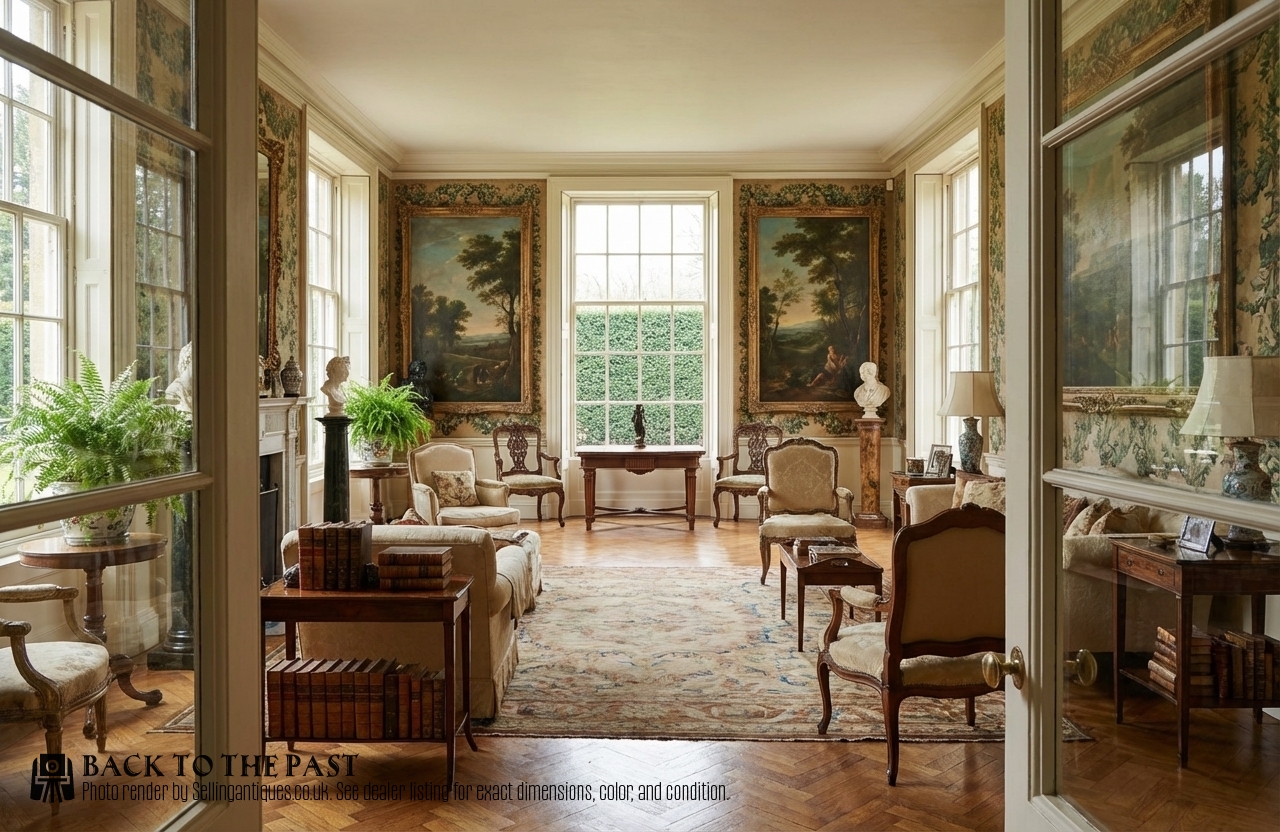
Neoclassical Dining Table
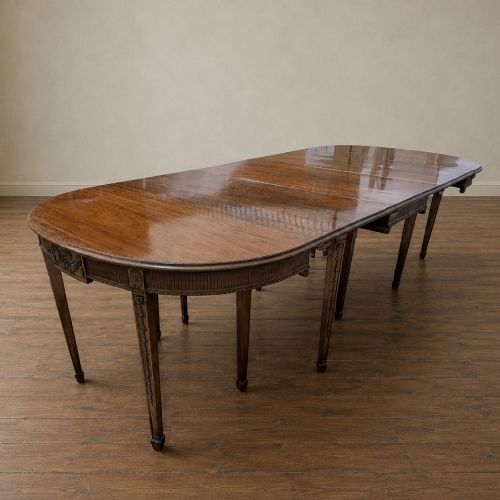
A neoclassical dining table brings balanced proportion and classical restraint to a room, drawing on George III, Regency, and Adam revival styles. These pieces often feature mahogany timber and architectural details like inlay and pedestals.
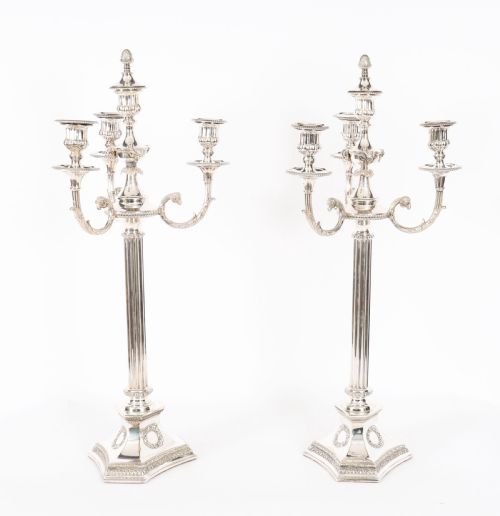
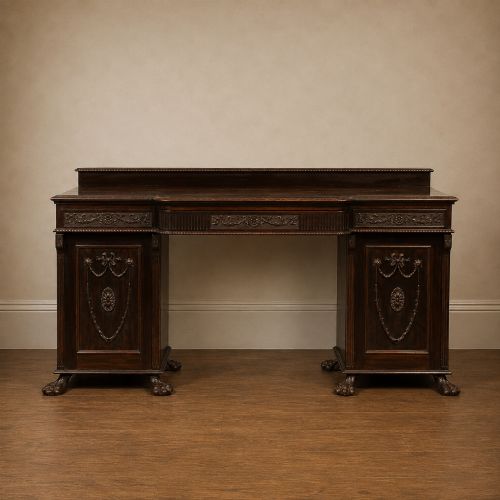
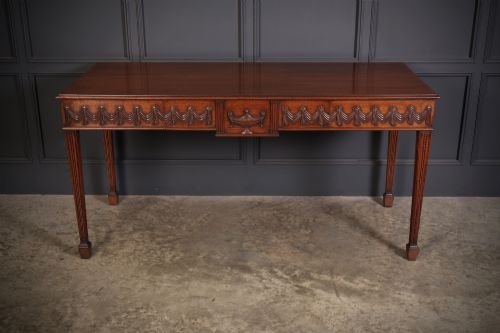
Alongside extending dining tables, buyers frequently encounter related serving tables, sideboards, and centre tables that share the same vocabulary of classical ornament. The selections span periods from the Georgian era through Victorian and Edwardian revivals.
Originating in the late eighteenth century and later revived in the nineteenth and twentieth centuries, these dining tables and serving pieces reflect enduring interest in symmetry, urn motifs, and clean linear edges.
Assessing quality and execution
Quality rests in the crispness of the carving, the selection of figured mahogany veneer, and the precision of inlaid stringing. Superior examples display harmonious proportions and careful attention to classical detail in the manner of notable designers.
Construction methods also dictate standard, where smooth extension actions, solid secondary timbers, and well-fitted joints separate standard production from exceptional craftsmanship.
Listings span multiple eras from the eighteenth century to the twentieth century, encompassing Georgian, Victorian, and Edwardian revivals.
Robert Adam·Gillows·Marsh and Tatham·Thomas Bradbury and Sons Ltd·Barker Ellis
The Neoclassical Dining Table Glossary
- Neoclassical
- A style rooted in classical antiquity characterised by symmetry, straight lines, and motifs such as urns, husks, and fluting. It experienced major revivals during the Georgian, Victorian, and Edwardian periods.
- D-end
- A table configuration featuring semi-circular ends that detach or extend to form a larger surface. This layout allows flexibility in dining arrangements.
- Sideboard
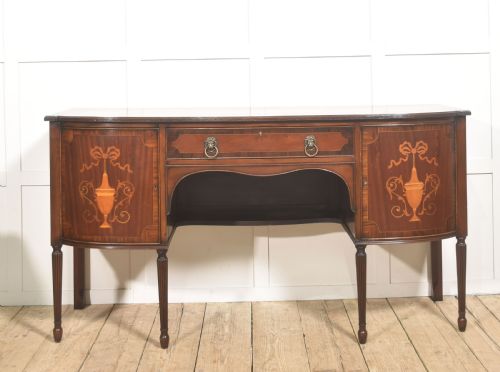
- A long surface used for serving food and storing dining accessories, frequently ornamented with satinwood inlay or brass hardware. Georgian and Edwardian iterations often incorporate pedestals or breakfront designs.
- Satinwood
- A lustrous timber with a yellow-gold tone utilised for contrasting inlay and banding on mahogany furniture. It adds brightness to dark primary woods.
- Pedestal
- A structural support column beneath a table centre or sideboard end, often decorated with reeding or classical carvings. It distributes weight while maintaining an open silhouette.
Neoclassical Dining Table: Frequently Asked Questions
How do I care for mahogany surfaces?
Dust regularly with a soft, dry cloth and apply a quality beeswax periodically to nourish the timber. Avoid placing tables near direct heat sources or strong sunlight to prevent warping and fading.
Protect the finish from moisture by using coasters and placemats during dining use. Gentle maintenance preserves the depth of the grain and the integrity of the antique polish.
Are these tables suitable for modern dining?
Many extending formats allow flexibility for daily use or larger gatherings. The classic proportions integrate easily into various interior schemes.
Pairing antique tables with contemporary seating creates a balanced room layout. Their sturdy construction ensures they remain functional pieces of furniture.
How do I distinguish revival periods?
Revival pieces from the Edwardian and Victorian eras often adopt Georgian and Adam motifs with slight variations in hardware and timber finish. Examining the underside and internal drawer construction helps reveal the manufacturing period.
Later adaptations may employ machine-cut elements rather than hand-carved details found in eighteenth-century originals. Comparing the joinery style to known period examples clarifies the date.
What defines a serving table?
Serving tables provide a surface for food presentation and storage adjacent to the main dining table. They typically feature shallow depths and long spans.
Many examples incorporate drawers or lower shelves for linen and cutlery. Their decorative treatment mirrors the primary dining furniture in the room.