



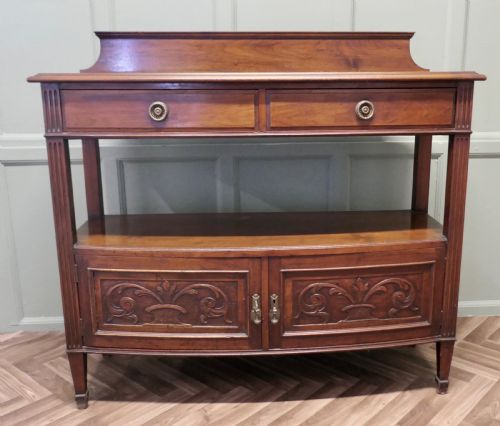


French Walnut Dining Table
A french walnut dining table brings warmth and solid timber grain to a room, ranging from rustic farmhouse boards to formal revival pieces.
French Walnut Dining Table
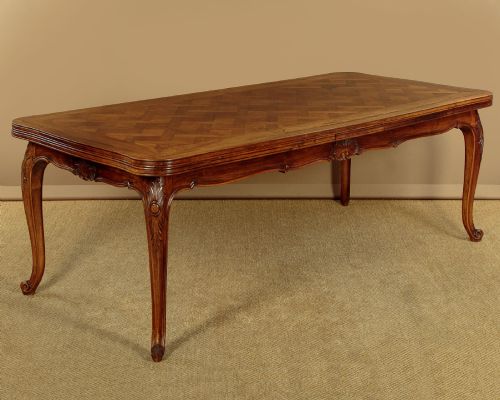
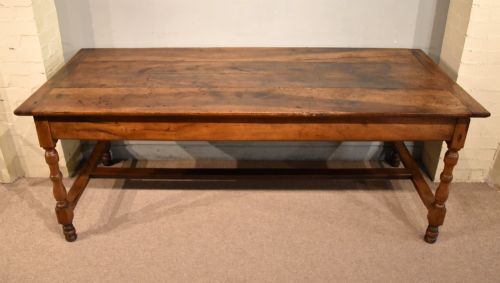
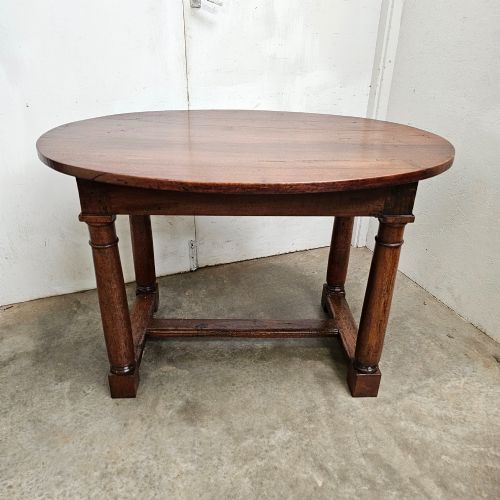
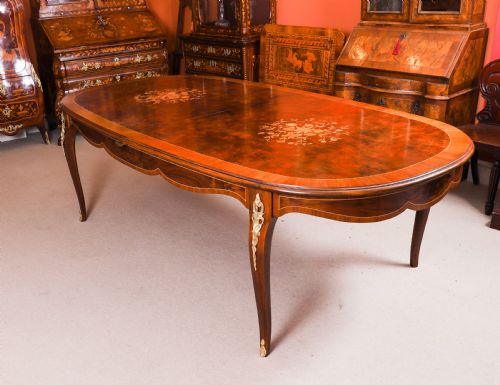
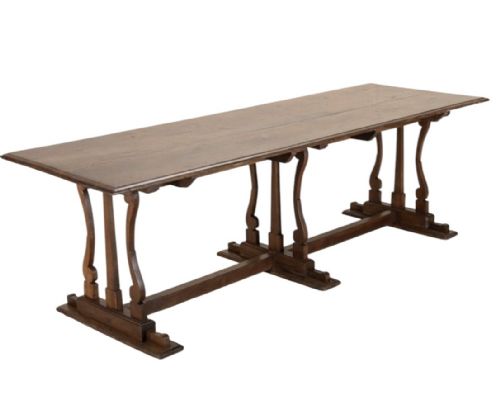
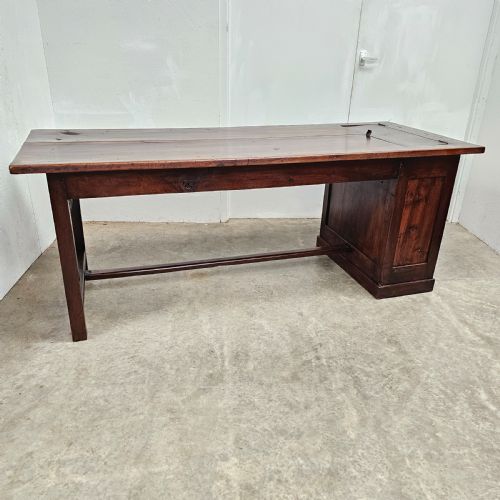
A french walnut dining table spans heavy monastic and refectory forms from the eighteenth and nineteenth centuries alongside lighter provincial and extending formats. Buyers searching for a french walnut dining table encounter robust farmhouse timber surfaces as well as elaborate revival designs featuring parquet tops and carved cabriole supports.
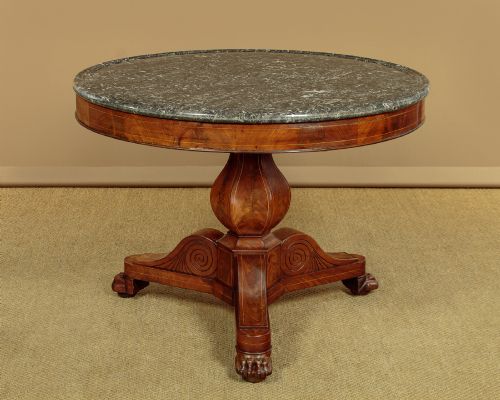
The selection ranges from early single-plank and two-board tops designed for daily use to grand Louis revival pieces mounted in ormolu. Smaller round centre tables and gueridon formats also appear alongside large ten-seat refectory tables suited to modern dining spaces.
Origins trace across French provincial workshops and metropolitan cabinet makers, capturing periods from the eighteenth century through the Art Deco era of the 1930s. The dominant types remain the rustic farmhouse plank table and the extending draw-leaf mechanism.
How They Were Made
Makers utilised solid walnut alongside marquetry and parquetry veneers laid over supportive sub-woods to create patterned tabletops. Timber selection focused on rich grain figures, particularly book-matched walnut and burr walnut sections.
Construction techniques include draw-leaf sliding extensions, H-stretchers for structural rigidity, and pegged mortise and tenon joints on older refectory frames. Decorative mounts in cast brass and ormolu appear on formal nineteenth and twentieth-century examples.
Surfaces received traditional polishing or wax finishes that highlighted the natural depth and tone of the walnut without obscuring the grain.
Several tables retain the faint flour dust in their bread-prep crevices, hinting at decades of quiet farmhouse baking.
What Varies in Quality
The standard of a french walnut dining table rests upon timber selection and the integrity of the joinery rather than mere age. Tables utilising single-plank or well-matched two-board tops demonstrate superior material quality compared to multi-strip surfaces.
Hand-carved details on legs and aprons show the sculptor's skill, distinguishing bespoke workshop production from simpler provincial output. Mechanism precision in extending and draw-leaf tables also dictates value, where smooth operation reflects careful historical carpentry.
Jules Leleu
The French Walnut Dining Table Glossary
- Refectory table
- A long, narrow dining table traditionally used in communal dining halls and characterised by sturdy legs joined by a longitudinal stretcher. These tables provide generous seating capacity along the length.
- Draw-leaf table
- An extending table with two leaves stored beneath the main top that slide out to lengthen the surface. This mechanism allows the table to expand quickly for guests.
- Parquetry
- Geometric wood inlay work forming a mosaic pattern on the tabletop. Artisans arrange contrasting timber veneers to create decorative surface designs.
- Gueridon
- A small round occasional or centre table, typically supported by a central pedestal or slender legs. These tables gained popularity in nineteenth-century French interiors.
- Ormolu
- Gilt-bronze mounts applied to furniture for decorative enrichment. This technique adds metallic contrast to the dark walnut timber.
French Walnut Dining Table: Frequently Asked Questions
How do I clean the wood surface?
Use a soft, dry cloth to remove dust and apply a natural beeswax periodically to nourish the walnut timber. Avoid harsh chemical sprays that strip the traditional finish.
Keep the table away from direct heat sources and strong sunlight to prevent the wood from drying out or splitting over time.
How do draw-leaf extensions work?
The main leaves pull outward from beneath the primary tabletop, and the central section drops down into place to create an extended, flat surface.
This clever mechanism keeps the extension pieces stored neatly within the frame when not in use.
Are these tables suitable for daily use?
Solid walnut construction provides exceptional durability, making these tables well-equipped for everyday family meals and gatherings.
Using placemats and coasters helps protect the antique polish from moisture rings and heat marks.
How can I tell the period?
Examine the construction marks, timber thickness, and leg style, as cabriole legs point to revival periods while simple plank tops suggest earlier farmhouse origins.
Hardware details and extension mechanisms also offer clear clues to the manufacturing decade.