
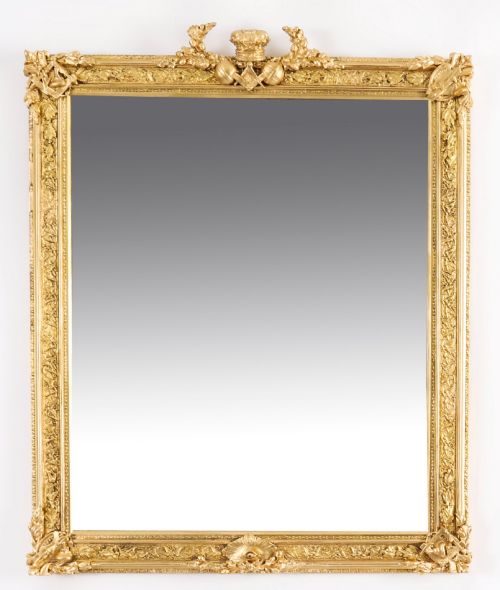
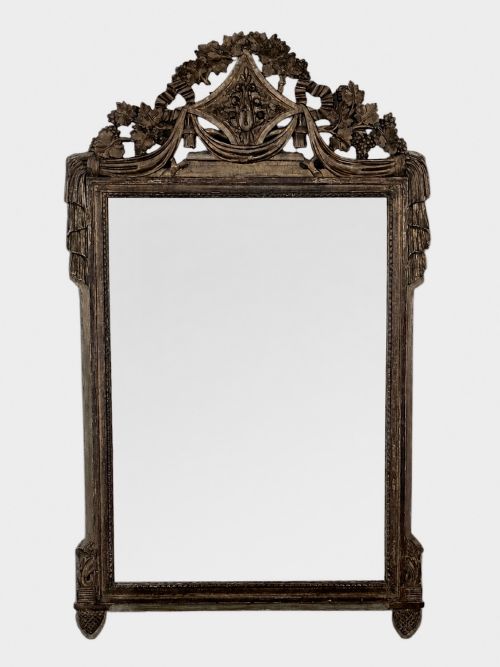
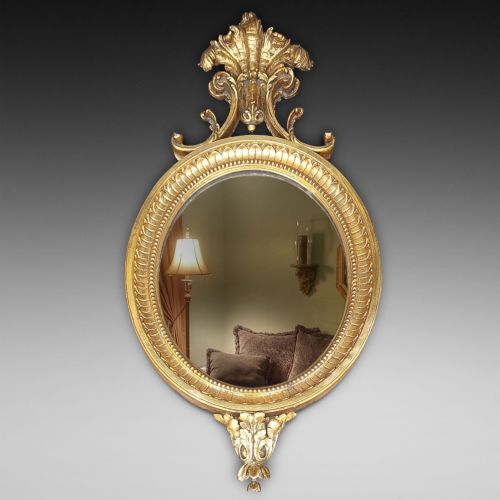
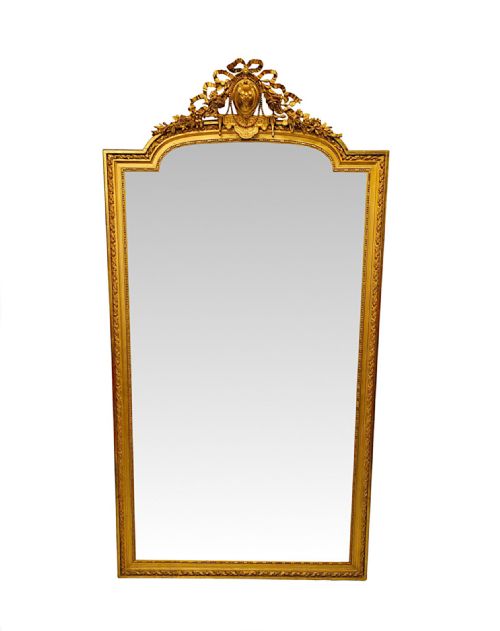

Neoclassical Carved Mirror
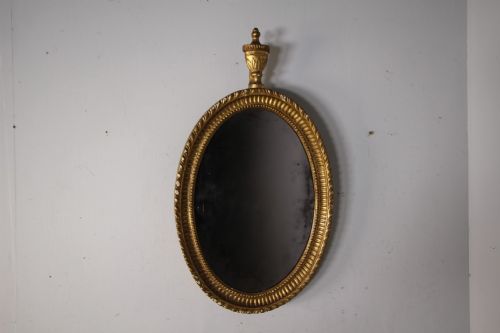
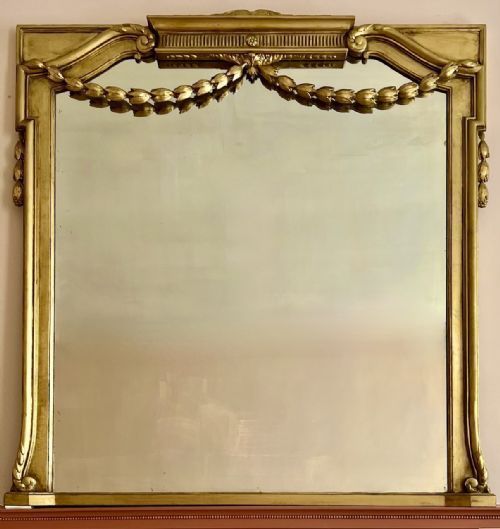
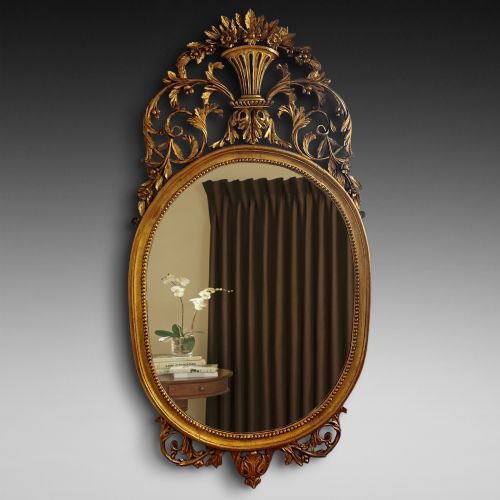
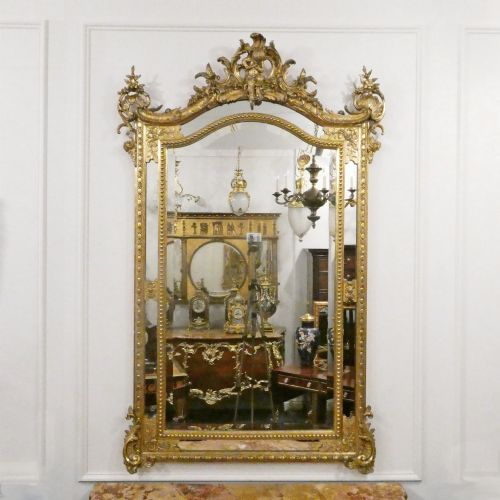
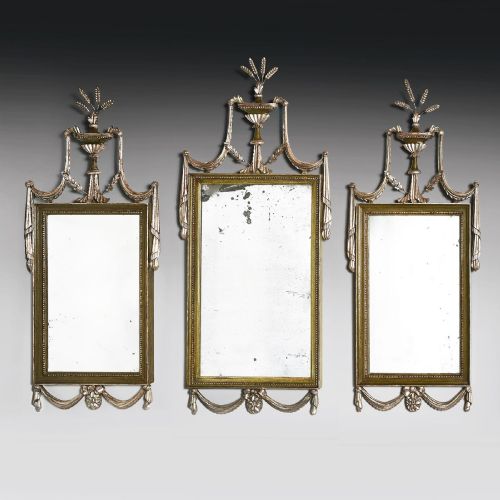
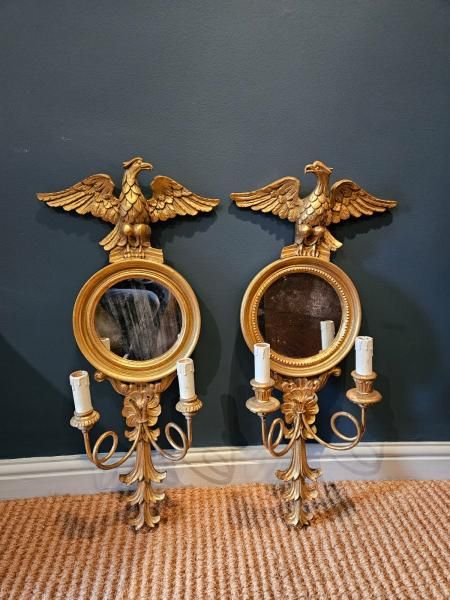
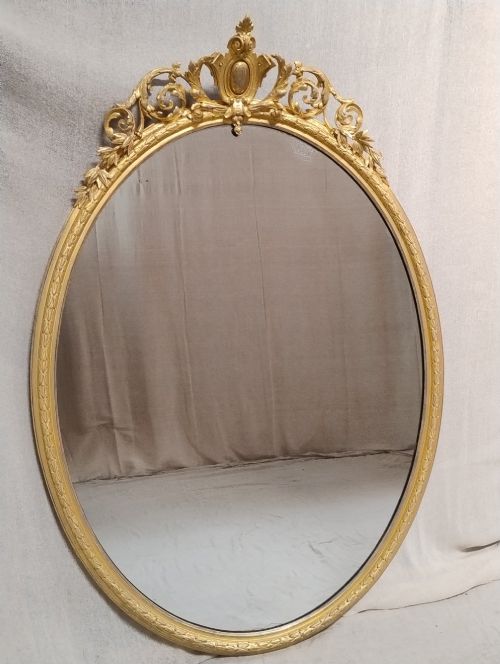
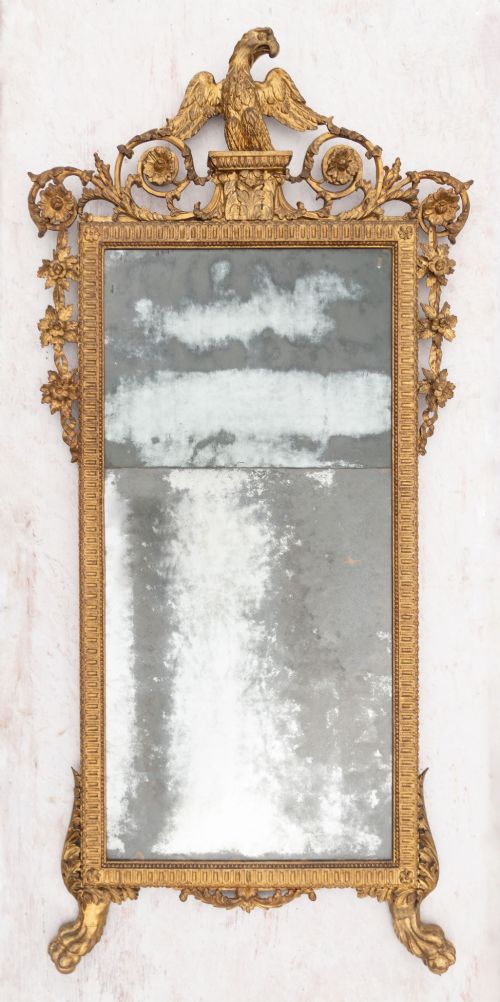
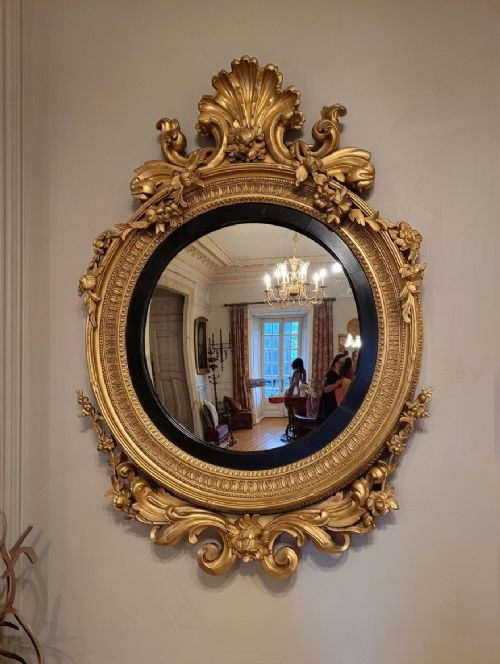
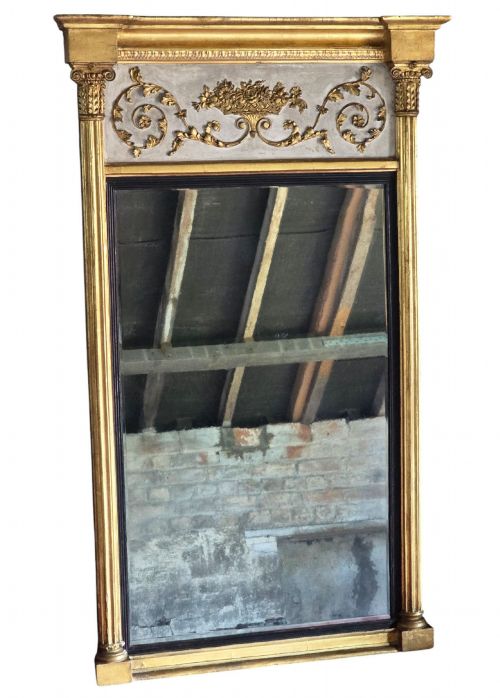
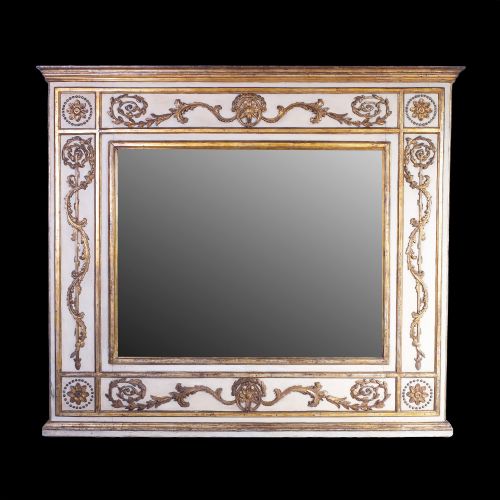
These neoclassical carved mirror examples bring classical symmetry and gilded grace to a room, ranging from grand overmantels to slender wall sconces.
Neoclassical Carved Mirror
A neoclassical carved mirror draws upon classical motifs like urns, swags, and symmetrical framing to anchor a room. Buyers searching for a neoclassical carved mirror will encounter pieces stretching from the eighteenth century through the Victorian era.
The selection ranges from compact oval wall mirrors and girandoles to massive overmantels designed to sit above a fireplace. English and French workshops dominate the selection, alongside Italian and Swedish pieces following the neoclassical manner.
Overmantel mirrors and pier glass forms appear frequently alongside smaller wall-hanging pieces. The periods span Georgian, Regency, and Louis XVI styles, reflecting enduring classical revivals across more than a century.
Materials and construction methods
Makers shaped these frames from wood, pine, and gesso before applying gold leaf, silver, or paint. Carved wooden elements provide the structural relief, while composition and gesso build up finer surface details.
Reflecting plates include early mercury glass and original bevelled glass mirror plates. Gilding techniques utilise gold leaf and paint to create the bright, reflective finishes characteristic of the period.
Freemasons occasionally commissioned specialised gilded mirrors, proving that even secret societies appreciated a good classical reflection.
Distinctions in craftsmanship and survival
Quality rests in the crispness of the hand-carving and the integrity of the original giltwood surface. Finer examples retain their original mercury glass plates and deeply modelled gesso enrichments without heavy restoration.
The weight and depth of the wooden frame separate master-carved pieces from later revival items relying heavily on moulded composition. Original backboards and untouched surfaces elevate a piece above heavily reworked alternatives.
Gillows Of Lancaster
The Neoclassical Carved Mirror Glossary
- Giltwood
- Wood carved and coated with gold leaf. This material provides the brilliant metallic finish seen on many classical frames.
- Mercury glass
- An early type of mirror plate produced by pouring a mercury amalgam behind glass. It often displays characteristic dark mottling and soft reflection.
- Overmantel mirror
- A large horizontal mirror designed specifically to hang above a fireplace mantelpiece. These pieces often anchor the decorative scheme of a formal room.
- Trumeau mirror
- A decorative wall mirror incorporating a painted panel or carved artwork above the glass plate. These French pieces integrate woodwork and mirrors into wall panels.
- Girandole
- A decorative wall mirror featuring attached candle sconces. The candle light reflects directly off the glass and gilded frame.
Neoclassical Carved Mirror: Frequently Asked Questions
How do I hang a heavy overmantel mirror safely?
Heavy overmantel mirrors require secure wall fixings anchored directly into masonry or solid wall studs. Professional installation ensures the substantial weight of the wood and glass is properly supported.
Weight distribution matters because many frames rely on old wooden structures that should not bear the entire hanging strain alone. Using appropriate brackets preserves both the wall and the antique frame.
Are original mercury glass plates fragile?
Original mercury glass plates are stable within their frames but require gentle handling during transport or cleaning. The backing material is sensitive to moisture and harsh chemical cleaning agents.
Cleaning should involve only a dry or slightly damp microfibre cloth applied directly to the glass. Avoiding abrasive cleaners protects the fragile silvering behind the plate.
How do I tell a Georgian mirror from a Victorian revival?
Georgian mirrors typically feature hand-carved wooden details and older construction methods behind the frame. Victorian revivals often incorporate moulded composition ornament rather than deep wood carving.
Examining the backboards, fixings, and joinery helps reveal the true age of the piece. Wood shrinkage and older nail types offer further clues to dating.
Where should I place a pier glass mirror?
Pier glass mirrors work best on the wall space between two windows. This placement maximises natural light reflection across the room.
Historically, these tall mirrors sat above low console tables or pier tables. Matching that height creates a balanced traditional arrangement.