




Ribbon Crest Gilt Mirror
A ribbon crest gilt mirror brings classical elegance to a room through delicate carved detailing and gleaming metallic surfaces.
Ribbon Crest Gilt Mirror
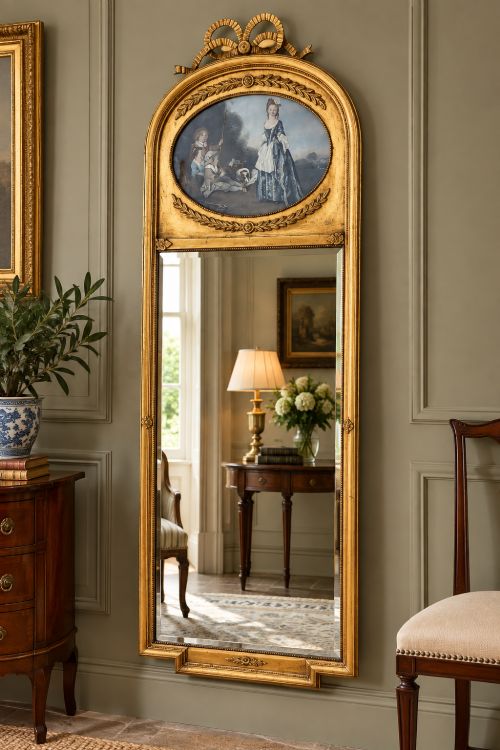
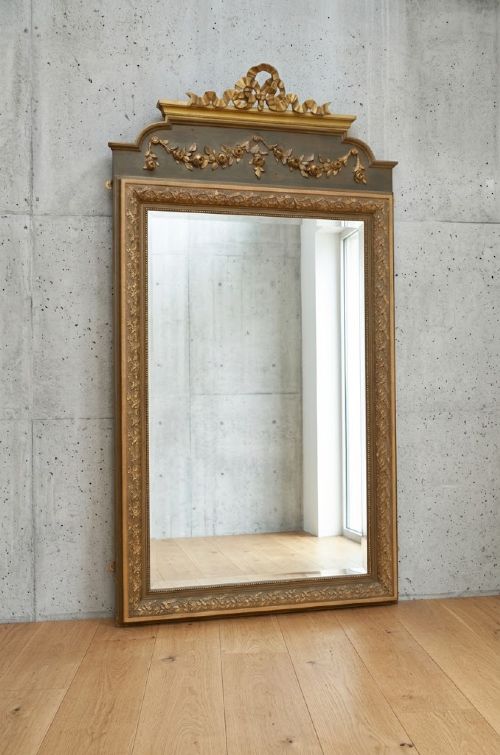
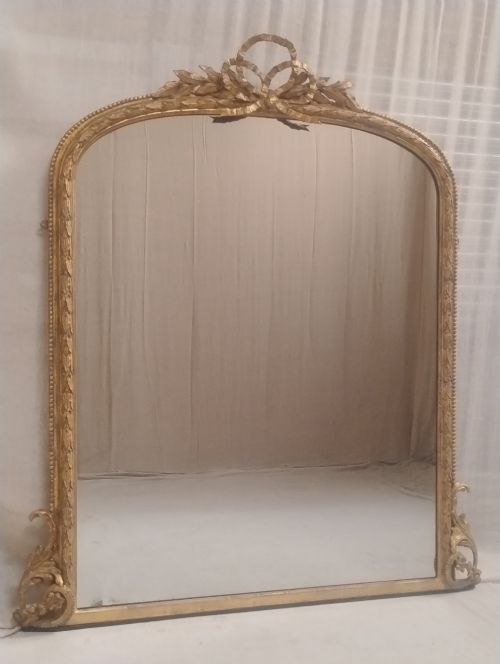
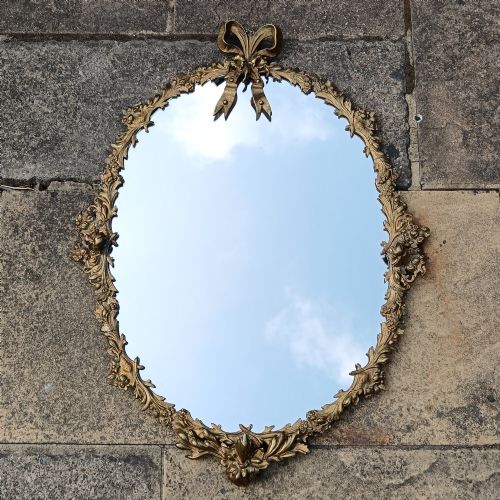
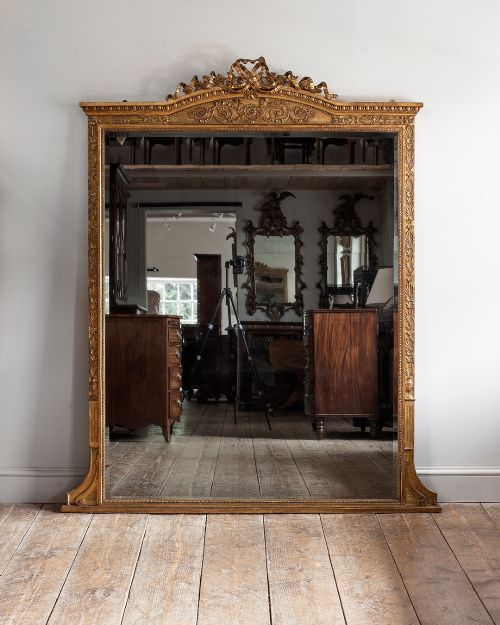
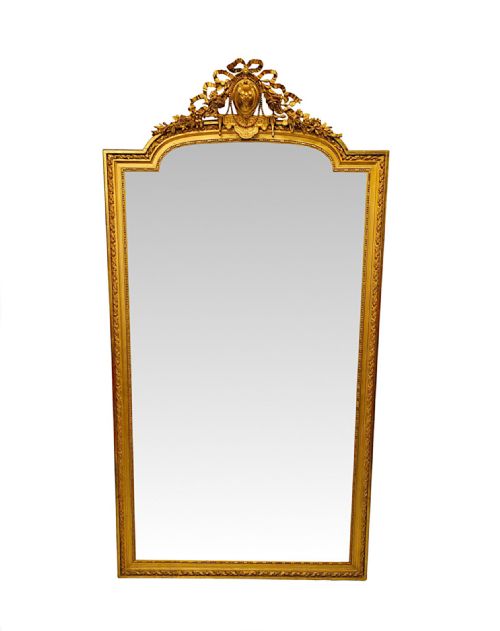
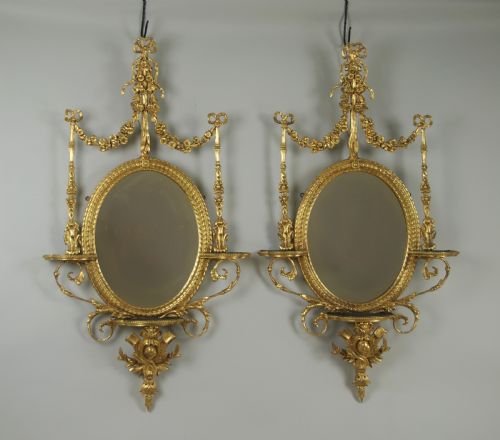
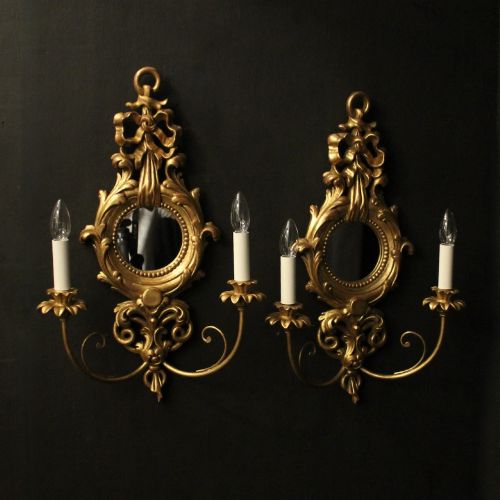
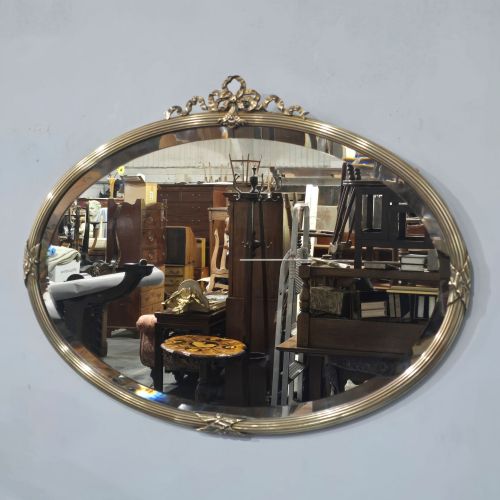
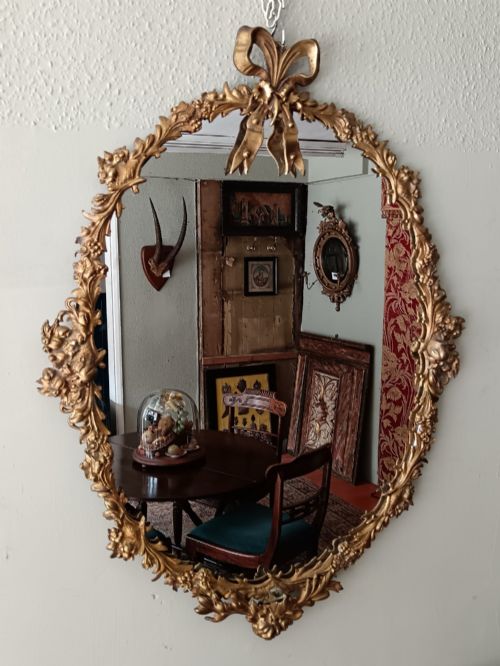
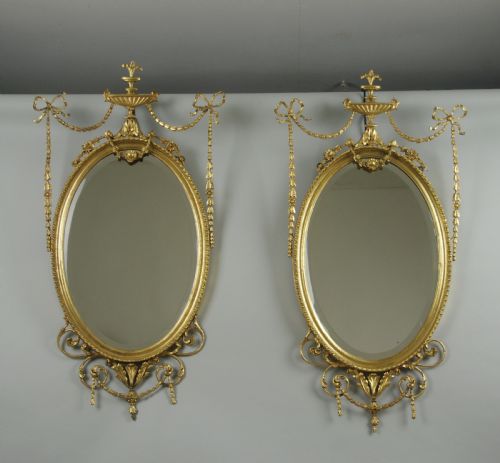
A ribbon crest gilt mirror is typically found in wall-hung or overmantel formats spanning the nineteenth century and the Edwardian period, often reflecting Louis XVI Revival or Adam styles. These pieces combine a functional reflective glass surface with ornamental frames shaped by scrolled or looped ribbon motifs at the summit.
Most examples emerge from French and English workshops, appearing as oval wall mirrors, tall dressing glasses, or grand architectural overmantels designed to anchor a principal room. The predominant aesthetic draws heavily on neoclassical vocabulary, where symmetrical garlands and bowknots soften the rectilinear geometry of traditional frames.
Materials and construction methods
Makers built the foundational framework of a ribbon crest gilt mirror from timber, frequently applying a layer of gesso to carve fine decorative reliefs such as ribbons, swags, and bead reels. Composition ornament, a pliable mixture of whiting, glue, linseed oil, and resin, was also pressed into moulds and secured to the wooden structure before gilding.
Gold leaf or applied metallic leaf was carefully laid over a prepared bole base to provide the characteristic brilliant surface, while some versions incorporated gilt bronze mounts or painted wood details. Mirror glass of the period often featured hand-bevelled edges, set securely within the rebates of the decorated frames.
The selection includes pieces spanning the Victorian, Edwardian, and late nineteenth-century periods, alongside Louis XVI Revival and Adam styles.
Distinguishing quality across examples
The sophistication of the carving at the ribbon crest dictates much of the visual success, where hand-carved gesso and timber show crisp undercuts and naturalistic folds compared to heavier, blunt moulded pastes. Crisp definition in the floral swags and bowknots reveals the hand of a skilled artisan rather than a hurried factory output.
The integrity of the gilding surface matters significantly, with finer pieces displaying layered gold leaf that ages with a warm, subtle patina rather than flat, uniform modern metallic paints. Original mirror plates showing gentle foxing or clear bevels further separate superior examples from later replacements.
Strahan of Dublin
The Ribbon Crest Gilt Mirror Glossary
- Giltwood
- Timber that has been coated with gold leaf or metal leaf. This traditional finish provides a durable, luminous metallic sheen.
- Gesso
- A plaster mixture applied to wood frames and carved or smoothed. It serves as the primary base for subsequent gilding and intricate detailing.
- Overmantel mirror
- A large mirror specifically designed to hang above a fireplace mantelpiece. These pieces frequently dominate the wall space in nineteenth-century interiors.
- Louis XVI Revival
- A decorative style popular in the nineteenth century that revived eighteenth-century French neoclassical motifs. It incorporates straight lines, symmetry, and ribbon crests.
- Bevelled glass
- Mirror glass with edges ground and polished to an angle. This technique creates a prismatic light effect around the perimeter.
Ribbon Crest Gilt Mirror: Frequently Asked Questions
Where should I hang a ribbon crest gilt mirror?
These mirrors work best mounted above a fireplace mantel, on a principal drawing room wall, or above a console table where the decorative crest receives adequate space to stand out.
Ensure the wall fixings match the substantial weight of the timber and gesso frame to support the piece securely.
Are these mirrors original to the nineteenth century?
The inventory includes pieces dated across the Victorian and Edwardian eras, alongside revival styles that emulate earlier neoclassical design periods.
Examining the construction of the wooden backboards, fixings, and the nature of the glass helps confirm the period of manufacture.
How do I identify a Louis XVI style mirror?
Louis XVI style pieces rely on classical symmetry, straight structural lines, and ornamentation such as ribbons, quivers, and floral swags rather than heavy baroque curves.
The ribbon crest serves as a signature element of this neoclassical revival aesthetic.