



Gilded Wood Floor Mirror
A gilded wood floor mirror brings scale and reflected light into a room, spanning nineteenth-century French and English designs.
Gilded Wood Floor Mirror
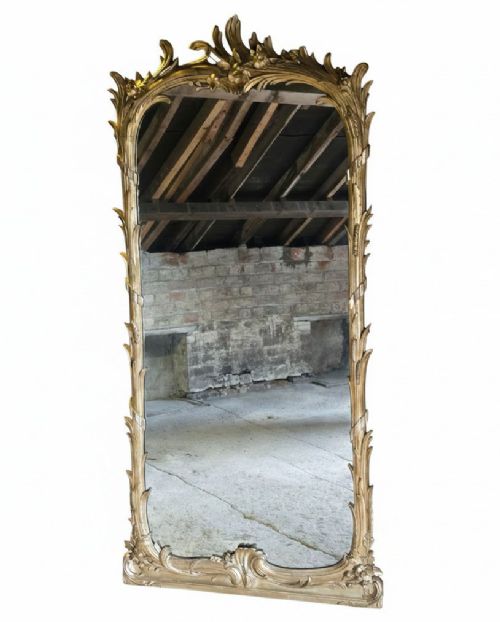
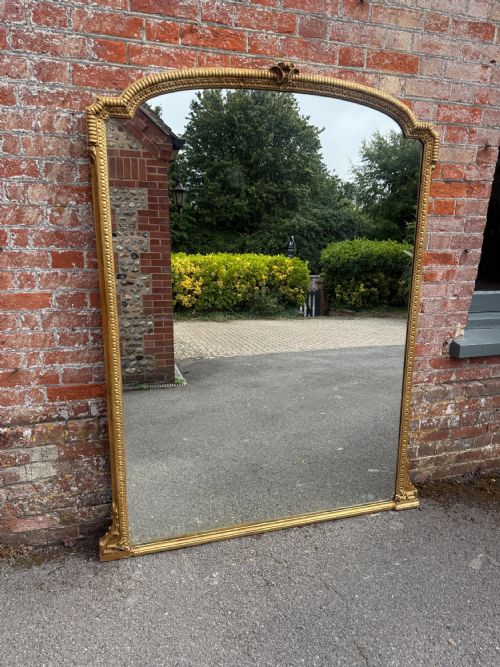
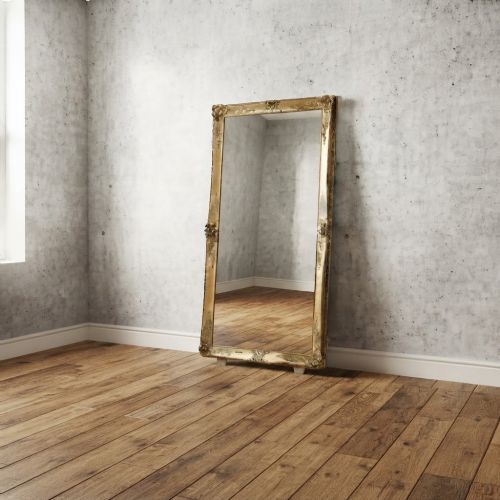
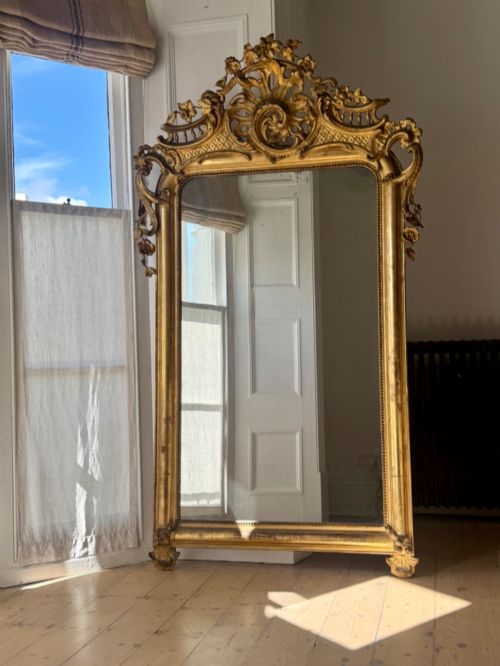
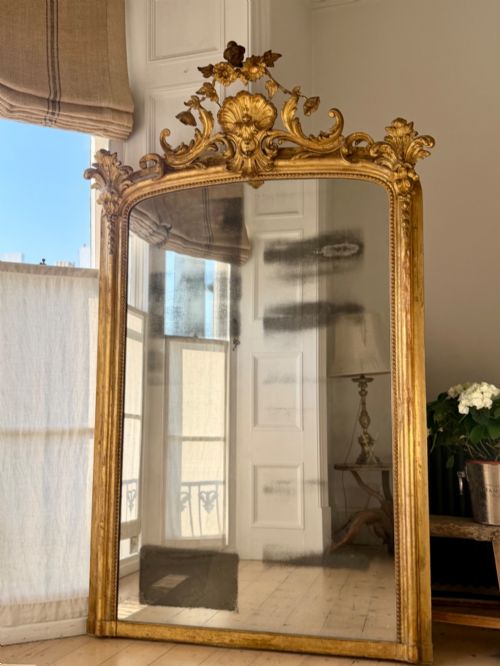
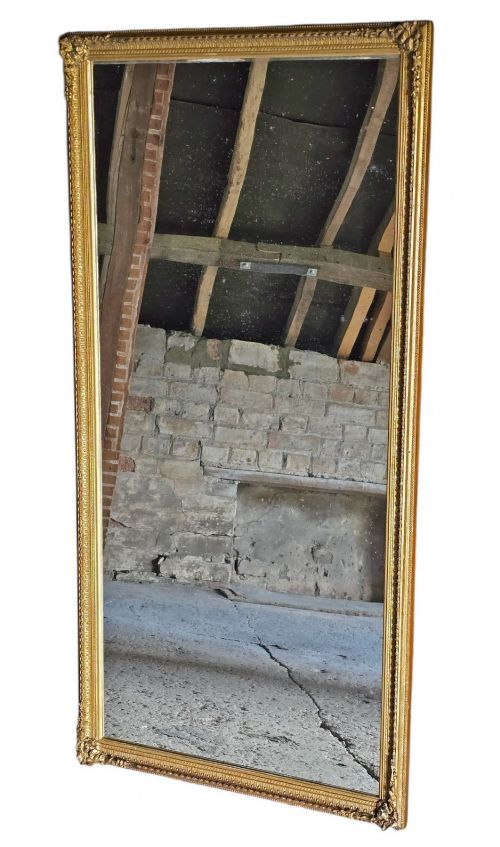
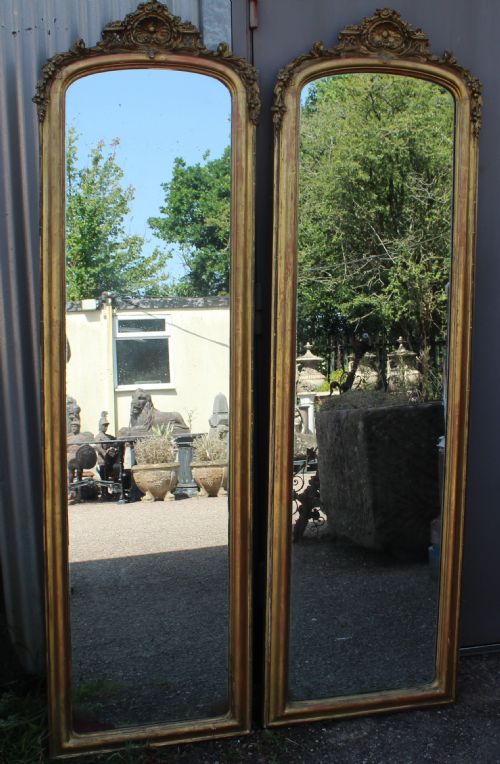
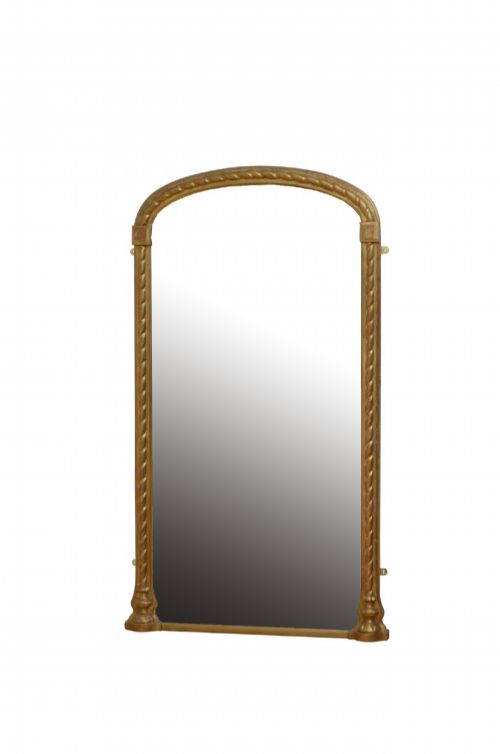
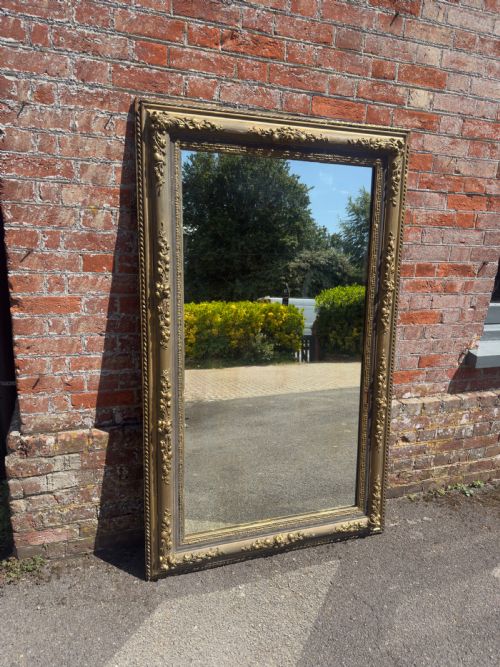
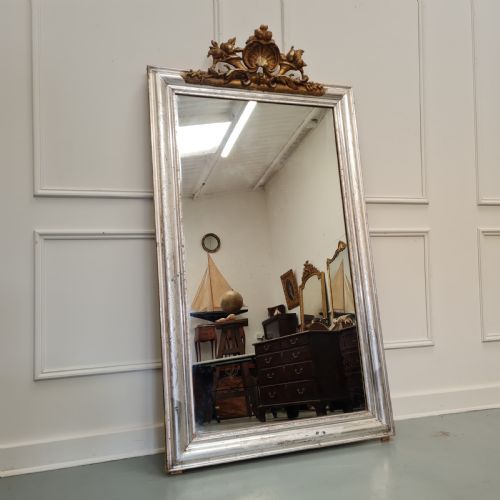
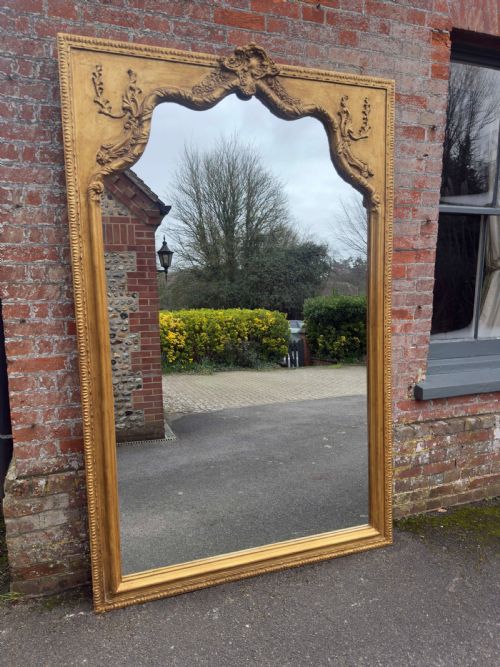
A gilded wood floor mirror stands tall to reflect an entire figure or open up a room. The examples found here take several forms, including full-length leaner mirrors, cheval mirrors, and tall wall mirrors.
The selection spans the eighteenth, nineteenth, and early twentieth centuries. Pieces originate from English and French workshops, displaying styles from Victorian and Edwardian periods to French Rococo Revival and Neoclassical designs.
How they were made
Frames are constructed from wood, frequently layered with gesso to build up intricate surface relief before gilding. Carvers shape the timber and plaster into ornate scrolls, rope carvings, and architectural arches.
Finishes include gold leaf, silver gilding, and parcel gilt treatments applied over paint. The glass itself ranges from standard mirror plate to older mercury glass panels showing foxed ageing.
Listings feature periods spanning from the eighteenth century through to the Edwardian era, incorporating materials such as gesso, giltwood, and original mercury glass.
What varies in quality
The depth and crispness of the hand-carved wooden ornament set better examples apart from simpler moulded frames. Deeply undercut foliage and precise gesso moulding indicate skilled workshop production.
The condition of the original gilding and the character of the mirror glass dictate visual impact. Intact gold leaf surfaces and period mercury glass with natural foxing hold more presence than later replacements.
The Gilded Wood Floor Mirror Glossary
- Giltwood
- Wood that has been coated with gold leaf or gold powder. This surface treatment gives frames a bright or softly burnished metallic sheen.
- Gesso
- A plaster mix applied to wood frames to create a smooth base for carving and gilding. It allows for sharp relief details in ornate mouldings.
- Mercury glass
- A double-walled glass blown type silvered between the layers with a liquid mercury amalgam. Older panels develop characteristic dark spots known as foxing.
- Cheval mirror
- A freestanding full-length mirror hung on a vertical frame with pivots. This design allows the glass to tilt to various angles.
- Leaner mirror
- A large tall mirror designed to stand upright against a wall without being hung from brackets. These pieces rely on their substantial weight for stability.
- Pier mirror
- A tall narrow mirror traditionally placed on the wall space between windows. They frequently match or complement console tables placed below them.
Gilded Wood Floor Mirror: Frequently Asked Questions
Where should I place a floor mirror?
Position a tall mirror opposite a window to maximise natural daylight and draw it deeper into the space. Placing one in a hallway or bedroom creates an immediate sense of expanded room dimensions.
Ensure the floor surface is level so the heavy frame leans securely against the wall without rocking. Freestanding cheval versions need enough clearance around them to allow the pivoting glass to move freely.
How do I clean a vintage gilt frame?
Dust the carved wooden surface gently with a soft dry brush to remove particles without disturbing the fragile gold leaf. Avoid using water, chemical sprays, or abrasive cloths on gilded gesso as moisture lifts the finish.
Keep glass cleaner strictly to the mirror plate itself. Spraying liquid directly onto the frame risks damaging the historic gesso and underlying wood.
Are these mirrors heavy to mount?
Full-length frames built from solid timber, thick gesso, and heavy glass possess considerable weight. Leaner mirrors are typically designed to rest against the wall rather than hang, relying on floor friction and wall contact for balance.
If wall mounting a heavy piece, professional installation into secure wall studs is essential. Floor-standing cheval designs distribute their weight through a stable wooden base rather than relying on wall fixings.
What is mercury glass?
Mercury glass is an early type of mirror plate made by pouring a silvering solution between two walls of blown glass. Despite the traditional name, actual elemental mercury was largely replaced by safer silver nitrate methods during the nineteenth century.
Over decades, moisture and air seep between the glass layers, causing the reflective backing to mottle and darken. Collectors value this natural ageing, known as foxing, for the historic character it brings to antique mirrors.