

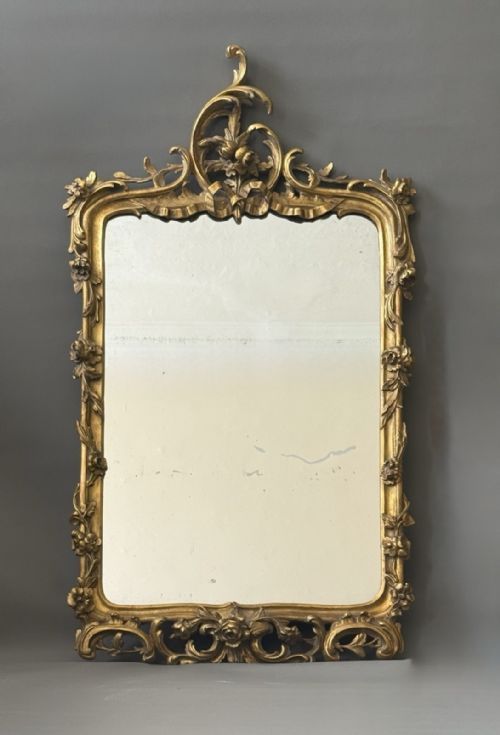
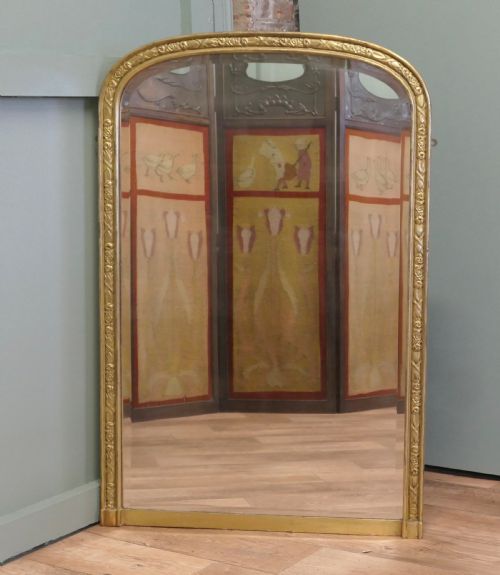
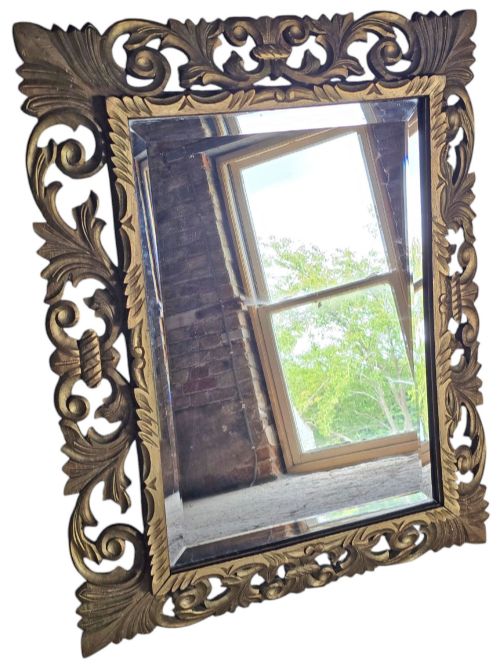
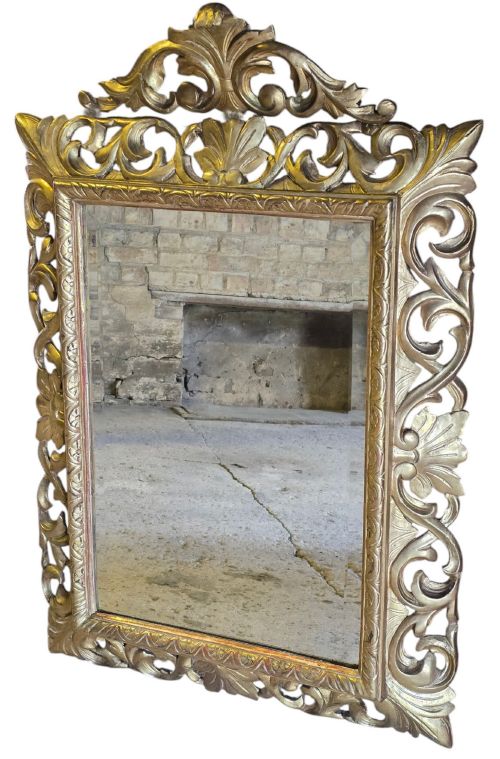
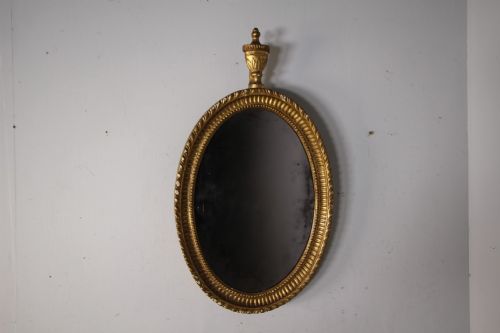
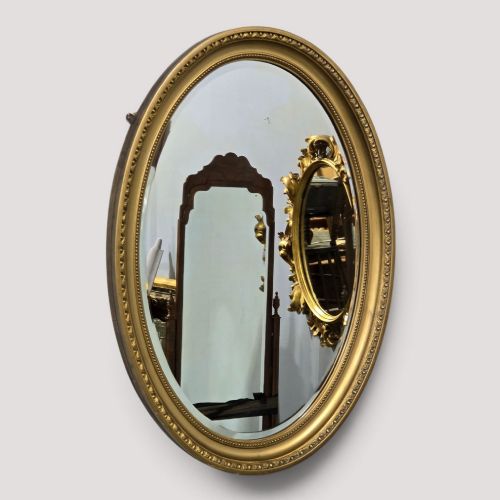
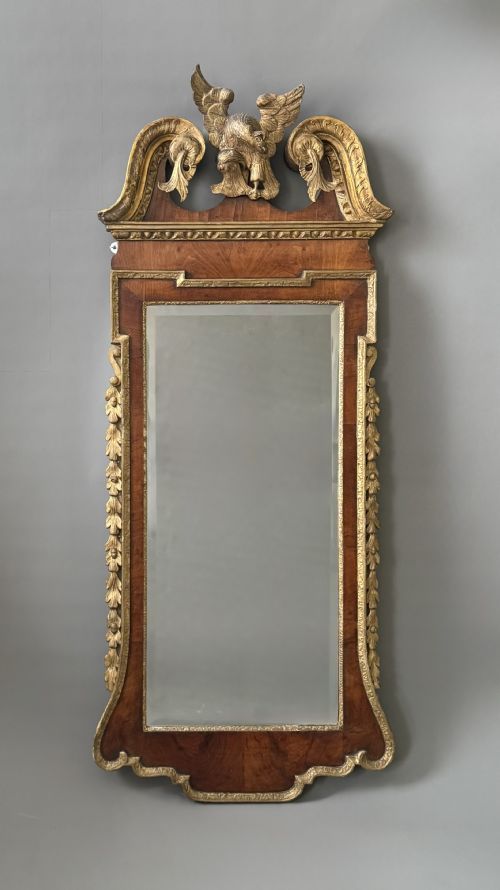
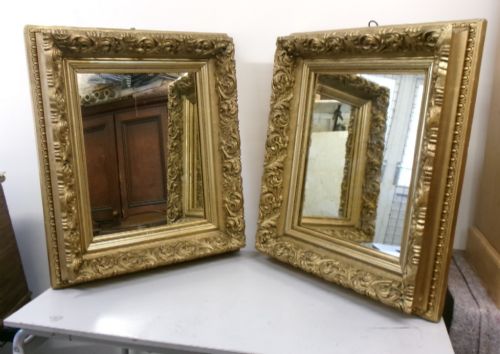


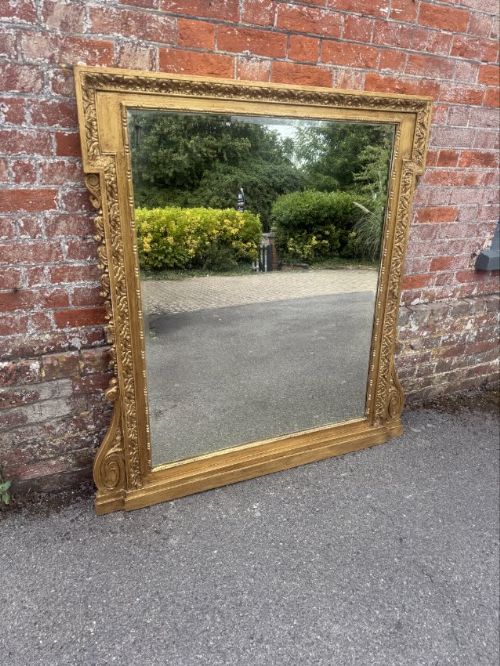
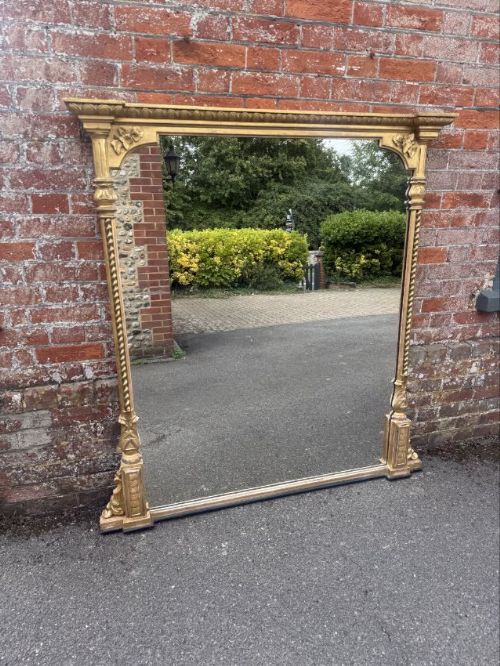
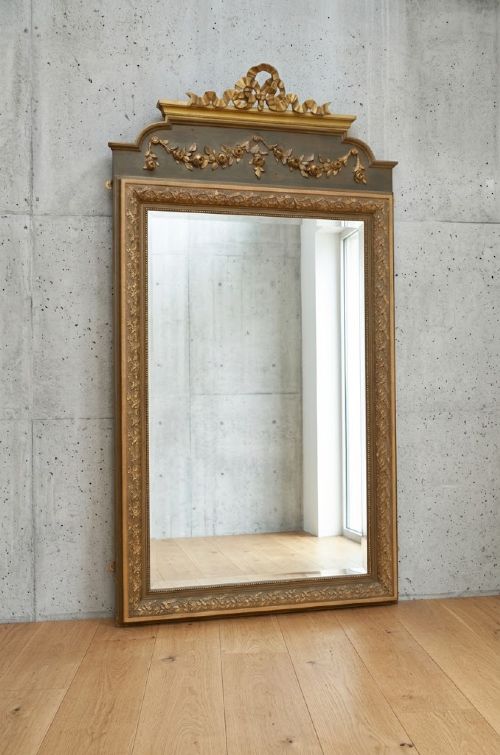
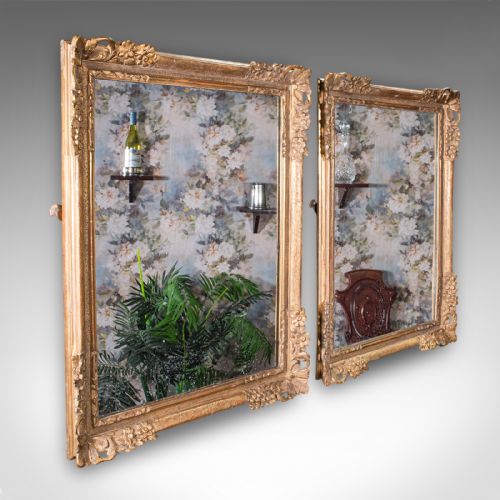
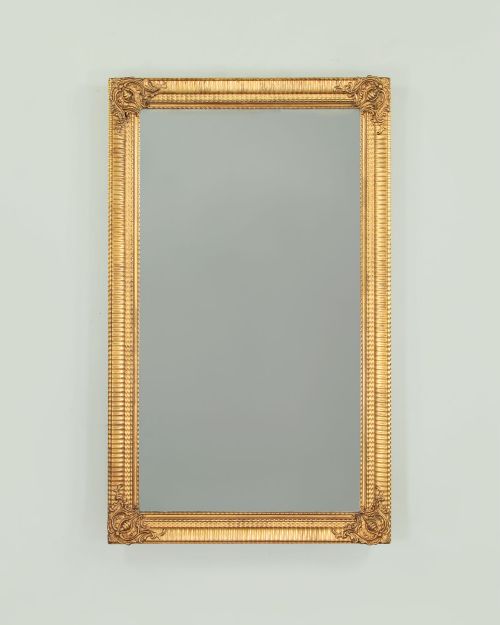
Carved Gilt Frame Mirror
These carved gilt frame mirror pieces bring architectural weight and bright reflection to a room, drawing the eye with gilded surfaces.
Identifying Carved Gilt Frame Mirror Pieces
A carved gilt frame mirror is a reflective glass panel enclosed in an ornate wooden structure finished with gold leaf or metallic paint. These items function primarily as wall-hanging decorations or expansive overmantle pieces positioned above fireplaces.
The selections span English and French workshops from the nineteenth and early twentieth centuries, alongside earlier Italian inspirations. Common formats include arched tops, rectangular overmantles, oval shapes, and full-height floor dressing mirrors.
Victorian and Rococo Revival styles dominate the selection, bringing heavy ornamentation, floral motifs, and classical scrolling into domestic interiors. Buyers encounter both restrained beaded borders and flamboyant, highly decorated frames.
Materials and Construction Methods
Makers constructed these frames from solid timber, applying layers of gesso - a mixture of plaster and glue - to build up relief details and mouldings. Artisans then carved intricate patterns directly into the wood and gesso layers before applying the gold leaf finish.
Surfaces utilise genuine giltwood or gilded wood alongside composition ornament pressed into moulds for complex repeating patterns like rope twists, ribbed details, and laurel leaves. The reflective elements consist of traditional mirror glass fitted securely within the finished wooden carcasses.
Retail Price Guide 2026
Typical UK retail prices for carved gilt frame mirror, calculated from the Sellingantiques database of over a million retail prices indexed since 2003. This retail price guide relies exclusively on Sellingantiques data; no external sources or auction records are used, so the figures do not describe the wider market.
Materials recorded across the selection include gesso, giltwood, mirror glass, and gilded wood worked into wall and overmantle formats.
Distinctions in Quality and Craftsmanship
Quality rests upon the depth and precision of the manual carving rather than cast composition alone, separating standard production pieces from masterworks. The crispness of floral details, acanthus leaves, and rope twists reveals the skill of the original gilder and woodcarver.
Proportion and scale dictate the visual impact of an overmantle or wall glass, with larger, balanced pieces commanding greater presence in a room. The preservation of the original gilded surface, showing natural patination without heavy modern repainting, marks superior surviving examples.
The Carved Gilt Frame Mirror Glossary
- Gesso
- A dense plaster mixture applied to wooden frames as a smooth base for gilding and relief ornamentation. Artisans carved intricate decorative motifs directly into this dried preparation.
- Giltwood
- Timber that has been coated with thin sheets of gold leaf or metallic powder. This material gives frames their characteristic bright, reflective metallic sheen.
- Overmantle Mirror
- A large horizontal looking glass specifically designed to hang on the wall directly above a fireplace mantelpiece. These pieces often feature shaped or arched tops to match architectural proportions.
- Rococo Revival
- A nineteenth-century design movement inspired by the French eighteenth century, characterised by asymmetrical curves, scrollwork, and naturalistic shell or floral motifs. Frames in this style exhibit flamboyant, exuberant ornamentation.
- Cheval Mirror
- A full-length dressing glass suspended on a vertical frame with supporting side pivots. This allows the user to tilt the entire reflective surface to various angles.
Frequently Asked Questions
Where should I hang an overmantle mirror?
These large horizontal glasses belong directly above a fireplace mantelpiece, where they anchor the room's primary focal point. Position them at a height that reflects surrounding artwork or ceiling details rather than empty wall space.
Ensure the wall fixings match the substantial weight of the timber and gesso construction. Secure the piece firmly to wall studs to support the heavy frame safely.
How do I clean a gilded wooden frame?
Dust the intricate carved surfaces gently using a soft, dry brush or a feather duster. Avoid commercial liquid cleaners, abrasive cloths, moisture, or chemical sprays, which can strip away fragile historic gold leaf.
Take particular care around flaked gesso or worn gilding to prevent further loss of the original finish. Professional conservation is advisable if the surface requires deep cleaning or consolidation.
How do I identify a Victorian piece?
Victorian examples frequently showcase heavy proportions, rope twist mouldings, and robust gesso ornaments applied to a solid wood carcass. Look for typical nineteenth-century framing techniques, such as pegged joints and heavy overmantle formats designed for period hearths.
Compare the decorative vocabulary with known Rococo Revival or French Chateau styles typical of the mid to late nineteenth century. The presence of original backboards and aged mirror glass further confirms the period of manufacture.
What is a French Rococo Revival mirror?
This style draws inspiration from eighteenth-century French design, featuring flamboyant scrolls, asymmetrical floral arrangements, and rich carved detail. Makers utilised these ornate motifs to create dramatic visual movement across the gilded wooden borders.
Such pieces often present arched or shaped tops intended to create an impression of luxury and height within nineteenth-century drawing rooms.