
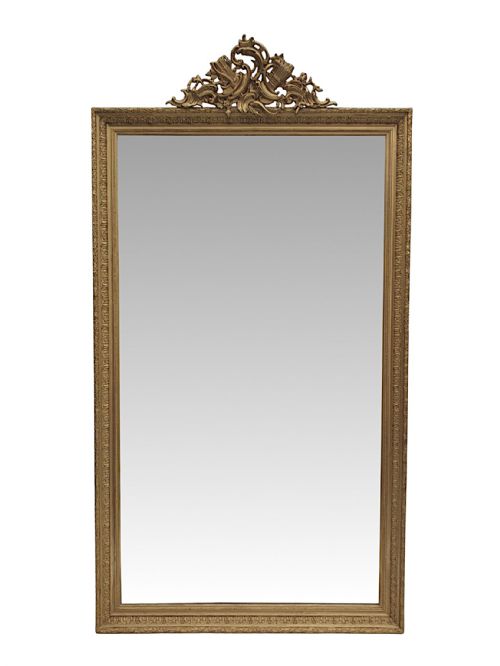
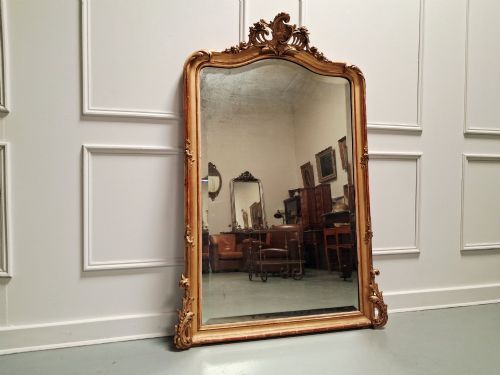
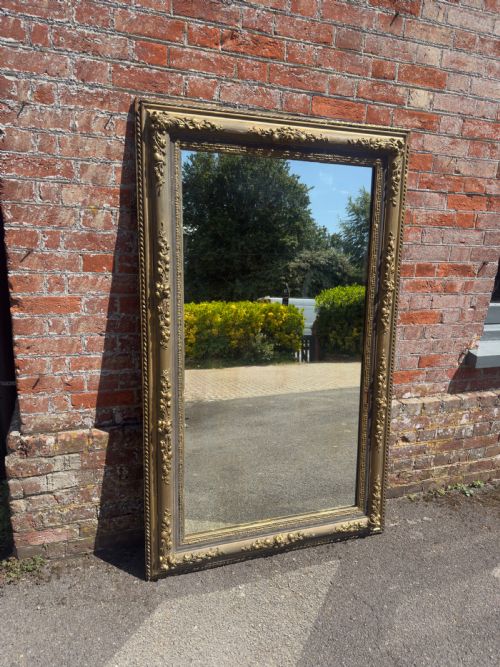
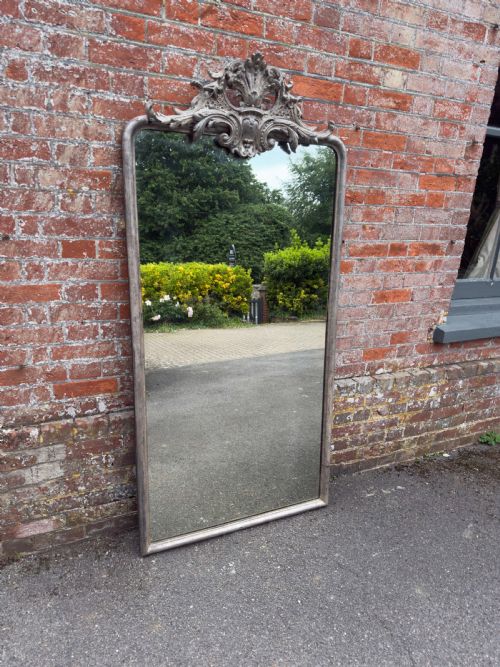


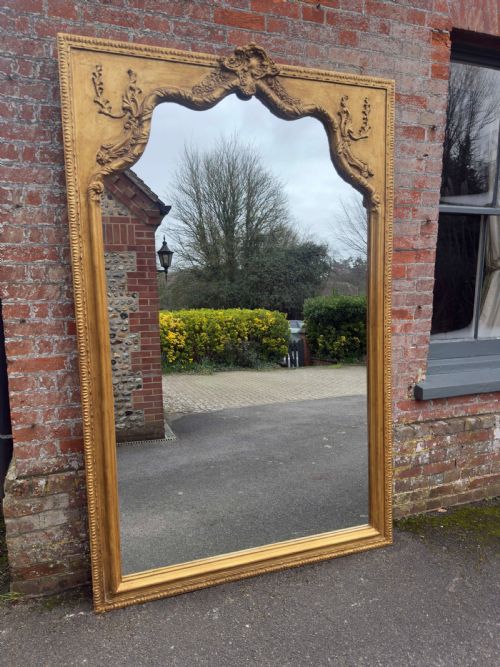


Carved Gesso Floor Mirror
A carved gesso floor mirror brings heavy nineteenth-century presence to a room, offering grand scale and ornate framing.
Carved Gesso Floor Mirror
When you search for a carved gesso floor mirror, you find substantial nineteenth-century pieces designed to lean against a wall or sit above a mantelpiece. The selection relies heavily on large English and French examples spanning the mid-nineteenth century through to the early twentieth century.
Most entries follow distinct regional styles, moving between French Rococo revival aesthetics and English Victorian forms. You encounter arched tops, shaped tops, and ribbed frames designed to catch the light in a hallway or principal room.
The forms crossover between traditional overmantels, leaner mirrors, and large dressing glasses. Each specimen utilises the imposing scale typical of nineteenth-century domestic interiors.
How they were made
The construction begins with a solid wood carcass shaped into arched or rectangular frames. Artisans applied layers of gesso over the carved wood base to build up relief ornamentation before finishing the surface.
Surfaces received treatments of gold leaf, silver, or specific paints to achieve the desired giltwood or painted appearance. Original silvering and distressed finishes on the mirror glass complete the traditional manufacturing process.
Some nineteenth-century French mirrors arrive bearing the charming designation of bistro mirror, having spent decades reflecting local café life.
What varies in quality
The depth and intricacy of the carved gesso ornamentation dictate the visual impact of the piece. Crisp detailing on rope twists and scrolling foliage separates standard frames from exceptional ones.
The integrity of the original giltwood or painted surface determines the historical weight of the object. Surviving original silver on the mirror glass and intact gesso relief preserve the authenticity of the period.
The Carved Gesso Floor Mirror Glossary
- Gesso
- A plaster-like mixture applied to wood frames to create a smooth surface for carving or gilding. This material allows for intricate relief ornamentation that holds paint and leaf securely.
- Giltwood
- Wood carved and covered with a thin layer of gold leaf. This technique provides the brilliant metallic finish seen on many nineteenth-century French and English frames.
- Overmantel
- A large mirror specifically designed to hang or rest on the wall directly above a fireplace mantel. These pieces often share the same arched top and heavy gesso decoration found on floor mirrors.
- Rococo Revival
- A nineteenth-century design style drawing on eighteenth-century French motifs like C-scrolls, asymmetric curves, and naturalistic foliage. This style dominates the decorative frames of the period.
Carved Gesso Floor Mirror: Frequently Asked Questions
How do I place a floor mirror?
A carved gesso floor mirror works best resting directly against a sturdy wall in a hallway, bedroom, or principal reception room. The heavy scale requires solid placement without relying solely on wall fixings.
Ensure the floor surface is level so the substantial timber and glass weight distributes evenly. Leaning the frame safely creates the traditional visual effect intended by nineteenth-century makers.
Are these mirrors meant to be hung?
Many examples function as leaner mirrors designed to stand upright against a wall from the floor. Other pieces originate as overmantels built to sit above a fireplace.
Heavy carved wood and gesso frames possess significant weight that dictates their placement. Consult a professional installer if you intend to secure a large frame to a wall rather than leaning it.
How do I identify French styles?
French pieces from the nineteenth century often display Rococo revival influences with ornate, flowing scrollwork and shaped tops. The decorative language leans toward elaborate naturalistic motifs and distinctive painted or silvered finishes.
English counterparts from the same era tend to feature structured architectural elements like rope twist frames or disciplined arched tops. Comparing the framing details reveals the origin of the workshop.
How do I care for gesso frames?
Maintain gesso and giltwood surfaces by dusting gently with a dry, soft cloth. Avoid liquid cleaners or moisture, which can damage delicate plaster relief and historic paint layers.
Keep the mirrors away from direct sunlight and excessive humidity to protect the antique wood and original silvering on the glass.