


Neoclassical Candle Holders
Neoclassical candle holders bring the architectural symmetry and classical restraint of the ancient world directly onto the table.
Neoclassical Candle Holders
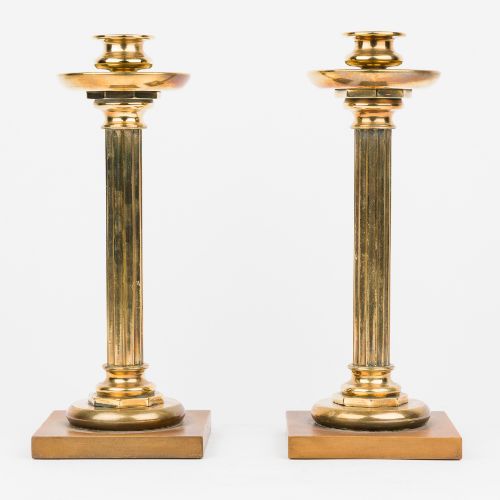
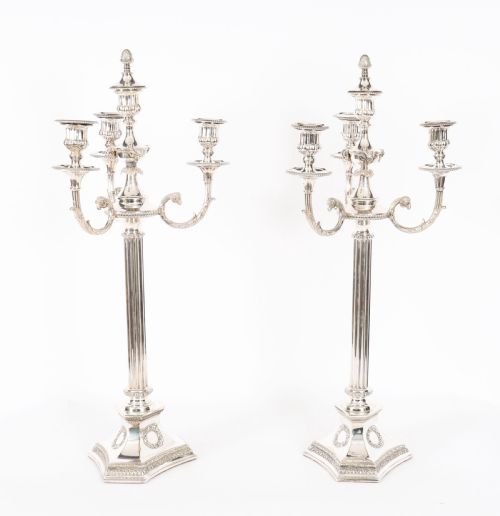
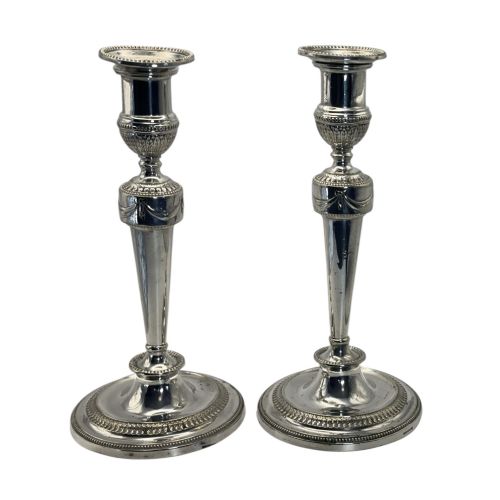
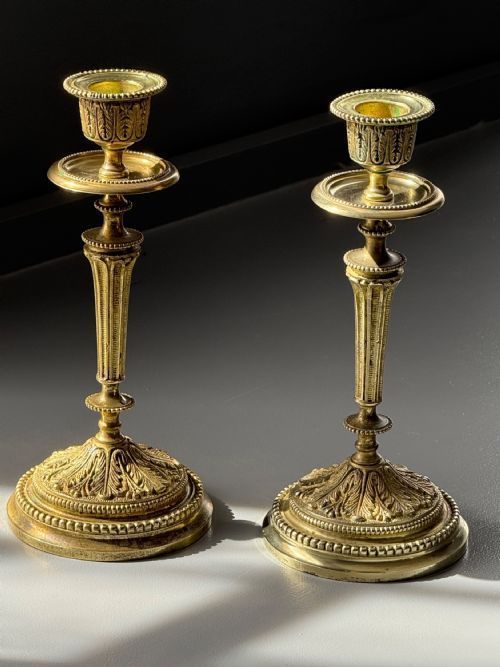
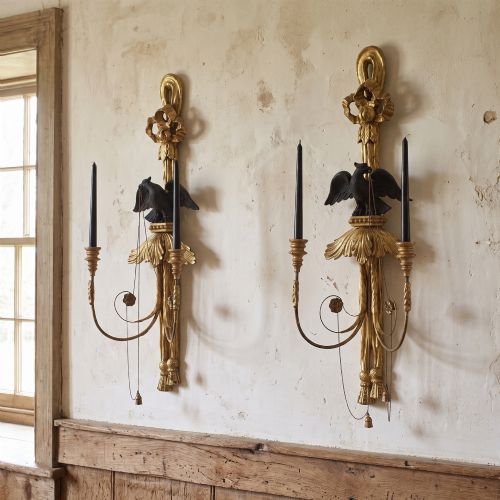
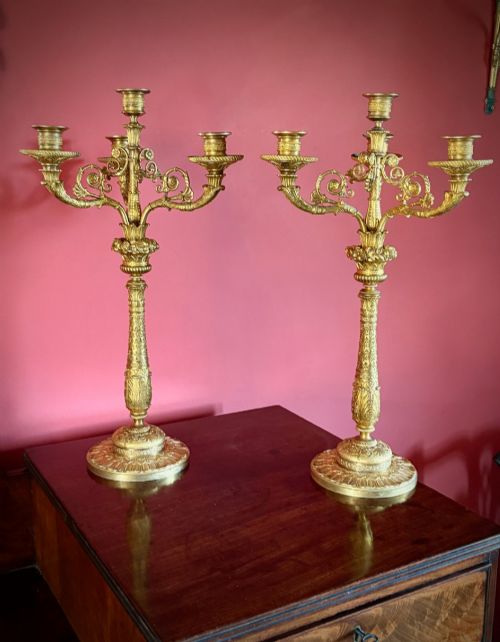
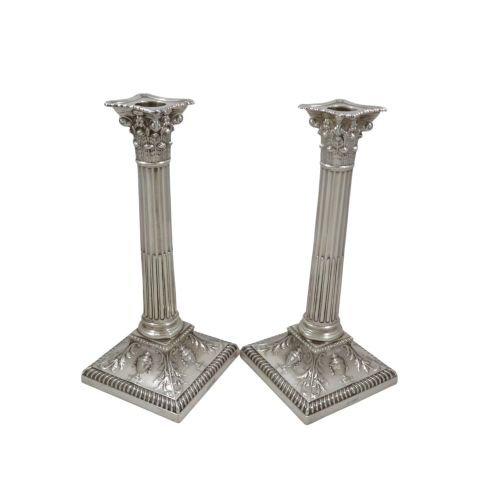
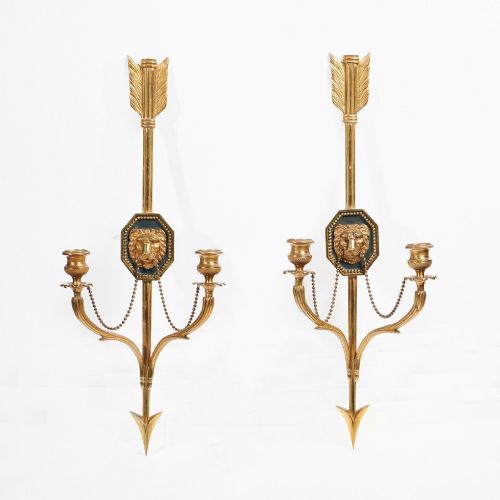
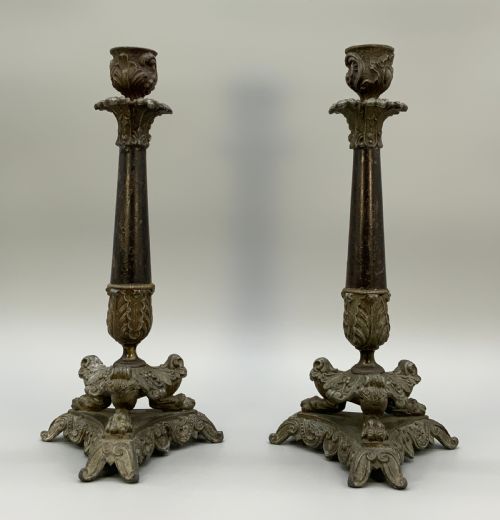
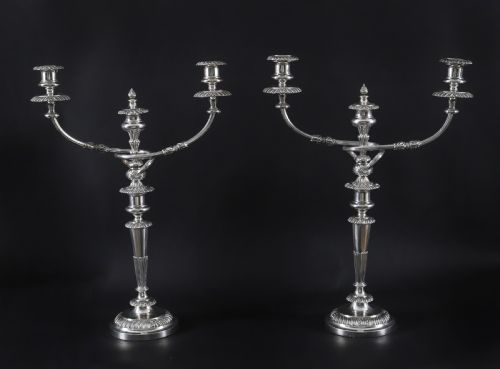
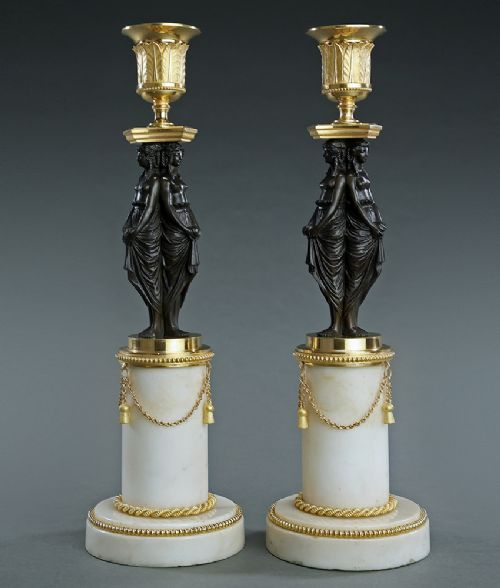
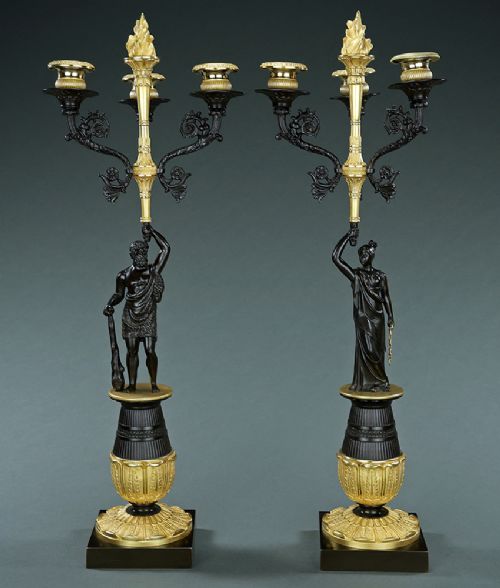
When searching for neoclassical candle holders, buyers encounter a diverse selection of lighting fixtures rooted in the classical revivals of the eighteenth and nineteenth centuries. These objects typically take the form of candlesticks, multi-armed candelabra, wall sconces, and chambersticks designed with strict geometric proportions and motifs drawn from Greek and Roman antiquity. Items on this page range from compact desk accessories to large, imposing floor and table pieces.
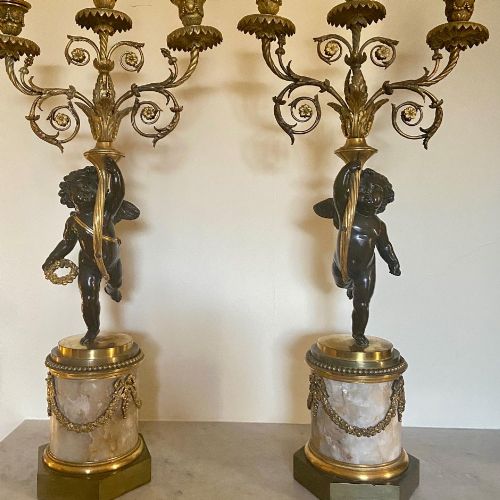
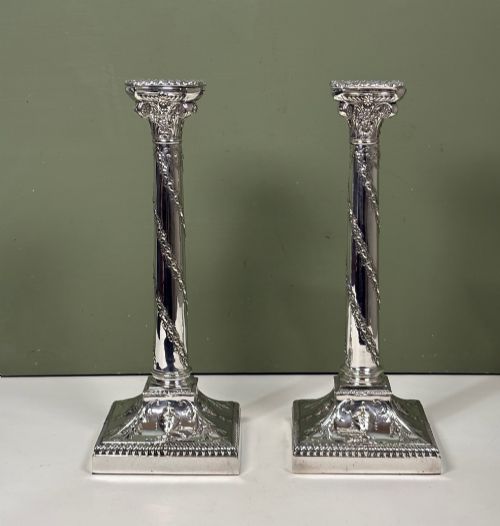
The material vocabulary of these items draws heavily on cast metals, natural stone, and ceramics, reflecting the tastes of the Georgian, Regency, Victorian, and Edwardian eras. Makers frequently utilised brass, bronze, patinated bronze, and gilded finishes such as ormolu, often pairing them with white marble, silver plate, or sterling silver. Certain examples incorporate porcelain, jasperware, or carved giltwood to achieve a rich decorative contrast.
Stylistic influences span French Empire, Louis XVI, and classical English designs, alongside later revivals from the late nineteenth and early twentieth centuries. Pieces often feature architectural elements like fluted columns and Corinthian capitals, or figural compositions including putti, caryatids, and mythological subjects. This selection captures centuries of European craftsmanship inspired by archaeological discoveries.
How they were made
Metals such as bronze, brass, and silver were predominantly cast utilising traditional methods, yielding heavy, solid components that were subsequently chased, polished, or fire-gilded to create ormolu surfaces. Silver-plated and Old Sheffield Plate items required the application of silver sheets or deposits over base metal cores, while sterling silver versions were formed through hammering, spinning, or casting.
Candelabra and complex candlesticks were constructed in multiple sections and joined mechanically with threaded rods, pins, or screws, allowing for intricate multi-armed arrangements. Stone bases, particularly white marble, were turned on lathes or hand-cut and polished to form stable plinths that anchored the heavier metal uprights.
Neoclassical Candle Holders Retail Price Guide 2026
Typical asking prices for neoclassical candle holders among the pieces listed under this phrase on Sellingantiques today, from the lower quarter to the upper quarter. They describe what is for sale here now, not the wider market.
Listings feature neoclassical candle holders spanning the eighteenth, nineteenth, and early twentieth centuries, constructed from gilt bronze, marble, and sterling silver.
What varies in quality
The structural integrity of the assembly and the choice of supplementary materials influence overall grade, as seen in the selection of high-grade statuary marble or substantial gauge silver. Original matching components and unpolished patinas further elevate the standing of a pair, preserving the intended balance between the metalwork and its decorative mounts.
Mappin & Webb·Matthew Boulton·J. Miller·Rabiat
The Neoclassical Candle Holders Glossary
- Ormolu
- A gilded bronze technique involving an amalgam of mercury and gold applied to a bronze base and heated. This method produces a durable, rich golden surface characteristic of fine French and English decorative pieces.
- Candelabra
- A branched lighting fixture designed to hold multiple candles simultaneously. They often feature a central shaft dividing into several arms supporting individual drip pans and nozzles.
- Caryatid
- A sculpted female figure serving as an architectural support in place of a column or pilaster. These figures frequently appear on the stems of candlesticks and furniture from classical revival periods.
- Jasperware
- A type of fine stoneware developed by Josiah Wedgwood featuring a matte surface, commonly produced in contrasting colours with white classical relief decorations. It appears on ceramic candle holders from the late nineteenth and early twentieth centuries.
- Girandole
- An ornamental bracket wall mirror featuring attached candle sconces designed to reflect and multiply candlelight. These pieces were popular in giltwood frames throughout the eighteenth and nineteenth centuries.
Neoclassical Candle Holders: Frequently Asked Questions
How do I date an antique brass candlestick?
Dating relies heavily on manufacturing techniques, base construction, and stylistic clues. Earlier examples often show irregular casting marks and solid, heavier bases, while later nineteenth-century pieces display more uniform machine threading and standardised proportions.
Matching the decorative motifs to known periods like Georgian or Victorian helps narrow the timeline further. Examining wear patterns around the socket and base also provides context regarding the age and frequency of use.
What is the difference between ormolu and brass?
Ormolu is a gold-mercury amalgam applied to a bronze or brass substrate through a high-heat fire-gilding process. This creates a deep, warm golden surface that differs visually from the raw yellow alloy beneath.
Brass is a plain copper-zinc alloy that develops a dark patina or can be polished to a bright yellow metallic finish. Neoclassical pieces often used ormolu to highlight decorative mounts against patinated bronze or marble.
Can these candle holders be used with modern candles?
Most antique candle holders accommodate standard taper candles, though sizing can vary slightly due to hand-casting and historic shrinkage. It is advisable to measure the nozzle diameter before purchasing modern wax inserts.
Using dripless candles helps protect delicate metalwork, silver plate, or marble surfaces from heat and wax accumulation. Ensuring a snug fit prevents the candle from tilting during use.
How should I clean silver plated candle holders?
Cleaning requires a soft microfiber cloth and a gentle silver polish formulated to protect plated surfaces from excessive abrasion. Avoiding harsh chemical dips preserves the underlying base metal and any subtle chasing.
Regular, light dusting prevents tarnish from building up in the recessed neoclassical details of the casting. Proper storage in a stable, dry environment minimises the need for frequent polishing.