




Neoclassical Cabinet Plate
These neoclassical cabinet plate examples bring classical mythological scenes and rich gilding into the home.
Neoclassical Cabinet Plate
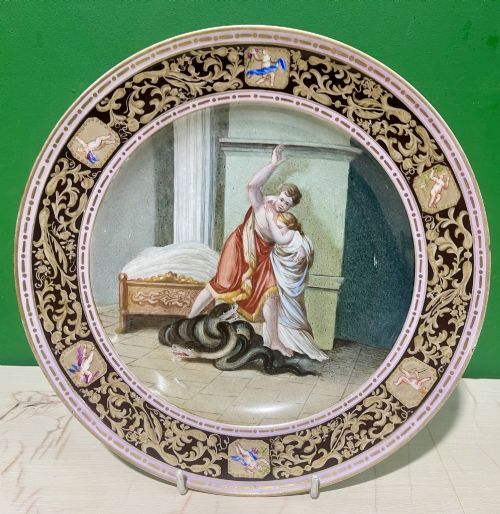
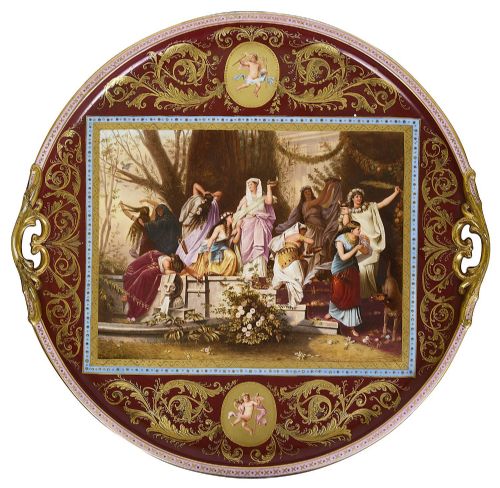
A neoclassical cabinet plate is a decorative ceramic piece designed for display rather than dining, usually featuring detailed mythological or historical figure painting. These plates and chargers often showcase elaborate cobalt blue borders paired with heavy gold leaf and gilding.
The pieces available here centre on nineteenth-century production, particularly Vienna porcelain chargers alongside specific nineteenth-century works. Buyers encounter large-scale painted chargers depicting classical narratives alongside pierced porcelain and specialised enamel decoration.
Forms range from standard cabinet plates to oversized decorative chargers and trays spanning the mid to late nineteenth century. The prevailing style draws heavily on neoclassical revival aesthetics, featuring hand-painted mythological subjects executed with fine detail.
Materials and construction
These items rely on hard-paste porcelain as the primary substrate, shaped into plates, trays, and large chargers. Artisans applied cobalt blue grounds to frame the central painted reserves before firing.
Decoration combines polychrome enamel painting with extensive gold leaf, gilt, and gilding. Certain pieces incorporate delicate pierced porcelain borders alongside fine hand-painted figurative work.
Neoclassical Cabinet Plate Retail Price Guide 2026
Typical asking prices for neoclassical cabinet plate among the pieces listed under this phrase on Sellingantiques today, from the lower quarter to the upper quarter. They describe what is for sale here now, not the wider market.
Listings feature nineteenth-century porcelain materials including enamel, gold leaf, and gilt, styled in neoclassical revival designs.
Distinctions in quality
Quality rests upon the skill of the hand-painted figurative work within the central reserve, distinguishing standard factory output from master-painted pieces. Named subjects, signed artistry, and detailed mythological storytelling elevate individual examples.
The application and preservation of the gold leaf, gilt work, and cobalt blue grounds define the visual impact of the piece. Intricate border treatments, such as pierced porcelain margins, reflect higher manufacturing ambition.
Royal Vienna·Mintons
The Neoclassical Cabinet Plate Glossary
- Cabinet plate
- A decorative ceramic plate intended for display in a cabinet or on a wall rather than for table service. These pieces usually feature elaborate painted scenes.
- Charger
- A large decorative plate or tray used historically for ceremonial purposes or grand display. In nineteenth-century porcelain, these often exceed standard plate dimensions.
- Gilding
- The application of gold leaf or gold powder to ceramic surfaces to create metallic highlights and borders. This technique enhances the neoclassical aesthetic.
- Cobalt blue
- A deep, rich blue pigment applied under or over the glaze to create striking contrasting borders. It frequently frames the central painted mythological narrative.
- Pâte-sur-pâte
- A method of ceramic decoration where relief designs are built up using layers of liquid clay slip before firing. This creates a cameo-like effect on the surface.
Neoclassical Cabinet Plate: Frequently Asked Questions
What is a neoclassical cabinet plate?
A neoclassical cabinet plate is a decorative porcelain dish created for visual display, featuring classical mythological scenes, historical narratives, and ornate gilding.
These pieces emerged during the nineteenth century as ornamental works of art rather than functional tableware, often showcased on walls or within display cabinets.
How were cabinet plates used?
Cabinet plates served primarily as decorative objects for display in formal drawing rooms and parlours during the nineteenth century. Owners mounted them on walls or placed them on specialised stands to highlight their detailed painted art.
Because of their delicate enamel work and extensive gold leaf application, they remained strictly ornamental rather than serving utilitarian functions at the dining table.
How do you identify nineteenth-century pieces?
Nineteenth-century pieces typically exhibit characteristic hard-paste porcelain bodies combined with cobalt blue grounds and heavy gilding. The painting styles reflect nineteenth-century revivals of classical antiquity, often depicting specific mythological figures.
Examining the application of the gold leaf and the fineness of the enamel brushwork helps distinguish genuine nineteenth-century output from later reproductions.
Why do some plates feature pierced borders?
Pierced borders involve cutting openwork patterns directly into the porcelain rim before the initial firing. This technique added an extra layer of craftsmanship and lightness to large decorative chargers.
Such treatment was reserved for higher-tier ornamental pieces intended to showcase the technical skill of the porcelain manufactory.