





Antique Austrian Porcelain Chargers
Antique Austrian porcelain chargers bring large decorative painted surfaces and rich gilding into a room.
Antique Austrian Porcelain Chargers
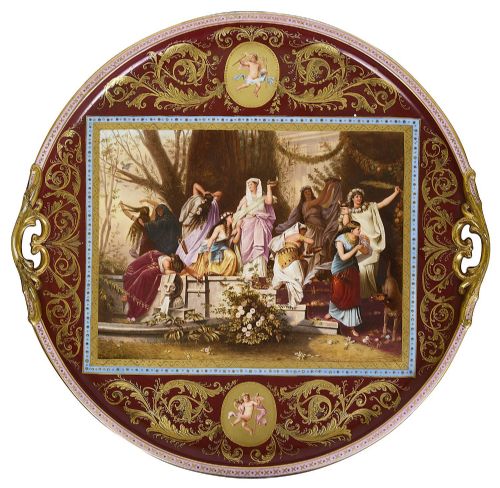
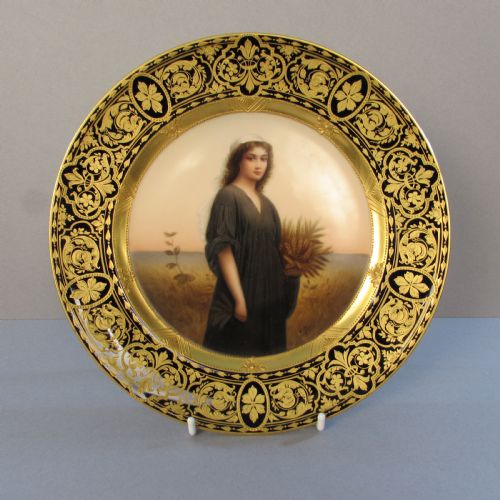
When you search for antique Austrian porcelain chargers, you encounter large display plates and decorative trays made in the Vienna style during the nineteenth century and into the early twentieth century. These pieces function primarily as cabinet plates and decorative chargers rather than tableware, measuring up to fifty centimetres across.
The items listed on this page showcase mythological, historical and religious narrative scenes, such as Venus in the Forge of Vulcan, the wise and foolish virgins, and classical figures like Aurora and Cephalus. Most examples you meet here belong to the nineteenth century, including specific pieces dated around eighteen fifty and eighteen ninety alongside later works from nineteen twenty.
How they were made
These chargers and cabinet plates begin as hard-paste porcelain formed into wide circular trays and plates. Artisans then apply detailed enamel painting by hand to create the intricate figural scenes that span the centre of each piece.
Gilding plays a major role in the decoration, utilising gold leaf and gold gilt to frame the central painted panels. Cobalt glaze provides a deep blue background colour on many pieces, contrasting sharply against the bright gold gilding.
Antique Austrian Porcelain Chargers Retail Price Guide 2026
Typical asking prices for austrian porcelain chargers among the pieces listed under this phrase on Sellingantiques today, from the lower quarter to the upper quarter. They describe what is for sale here now, not the wider market.
The listings span from the mid-nineteenth century up to nineteen twenty, featuring materials like enamel, gold leaf and cobalt glaze.
What varies in quality
Quality rests heavily on the skill of the hand-painted narrative scenes and the precision of the artist's signature. Pieces bearing named signatures like Wagner or S. Stanley demonstrate superior portraiture and brushwork compared to unmarked or standard production plates.
The complexity and execution of the surrounding cobalt glaze and gold leaf ornamentation determine the overall visual impact. Richer gilding and deeper cobalt grounds elevate the piece from simple factory output to high artistic achievement.
S. Stanley·Sibl·Wagner
The Antique Austrian Porcelain Chargers Glossary
- Charger
- A large decorative plate intended for display on a wall or cabinet rather than for serving food. These pieces measure significantly larger than standard dining plates.
- Cabinet plate
- A high-quality porcelain plate made specifically for display within a glass-fronted cabinet or on a mantelpiece. They often feature elaborate hand-painted artwork.
- Cobalt glaze
- A intense blue metallic oxide colour applied under the glaze before firing, creating a rich deep blue background. It frequently provides the contrasting field for gold gilding.
- Gold gilt
- A thin layer of gold applied to the porcelain surface to highlight borders and decorative motifs. This adds reflective warmth and luxury to the piece.
- Neoclassical Revival
- A nineteenth-century artistic movement that draws inspiration from classical Greek and Roman art. This style dictates the mythological and historical figures painted on many chargers.
Antique Austrian Porcelain Chargers: Frequently Asked Questions
What is an antique Austrian porcelain charger?
These items are large, highly decorative plates made in Austria, primarily during the nineteenth century, featuring hand-painted classical or mythological scenes.
They were designed specifically for display in cabinets or on walls rather than for everyday dining use.
How do you display antique porcelain chargers?
Collectors typically mount these large plates on sturdy wall hangers or place them upright on specialised display stands inside glass cabinets.
Their substantial size and rich gold gilding make them effective focal points in a traditional room setting.
What subjects appear on these painted plates?
The hand-painted centres frequently depict classical mythology, biblical stories and historical narratives, such as Venus in the forge or wise virgins.
Signed pieces often attribute these detailed figural artworks to specific porcelain painters like Wagner.
How do you identify nineteenth century Vienna style?
Nineteenth-century Vienna style porcelain is recognised by its elaborate Neoclassical aesthetic, deep cobalt blue borders, and heavy gold leaf gilding.
Many examples also incorporate precise hand-painted portraits and narrative scenes framed by ornate gold decoration.